
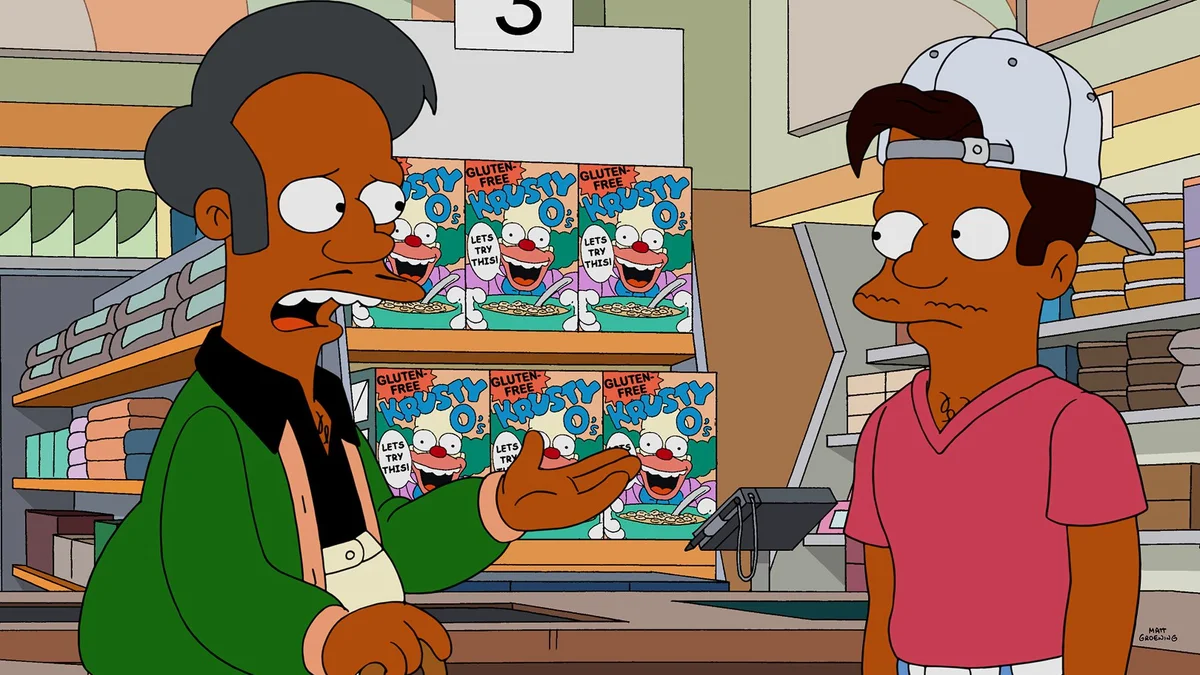
Apu finally speaks again in The Simpsons
The surprise had been carefully protected. On Sunday, October 18, 2026, American audiences watched Treehouse of Horror Presents: The Revengening, a Halloween-themed installment of The Simpsons.
Throughout the episode, a mysterious costumed figure returns to Springfield seeking revenge against its residents.
His identity remains concealed until a major revelation: the person behind the disguise is Apu Nahasapeemapetilon.
The longtime Kwik-E-Mart owner, largely reduced to silent background appearances in recent years, delivers his first speaking lines since October 2017.
His voice is different.
Sunil Malhotra, an Indian-American actor whose credits include The Legend of Korra, has taken over from Hank Azaria, who portrayed Apu throughout the character's earlier history.
The casting was kept secret until the episode aired.
Variety reports that Fox did not provide advance screeners and that the production team implemented additional confidentiality measures during script readings and animation work.
The intention was to preserve the reveal and allow the fictional story to communicate the decision before the promotional campaign explained it.
The result represents a meaningful development for a series whose characters have remained part of American television for nearly four decades.
Why had Apu stopped speaking?
Apu is one of Springfield's longstanding residents.
An Indian immigrant, Kwik-E-Mart owner, husband and father, he was for decades among the show's most recognizable supporting characters.
His role, however, was closely associated with a particular set of stereotypes.
Hank Azaria, an American performer without Indian heritage, portrayed Apu using a strongly exaggerated accent.
The character's comedy sometimes drew upon assumptions about South Asian immigrants, their professions and the way they were expected to speak English.
Over time, criticism extended beyond the question of one voice actor's performance.
It involved the consequences of making Apu one of the most visible representations of Indian people on American television.
When a character occupies such a prominent cultural position, particular mannerisms may influence the jokes, assumptions and prejudices faced by real people.
In 2017, The Problem with Apu, a documentary centered on comedian Hari Kondabolu's investigation of the character's influence, brought renewed attention to those concerns.
The film included perspectives on the social consequences of stereotypes associated with Apu.
The resulting debate created a creative problem for The Simpsons.
Should the writers retire the character, change him or find a way to preserve his place in Springfield while reconsidering his portrayal?
Hank Azaria officially stepped away in 2020
As the controversy continued, Hank Azaria gradually distanced himself from the role.
Apu had not spoken since the October 2017 episode The Serfsons.
He nevertheless appeared occasionally in backgrounds and ensemble scenes.
It would therefore be inaccurate to claim that the character had completely disappeared from the series.
He remained visually present but no longer participated meaningfully in new stories.
In 2020, Azaria officially confirmed that he would no longer voice Apu.
The following year, during an appearance on Dax Shepard's Armchair Expert podcast, he publicly apologized for his participation in a portrayal he had come to recognize as harmful.
His decision did not immediately provide a solution for the writing team.
Replacing a performer does not guarantee that a character's writing will evolve.
Conversely, removing Apu completely meant abandoning someone who had occupied a substantial place in Springfield's fictional community.
The producers ultimately allowed that uncertainty to continue across multiple seasons.
The new episode directly addresses the consequences of that prolonged hesitation.
The Revengening turns Apu's absence into a revenge story
The central idea behind the return is a playful reinterpretation of horror movie conventions.
In The Revengening, Springfield residents encounter a mysterious figure disguised as Daft Monk, a joke combining Daft Punk imagery with a monastic costume.
The character seeks revenge for events that initially remain unclear.
Revealing his identity changes the meaning of the entire story.
This is not simply an old resident returning to settle a personal score.
It is Apu, a character the show had effectively stopped allowing to speak.
His anger is directed at a community where he no longer seems to belong.
His family has disappeared from his everyday life, his store seems abandoned and his former friends act as though he has become invisible.
The situation provides a fairly transparent metaphor for his treatment within the series since 2017.
Apu expresses a frustration that viewers could also direct toward the producers.
Why had silence become the preferred response to a problem that might have been addressed through creative change?
The episode uses the structure of horror comedy to discuss a genuine editorial decision.
The violence belongs to the fictional Halloween storyline.
The underlying frustration refers to a controversy that significantly affected the show's creative direction.
Springfield apologizes, and the writers do too
The episode's most important moment arrives when the residents learn who is seeking revenge.
Marge acknowledges that Apu has been neglected.
Bart refers to uncertainty and the fear of making the wrong choice.
Other characters joke about lengthy internal discussions that never resulted in meaningful action.
These exchanges operate on two levels.
Within the story, Springfield residents apologize to a friend they forgot.
Outside the fiction, the writers appear to acknowledge that their own team failed to resolve the problem of Apu's representation quickly or effectively.
It is unusually direct self-criticism for a comedy well known for mocking its own conventions, but less accustomed to addressing controversies surrounding its production.
The narrative does not end with Springfield being destroyed.
A twist moves the action into a dream, and Apu returns to the Kwik-E-Mart, where Manjula and Homer are present.
Homer invites him to a Halloween party, restoring something resembling the show's familiar world.
The conclusion preserves the absurdity of the Halloween specials while allowing the character to rejoin Springfield's everyday life.
Apu can speak, run his store and participate in the community again.
That does not automatically resolve every problem associated with his previous portrayal.
It does, however, establish a possible new beginning.
Sunil Malhotra did not want to repeat a stereotype
Accepting the role was not an obvious decision for Sunil Malhotra.
In the interview published by Variety on October 19, the actor explains that he immediately suspected which character was involved when his agent informed him about an audition for The Simpsons.
His first reaction was concern.
He understood that the role carried a complicated history and that his performance would be compared with Azaria's original portrayal as well as years of criticism from South Asian audiences.
Malhotra began asking questions about how the series had changed.
Had the writers understood the controversy? Were they prepared to rethink Apu? Would he have enough creative input to make the performance his own?
He says he was willing to refuse the part if the answers were unsatisfactory.
Malhotra also recalls previously turning down professional opportunities that required him to play Indian characters defined largely by caricature.
That experience helps explain why he did not consider Apu an opportunity that should automatically be accepted.
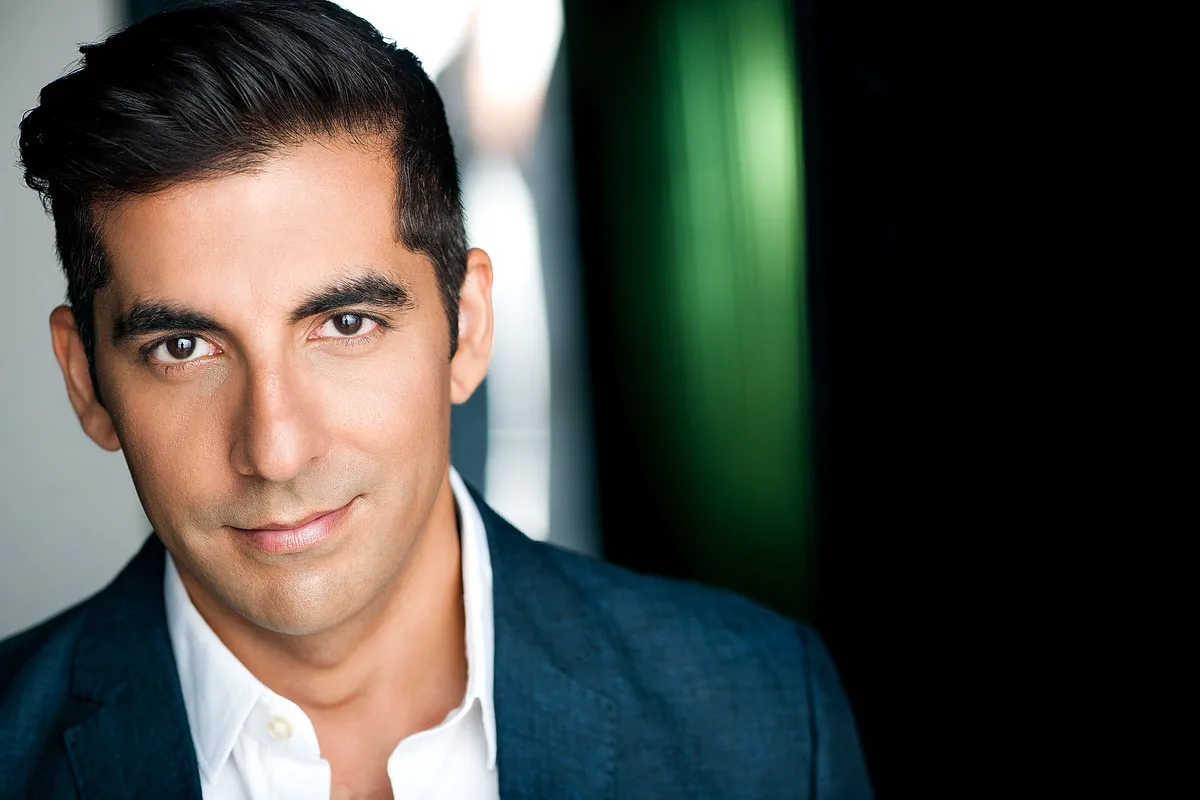
The actor requested conversations with Matt Selman and Cesar Mazariegos before making his decision.
According to his account, those meetings developed into a collaborative process in which he could raise concerns about the character.
He now describes his involvement as an opportunity to reclaim Apu, retaining recognizable qualities while moving away from elements that made the previous portrayal controversial.
His enthusiasm is an important part of the announcement.
It should not, however, be treated as proof that every viewer will agree with the new approach.
Manjula also has a new voice
Apu's return comes with another change to the original English-language cast.
His wife Manjula is now voiced by Janina Gavankar, whose acting credits include The Morning Show.
Her presence adds a family dimension to the episode.
The Simpsons is not merely restoring the Kwik-E-Mart owner. It is also reopening the possibility of stories about his household.
That distinction matters.
Apu was never exclusively a convenience store clerk whose dialogue existed to generate jokes about immigration or accents.
Over many seasons, the show developed his romantic relationships, marriage, children and friendships with other Springfield residents.
Those aspects already provided narrative opportunities extending beyond the elements that attracted the strongest criticism.
By bringing Manjula back with a new voice actor, the producers can explore those dimensions instead of treating Apu's return as a single nostalgic appearance.
Matt Selman told Variety that the Nahasapeemapetilon family is expected to appear more frequently in future episodes.
No specific episode schedule or detailed storyline has been announced.
The show previously struggled to address the controversy
The Revengening is not the writers' first attempt to acknowledge the issue.
In 2018, No Good Read Goes Unpunished featured a conversation between Marge and Lisa about a children's book containing material that had become offensive to contemporary readers.
The scene eventually introduced a visual reference to Apu.
At the time, some commentators considered the response dismissive, arguing that it presented criticism mainly as a shift in audience sensitivity rather than as a legitimate concern requiring more serious consideration.
The difference in 2026 is substantial.
Instead of relying on an indirect reference, the writers place Apu at the center of the story.
They create a situation in which the character can express frustration while the other residents acknowledge their inability to act.
That approach allows the series to preserve its self-referential comedy while offering a clearer acknowledgment of its own history.
The artistic success of that decision remains open to debate.
But the intention to stop avoiding the issue is considerably more explicit.
The casting change reflects a wider shift in American animation
Malhotra's appointment also belongs to a broader change in American voice acting.
In June 2020, The Simpsons announced changes to the casting of several characters from minority communities.
Alex Désert took over the role of Carl Carlson, previously voiced by Azaria.
Kevin Michael Richardson succeeded Harry Shearer as Dr. Julius Hibbert.
These decisions reflect an increasingly prominent question within animation.
What role should performers' cultural experiences play when assigning characters whose backgrounds form an important part of their identities?
There is not necessarily one answer suitable for every animated production.
Voice acting depends on performers' ability to portray people very different from themselves, and imagination remains central to the profession.
But the debate surrounding Apu also concerns the particular responsibility of representations that become widely recognized cultural references.
The issue is therefore not simply who stands behind the microphone.
It also concerns writing, characterization, narrative importance and the opportunities available to performers.
Changing the voice can be a meaningful step.
The writing will determine whether the character's broader development follows.
The Kwik-E-Mart can become part of Springfield again
For nearly nine years, Apu's silence gradually reduced the narrative importance of one of Springfield's most recognizable locations.
The Kwik-E-Mart has traditionally served as a gathering point for Homer, Bart and many other residents.
The store created opportunities for absurd comedy as well as episodes in which Apu could develop a personality distinct from the main cast.
His lack of dialogue inevitably made that environment more difficult to use.
In The Revengening, the return to the Kwik-E-Mart has symbolic importance.
Apu regains his workplace, his family and one of his most familiar customers.
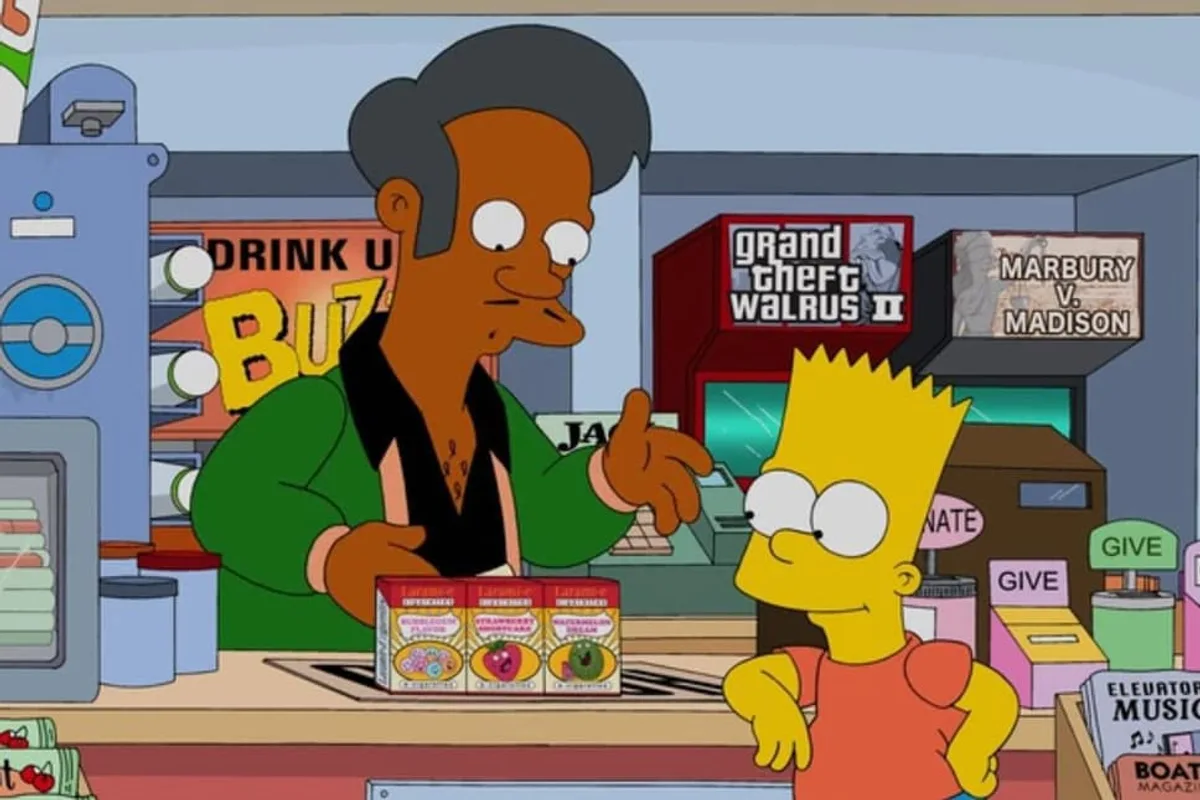
The location becomes more than a reminder of an earlier era.
It can function as a setting for new stories again.
That is arguably the central promise behind Selman's comments about future appearances.
For the return to become more than a publicity event, Apu will need stories that justify his presence beyond the controversy surrounding his voice.
Those stories could involve his family life, relationship with Homer or role within Springfield's community.
These remain possible directions rather than confirmed episode announcements.
Reconciliation does not mean the debate is over
The Simpsons creative team presents Apu's return as a positive decision.
Malhotra describes his performance as an opportunity for reclamation, while Selman wants the character to become an active presence again.
Both ambitions can coexist with the affection many viewers have felt for Apu across decades.
They do not mean every criticism of the old portrayal has disappeared.
Some viewers may welcome the casting while believing further writing changes are necessary.
Others may miss Azaria's performance or argue that the response has arrived remarkably late.
It would be premature to describe the initial reception as a single unified judgment.
The more meaningful test will come later.
One special episode can acknowledge past mistakes and generate an emotional moment.
A durable transformation depends on decisions made across future seasons.
The success of Apu's return will therefore become clearer through the stories the writers choose to give him next.
After nine years, Apu returns and The Simpsons acknowledges its hesitation
Apu's comeback is one of the most significant surprises of The Simpsons' thirty-eighth season.
Several facts are established.
The character began speaking again on October 18, 2026. Sunil Malhotra is his new original-language voice actor. Janina Gavankar plays Manjula. Matt Selman has confirmed plans to bring their family back in future episodes.
But the importance of this news extends beyond casting.
After years in which Apu appeared without truly participating in stories, the series has chosen to transform his silence into a narrative of revenge and reconciliation.
The device may seem excessive.
It nevertheless belongs to a longstanding Simpsons tradition of turning the show's own contradictions into comedy.
The difference is that the writers are no longer simply mocking viewers or television conventions.
They are acknowledging their own difficulty in handling a controversial character.
Future episodes will determine whether that self-criticism produces a meaningful and lasting change.
For now, Apu has a voice again, his family is present and he has a possible place in Springfield's ongoing stories.
Almost nine years after his last spoken appearance, that represents a substantial development.
The real challenge begins now: allowing Apu to become an engaging character because of the stories he tells, not only because of the controversy that once silenced him.