
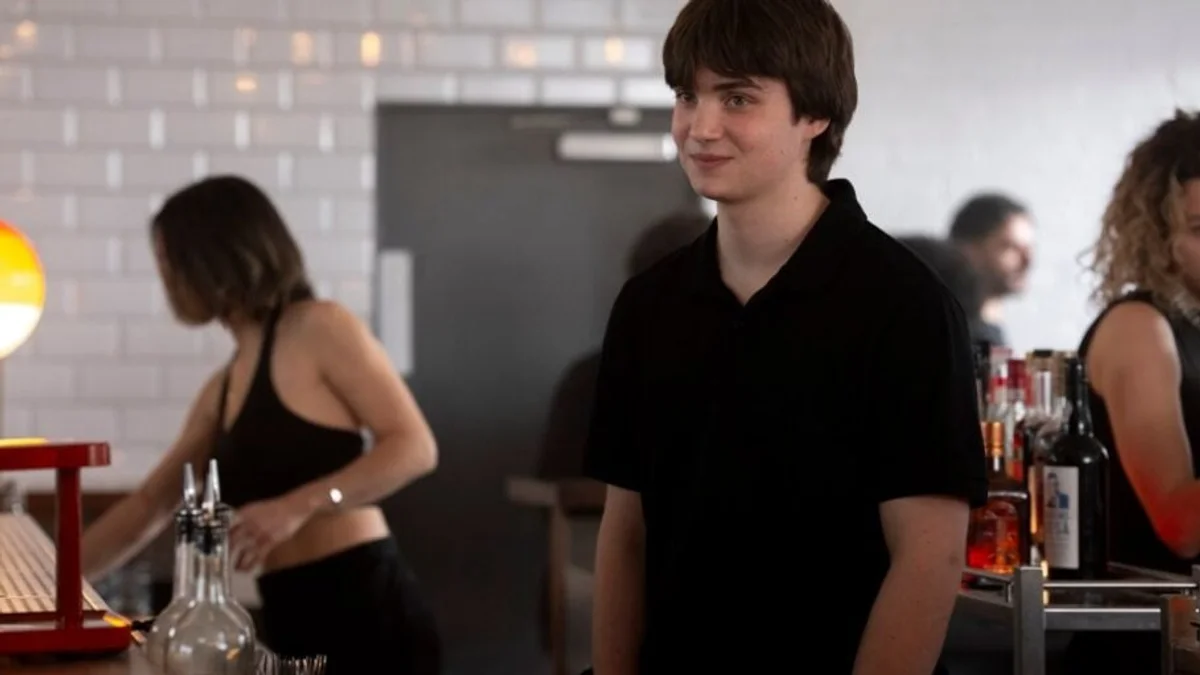
Three productions bring sudden attention to a young actor
Sometimes an actor's career accelerates so suddenly that several years of work appear to arrive at almost the same moment. Aran Murphy is experiencing that situation at 19. Two television series featuring him are currently airing on HBO, while a feature film shot more than two years earlier is about to reach theaters.
In Youth, he portrays Ruari, Sharon Horgan's son, who is struggling with a difficult transition into adulthood. In War, he plays Gabriel Duval, a teenager caught between family breakdown and a highly publicized legal dispute. In Klara and the Sun, he joins Jenna Ortega and Amy Adams under the direction of Taika Waititi.
The three productions belong to different genres, but each offers the young performer a character whose reactions are not always easy to explain. Family conflict is central to both television roles, while the science fiction film introduces him to a fictional environment considerably removed from everyday life.
Speaking to Variety, Murphy does not describe this concentration of work as the culmination of an established career. He focuses instead on what he has learned and the differences between the productions.
That approach also reflects the reality of his experience. He already had professional credits, including film work, but the autumn 2026 releases represent a much larger level of public exposure.
In Youth, he plays a son who is difficult to understand
Youth is a comedy-drama created by Sharon Horgan, whose previous work includes Catastrophe and Bad Sisters. She plays Alex, a divorced woman in her fifties attempting to rebuild her romantic life while continuing to manage the responsibilities of her family.
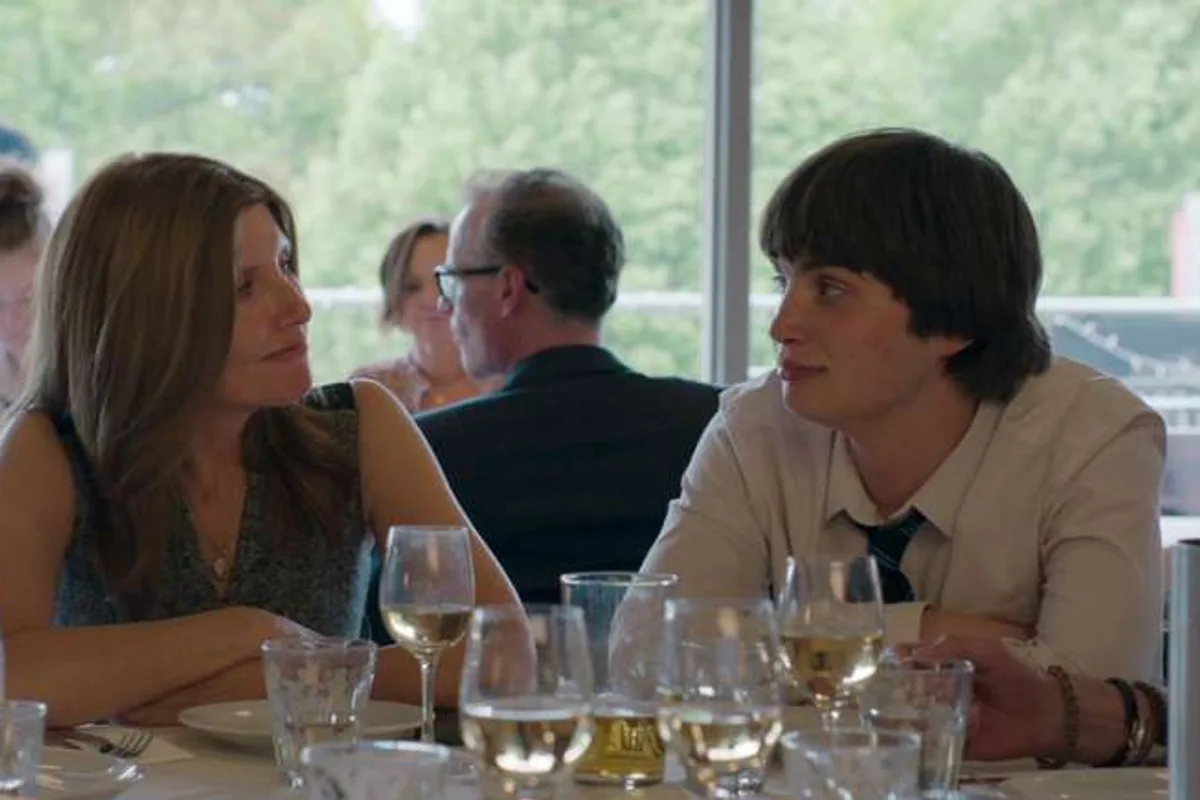
Those responsibilities include her son Ruari, played by Murphy. He has left university after a particularly difficult experience and returns home at a time when his relationship with his mother is already marked by frustration.
The series does not reduce their conflict to a conventional confrontation between a controlling parent and a rebellious teenager. Alex wants to regain some personal independence just as Ruari, who is expected to begin developing his own, struggles to find a direction.
That contradiction creates a relationship in which affection and irritation coexist. Alex wants to support her son, but she also wants her existence to stop revolving entirely around him. Ruari needs help while sometimes refusing to acknowledge his dependence.
Murphy explains in Variety that he drew on an experience he knows personally: leaving school and facing the uncertainty of decisions about education, work and adult life.
His circumstances have not been identical to Ruari's. However, he understands the feeling of suddenly being expected to make choices that could influence an entire future.
That connection gives him an emotional starting point without requiring him to confuse himself with the character.
Sharon Horgan cast him for his natural performance
Aran Murphy's selection for Youth was not simply a matter of his family name. In a September 27 interview with People, Sharon Horgan described an audition that immediately convinced her.
The creator wanted a young performer capable of making a complicated mother-son relationship feel authentic, without appearing to recite carefully constructed dialogue.
She was looking for the hesitation, silence and contradictory responses that often characterize real family relationships.
According to Horgan, Murphy possessed precisely those qualities. His audition immediately suggested the character she had imagined, and she quickly developed a maternal sense of closeness toward him during filming.
Her comments reveal what she needed from the performance. Ruari could not simply be an unpleasant young man. The audience also needed to understand why his mother remained concerned for him even when his behavior became difficult.
Much of the show's tension emerges from that ambiguity. Viewers may feel irritated by Ruari while recognizing his confusion. They may also understand Alex's exhaustion without assuming she has stopped loving her son.
That uncomfortable emotional territory is what makes Murphy's character interesting.
A character shaped by accusation and uncertainty
In his Variety interview, Murphy also discusses a sensitive storyline in Youth. Ruari leaves university after a rumor spreads about an encounter following a night of drinking.
The situation changes how other characters perceive him. It also creates uncertainty for the audience, which does not necessarily possess every piece of information needed to judge what happened.
Murphy explains that he chose to support his character internally. He wanted to understand Ruari's account and give him the emotional consistency required for a convincing performance.
However, he does not insist that viewers must share his interpretation. He believes audiences can reach their own conclusions.
That distinction matters in a series more interested in relationships than in delivering simple revelations. A character can contain contradictions, uncertainties and questionable behavior without the story immediately imposing a final moral judgment.
For an actor at the beginning of his career, this represents an interesting challenge. He must give Ruari a convincing inner life without personally resolving every question the writers have chosen to leave open.
War gives him another angry teenager
Only a short time after appearing in Youth, Murphy also emerged in War, the legal drama created by George Kay, whose credits include Lupin and Hijack.
Produced for HBO and Sky, War follows powerful London law firms becoming involved in a highly publicized legal conflict. The cast includes Dominic West, Sienna Miller, Phoebe Fox and Archie Renaux.
Murphy plays Gabriel Duval, the son of Carla, portrayed by Sienna Miller, and the stepson of Morgan, played by Dominic West. He appears prominently in the episode broadcast on October 15.
This time, the family conflict unfolds in an environment where private decisions can become weapons in a legal battle. Gabriel is not simply dealing with a separation. He is also caught in the strategies adults use to protect their interests.
That situation distinguishes War from Youth despite obvious similarities between the roles. Ruari reflects the uncertainty of becoming an adult. Gabriel lives within a family whose conflict is intensified by wealth, reputation and the legal system.
Both young men experience anger they cannot always direct constructively. Yet the emotion emerges from different circumstances and does not necessarily produce identical behavior.
A punch that made him nervous on set
Murphy recalls one of the more intimidating scenes he had to perform for War. Gabriel, intoxicated during a party, reacts violently to a remark about his parents' separation.
The scene requires a punch. Murphy explains that he had not previously performed that kind of action for a camera and was particularly concerned about accidentally injuring his scene partner.
The anecdote highlights a practical challenge of acting. Screen violence must appear credible while remaining controlled during production. A character's anger and an actor's safety precautions are entirely different realities.
Murphy attributes much of Gabriel's emotional consistency to George Kay's writing. He explains that the character's frustration was already clearly developed in the script, allowing him to understand the reaction without inventing an unrelated motivation.
This trust in writing returns repeatedly throughout his interview. In both Youth and War, the young actor emphasizes the work completed before he arrived on set.
It reveals a fairly specific approach to these early roles: finding the character's contradictions in the text before determining how to express them physically.
Klara and the Sun took him to an international production at 16
The third project is different. Klara and the Sun adapts Kazuo Ishiguro's novel under the direction of Taika Waititi.
Jenna Ortega portrays Klara, an artificial companion designed to support humans. Amy Adams plays the mother of Josie, a teenager portrayed by Mia Tharia. Murphy takes the role of Rick.
The story explores human relationships through the perspective of an artificial intelligence gradually discovering the emotions, contradictions and vulnerabilities of those around her.
For Murphy, the experience has a particular chronological significance. The film is reaching theaters in October 2026, but filming took place in early 2024, when he was only 16.
He tells Variety that he moved almost directly from school life to a film set in New Zealand. Working alongside Jenna Ortega, Amy Adams and Taika Waititi seemed almost unbelievable to him.
He describes the production as a major learning experience, emphasizing the kindness and availability of his collaborators and the opportunity to observe performers with considerably more experience.
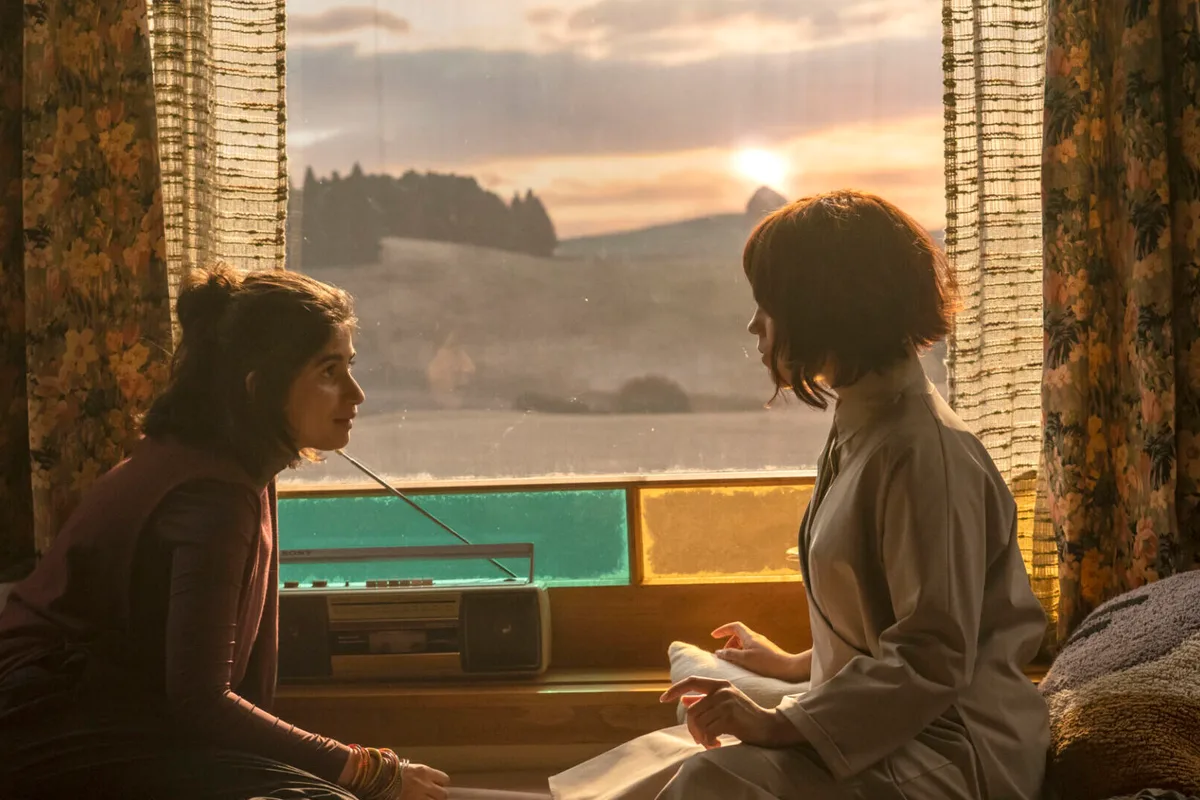
The delay between production and release also reflects a distinctive aspect of film acting. A young performer may finally see work completed years earlier, at an age when his priorities and methods were very different.
In Murphy's case, Klara and the Sun arrives when audiences already have the opportunity to discover him weekly in two television series.
A film about artificial intelligence that raises questions for him
Murphy does not discuss only the filming experience. He also uses the Variety interview to consider the ideas explored by Klara and the Sun.
Kazuo Ishiguro's story uses an artificial intelligence to observe human behavior. Klara has an appearance and functions designed to meet people's emotional needs, but her perspective reveals aspects of human relationships that the people themselves do not always recognize.
Murphy believes the story creates opportunities to discuss the importance of friendship, love and genuine human presence in a world increasingly shaped by technology.
He also expresses personal reservations about artificial intelligence, questioning whether its overall effects are beneficial to his industry.
That is not a technical assessment of AI systems. It is the perspective of a young artist beginning his career in a sector where digital tools may change established creative practices.
The contrast with the movie is interesting. The fiction imagines a machine capable of observing human life with apparent sensitivity. Murphy emphasizes the value of the relationships humans create with one another.
The two perspectives are not necessarily contradictory. A story can use an artificial intelligence as its central character while encouraging audiences to consider the limitations of technology in real life.
Cillian Murphy is a father before he is a cinematic influence
Another part of the interview naturally concerns Cillian Murphy. Aran's father is among Ireland's most recognized actors, particularly since winning the Academy Award for Best Actor for Oppenheimer.
The younger Murphy knows that their resemblance attracts attention. He nevertheless suggests that he does not consider them as physically similar as observers often claim.
The amused response also indicates the distance he would like to maintain between his personal identity and his father's public image.
Aran grew up in an artistic household. His mother, Yvonne McGuinness, works in visual art, while his father has developed an international acting career.
He acknowledges the benefits of growing up familiar with cinema and having conversations about performance. Watching Cillian Murphy on screen during childhood was not always comfortable, particularly when he played characters caught in violent situations.
He mentions Ken Loach's 2006 film The Wind That Shakes the Barley, which he hopes to revisit with an adult perspective.
When asked about his father's influence, however, Murphy emphasizes his support as a parent. Celebrity becomes less extraordinary when it is simply part of daily family life.
That does not mean growing up in a famous family brings no advantages or difficulties. The interview cannot measure those factors precisely. It establishes how the young actor understands his own experience.
He originally imagined a future in football
Acting was not always Aran Murphy's obvious ambition. He recalls originally imagining a future connected to football before developing a stronger interest in performance.
He was 11 when participating in a stage production that made a lasting impression. The experience helped him realize that acting might eventually become something he wanted to pursue professionally.
That transition from sport to theater matters to the way he describes his development. His decision to perform was not simply an attempt to continue a family tradition.
He remembers a concrete experience: appearing onstage and discovering the pleasure of playing a character before an audience.
His early professional work subsequently brought him into film and television. LOLA was among his screen credits before the concentration of releases in 2026.
The current projects therefore do not represent his absolute beginning, but rather the moment when earlier experiences are becoming visible to a much larger audience.
Two teenagers, two families and the same difficulty growing up
Ruari and Gabriel provide an opportunity to see how Murphy approaches related situations without necessarily repeating the same character.
In Youth, the conflict is primarily intimate. A mother and son must learn to understand their separate needs when their lives seem to be moving in different directions.
In War, family tension is amplified by money, public reputation and a legal conflict that transforms personal relationships into strategic arguments.
Both young men are experiencing a period when they want control over their futures without yet possessing all the means required to exercise it.
That produces anger, but also vulnerability, which Murphy attempts to make visible.
Working with these characters offers a valuable learning experience. It requires him to portray reactions that may be hostile without forgetting the emotional reasons behind them.
The challenge is avoiding the assumption that an expression of anger defines a person's entire identity.
Television is particularly suited to that development, providing several episodes to explore contradictions that cinema often needs to establish within a more limited running time.
A promising early career without a predetermined path
Murphy approaches his new visibility with a degree of caution that contrasts with his busy release schedule. In Variety, he explains that he does not know precisely what his next project will be.
He continues auditioning and remains open to different possibilities. He does not present his collaborations with Sharon Horgan, George Kay and Taika Waititi as guarantees of an established acting career.
That uncertainty is entirely consistent with the position of a 19-year-old performer. Several releases arriving close together may attract considerable attention without determining the opportunities that will follow.
His family name will probably remain a subject of conversation. However, the three productions currently associated with him already provide other ways to examine his work: the portrayal of frustration, the exploration of contradictory characters and a willingness to learn in very different filmmaking environments.
Youth continues its weekly release, War is airing through HBO and Sky, and Klara and the Sun begins reaching theaters from October 21 in certain territories, with October 23 announced for several markets.
That schedule gives audiences multiple opportunities to see the young actor working in contrasting genres.
The most interesting question is therefore not whether he will become the next Cillian Murphy. It is what kind of actor Aran Murphy wants to become when he no longer needs his surname to introduce him.