
Jesse Eisenberg reflects on the role that changed his career
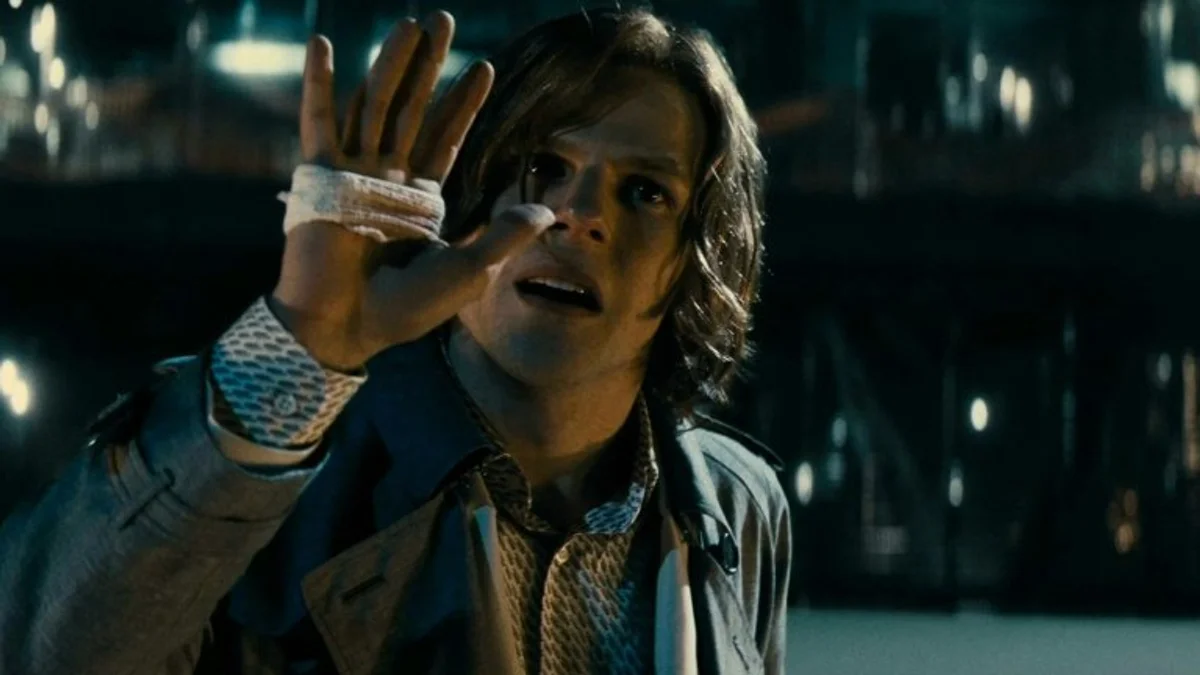
Jesse Eisenberg has not forgotten the response to his portrayal of Lex Luthor.
Ten years after Batman v Superman: Dawn of Justice, the actor continues to believe that the experience affected his professional trajectory.
During a discussion at the BFI London Film Festival on October 18, 2026, he said he found it increasingly difficult to secure roles in major studio productions after receiving a Golden Raspberry Award for Zack Snyder's superhero film.
According to remarks published by Variety, Eisenberg interpreted the response as a sign that the industry no longer particularly wanted him in superhero movies.
The situation did more than disappoint him.
It frightened him.
Eisenberg described acting as an unstable profession in which performers constantly worry about whether their careers are improving or declining.
Facing the possibility of fewer opportunities in major productions, he began exploring a different way to sustain his artistic career.
Writing and directing offered a measure of independence from decisions made by casting executives.
These remarks are not the announcement of a new DC controversy.
They represent an actor's account of how a difficult professional experience influenced his transition toward creating his own films.
A Razzie for Lex Luthor after an Academy Award nomination
Eisenberg's earlier career makes the episode particularly striking.
In 2010, he played Mark Zuckerberg in David Fincher's The Social Network.
The performance earned him an Academy Award nomination for Best Actor and established him as one of the most closely watched performers of his generation.
Several years later, Warner Bros. cast him as Lex Luthor in Batman v Superman: Dawn of Justice.
Luthor is among Superman's most recognizable enemies, but Snyder and Eisenberg approached him differently from many previous adaptations.
Instead of a consistently restrained industrial magnate, the film presented an eccentric, unpredictable technology entrepreneur.
The interpretation divided critics and audiences.
Some regarded it as a contemporary reinvention, while others considered the performance excessively mannered.
In 2017, Eisenberg received the Golden Raspberry Award for Worst Supporting Actor.
The distinction is satirical.
The Razzies are not an objective evaluation of acting ability or a collective judgment issued by studio casting executives.
Nevertheless, their media visibility can contribute to a negative professional reputation, particularly when the award involves a blockbuster watched by an enormous audience.
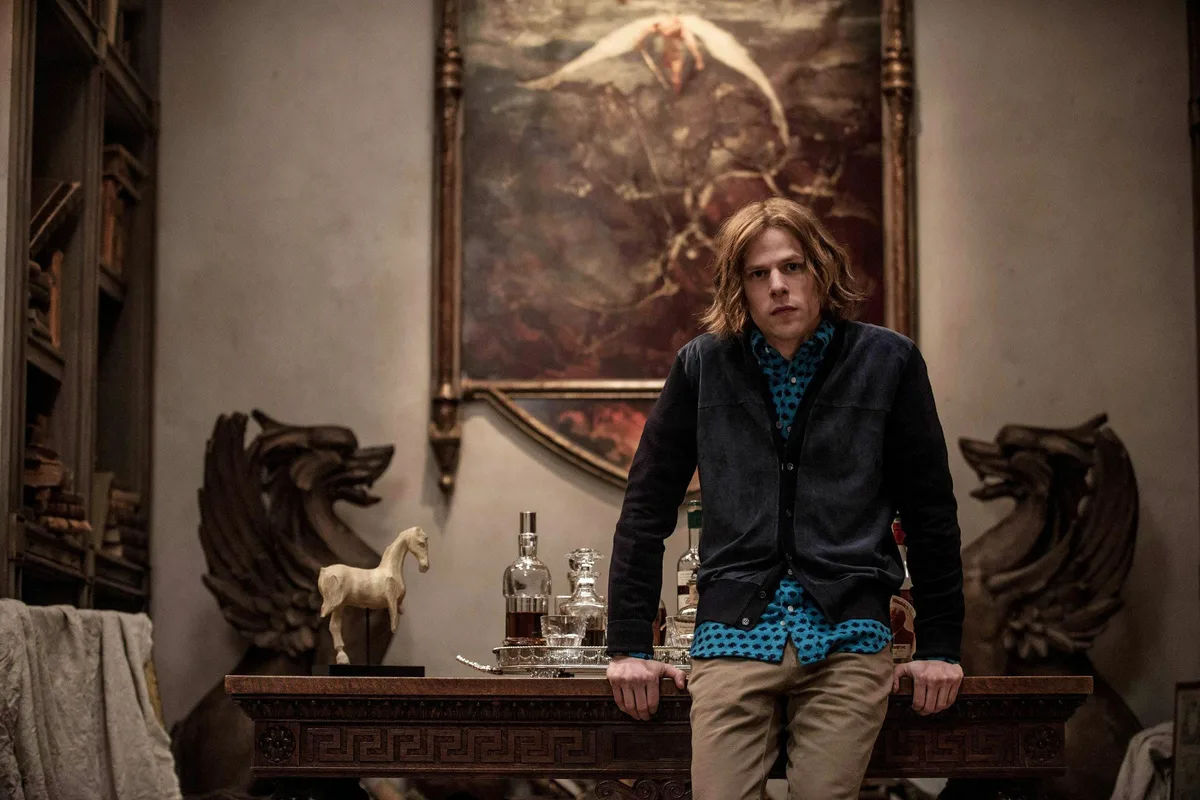
Eisenberg believes that this was precisely what happened to him.
His testimony does not provide direct evidence of individual studio decisions, but it describes the professional consequences he says he experienced.
Batman v Superman became a deeply divisive blockbuster
Released in March 2016, Batman v Superman brought two of DC's most recognizable superheroes into a confrontation intended to establish a larger shared cinematic universe.
Ben Affleck portrayed Batman, Henry Cavill returned as Superman and Gal Gadot introduced a new version of Wonder Woman.
The production carried enormous commercial expectations.
It was designed to continue the story introduced in Man of Steel while preparing the audience for Justice League.
The movie attracted substantial theatrical audiences, but its critical reception was significantly less enthusiastic.
Reviewers questioned the screenplay's construction, its consistently dark tone and the way multiple storylines were brought together.
Lex Luthor became a central part of those discussions.
Eisenberg played an antagonist required to manipulate two exceptionally powerful superheroes without possessing comparable supernatural abilities.
His eccentric personality contrasted sharply with the movie's prevailing seriousness.
That contrast was presumably intentional, but it also made the performance particularly visible in negative assessments.
A creative choice can be internally consistent without persuading its audience.
For an actor, the additional problem is being personally associated with the final result, even when that result depends on many decisions involving writing, direction and editing.
A commercially successful movie can still damage an actor's image
Eisenberg's experience illustrates a recurring paradox in studio filmmaking.
A production can generate substantial revenue while leaving certain performers with a damaged reputation.
Box office figures measure ticket sales.
They do not establish how casting executives evaluate a particular actor's performance.
A performer can therefore participate in a commercially prominent film without receiving the professional benefits normally associated with a successful role.
In Eisenberg's case, that difference appears to have been especially difficult.
During a December 2024 appearance on the Armchair Expert podcast, he had already discussed the impact of Batman v Superman on his career.
He explained that the exceptional visibility of the movie made negative reactions more damaging.
He also emphasized that he had enjoyed participating in the production and did not believe his collaborators had deliberately wronged him.
Those earlier comments provide important context for his October 2026 statements.
Eisenberg is not alleging an organized conspiracy against him.
He is describing the feeling that he had become less attractive to certain industry decision-makers following a controversial performance.
Directing became a way to regain control
In response, Eisenberg decided not to rely entirely on acting offers to determine his future.
He invested more of his efforts in screenwriting and filmmaking.
This did not mean abandoning acting.
After Batman v Superman, he continued appearing in productions including The Art of Self-Defense, Vivarium, Zombieland: Double Tap and Sasquatch Sunset.
However, his career increasingly made room for personal projects operating outside the traditional blockbuster model.
When You Finish Saving the World explored the difficult relationship between a mother and son whose ambitions and personalities seem incompatible.
A Real Pain examined family tension through two cousins traveling together in Poland.
In these films, Eisenberg could determine the characters, dialogue, emotional structure and direction of the story himself.
That represents a substantial change from performing in a major studio production whose final screenplay and editing decisions remain largely beyond an actor's control.
His latest festival comments therefore give additional meaning to his development as a director.
Writing and filmmaking were also ways of responding to uncertainty about his acting prospects.
A Real Pain turned creative independence into recognition
The most visible success of this second phase of Eisenberg's career remains A Real Pain.
Released in 2024, the film follows two cousins played by Eisenberg and Kieran Culkin during a journey through Poland connected to their family history.
It combines uncomfortable humor, personal relationships and questions about the inheritance of historical trauma.
Eisenberg wrote and directed the film while also playing one of its central characters.
The project received substantial critical recognition.
It earned him an Academy Award nomination for Best Original Screenplay, while Culkin won the Oscar for Best Supporting Actor.
That success does not demonstrate that the Batman v Superman experience was necessary for Eisenberg to become a filmmaker.
He already possessed creative ambitions and a recognizable interest in character-driven storytelling.
However, his recent remarks indicate that difficulties in securing acting roles increased his motivation to pursue those ambitions.
The professional setback he describes did not end his career.
In his account, it helped change its direction.
A revealing story about Kieran Culkin and Emma Stone
During the same London Film Festival discussion, Eisenberg also recalled difficulties encountered during the making of A Real Pain.
He said the production team had worried about whether Kieran Culkin would reach the filming location in Poland as planned.
According to Eisenberg, producer Emma Stone personally accompanied Culkin on the journey.
He told the story humorously, recalling how Culkin continued to approach the work with considerable spontaneity once filming began.
Eisenberg had prepared for a more controlled production process but eventually adjusted to his co-star's energy.
The anecdote highlights the difference between his responsibilities as a performer and as a filmmaker.
As an actor, Eisenberg interprets a character within a structure created by others.
As a director, he must manage the collaboration and accept that unexpected approaches may occasionally work better than the original plan.
That adaptability has become an important part of his creative identity.
The Debut confirms his growing career behind the camera
The comments about Batman v Superman arrived as Eisenberg presented his third feature as director.
The Debut, starring Julianne Moore and Paul Giamatti, closed the 70th BFI London Film Festival on October 18, 2026.
The film follows a reserved woman who joins a community theater production and discovers an unexpected form of personal recognition.
Eisenberg drew on childhood memories while developing its story about performance, belonging and power within creative communities.
Moore's involvement also demonstrates his ability to attract established performers to projects he writes and directs.
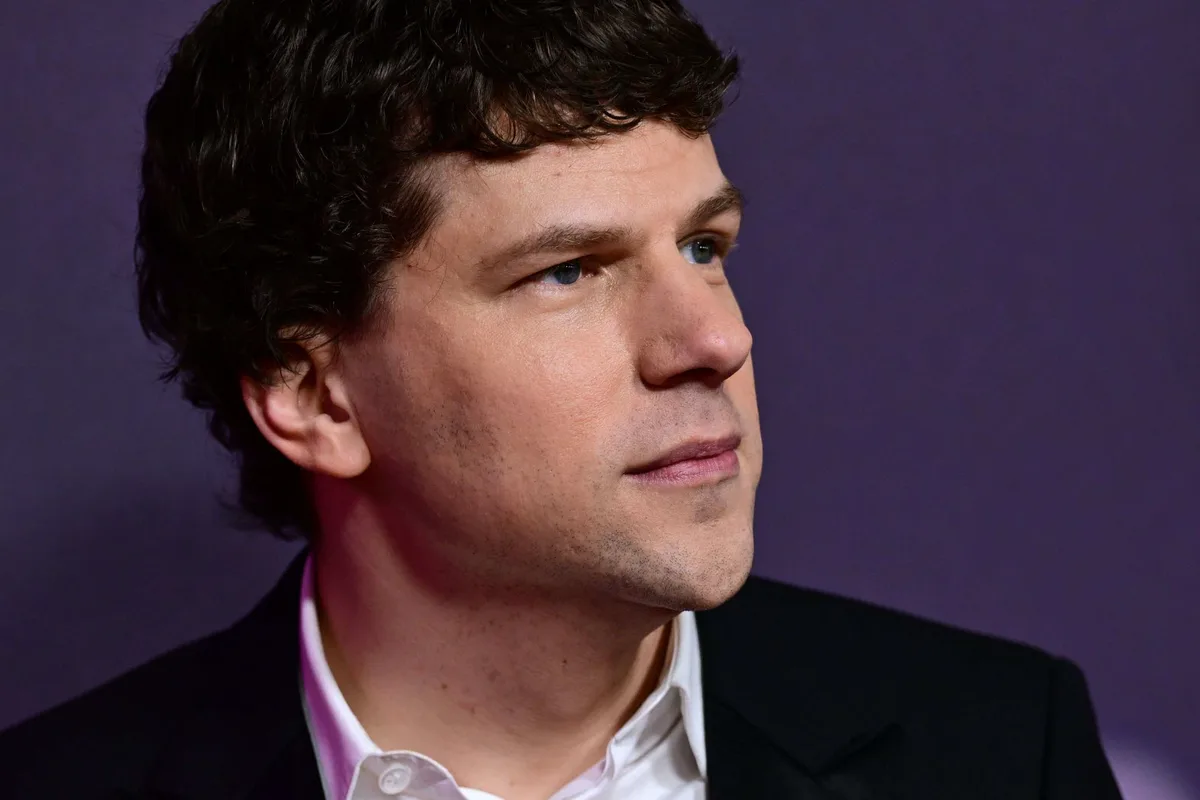
The contrast with his recollections of career difficulties is striking.
Ten years after an experience that he says reduced his access to major studio roles, Eisenberg is presenting his own film at the closing gala of an international festival.
That does not mean he has escaped the economic constraints of filmmaking.
His productions still depend on financing, partners and distribution arrangements.
But they allow him considerably greater influence over his artistic identity.
One poorly received role cannot define an entire career
Eisenberg's experience raises a question extending well beyond Batman v Superman.
How easily can an industry reduce an actor to the reception of one character?
Major franchises have extraordinary visibility.
A controversial performance in a blockbuster may receive far more attention than an acclaimed role in an independent production.
That exposure can create enormous opportunities, but it can also amplify negative judgments.
In Eisenberg's case, it would be inaccurate to claim Hollywood rejected him permanently.
He continued acting in numerous projects after 2016.
His testimony concerns the difficulties he says he faced securing certain studio roles and the fear those experiences created.
There is a fundamental difference between a credible personal account and proof of systematic exclusion by an entire industry.
The Razzie itself should also be treated cautiously.
It is a deliberately mocking award that cannot summarize a performer's ability or professional potential.
Nevertheless, the extent to which Eisenberg believes the award affected his prospects reveals the power of negative symbols within contemporary Hollywood.
From Lex Luthor to acclaimed filmmaker
Eisenberg is not announcing a return to DC through his latest comments.
He has not confirmed plans to reprise Lex Luthor.
Instead, he is explaining how a difficult professional experience encouraged him to reconsider his position within the industry.
In 2016, he appeared in a major blockbuster whose reception would remain associated with his name.
In 2026, he is presenting another film of his own and reflecting on the path that brought him there.
His story is not that of an actor who vanished after a setback.
It is the story of an artist who continued performing while increasingly creating his own material.
The experience also demonstrates that careers are not shaped exclusively by commercial success.
A blockbuster can damage an actor's image, while a much smaller film can generate significant artistic opportunities.
Eisenberg turned his fear of declining acting prospects into motivation to write and direct.
A decade after Batman v Superman, the most meaningful part of his career may no longer be the Razzie he received, but the work he chose to create afterward.