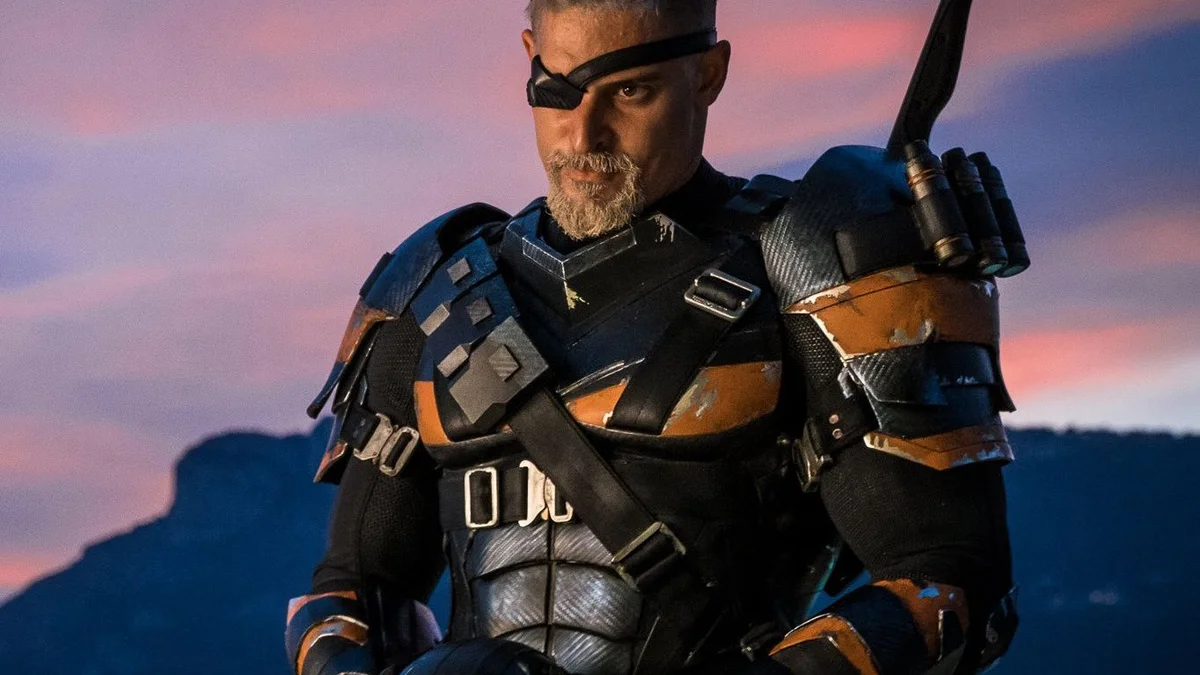
Ben Affleck envisioned a psychological revenge thriller
For years, the Batman movie that Ben Affleck intended to direct has remained one of superhero cinema's most intriguing abandoned projects.
Audiences knew its intended director, leading actor and central villain. The details of the storyline were considerably less clear.
Joe Manganiello has now provided a more complete picture.
In his memoir Bloodlines, the actor recalls what Affleck told him when offering him the role of Deathstroke, the film's principal antagonist.
According to Manganiello, Affleck wanted to create a superhero variation on David Fincher's 1997 thriller The Game.
The comparison reveals a great deal about the proposed direction.
In The Game, a man's existence becomes increasingly controlled by mysterious events that undermine his relationships, confidence and understanding of reality.
Affleck reportedly intended to apply a similar structure to Bruce Wayne.
Instead of making Batman confront a threat capable of destroying Gotham or the entire planet, the story would have attacked the man behind the mask.
The battlefield would have consisted of Bruce Wayne's secrets, relationships and personal vulnerabilities.
Deathstroke wanted to dismantle Bruce Wayne's entire life
The central motivation was revenge.
Deathstroke would have been led to believe that Batman had killed his son.
That conviction would have driven Slade Wilson to construct a calculated campaign against Bruce Wayne.
The character was not simply pursuing money or the satisfaction of defeating a famous opponent.
He wanted Bruce Wayne to suffer.
Manganiello describes a plan in which Deathstroke would exploit knowledge of Batman's secret identity to target the people most important to him.
This distinction gives the premise unusual dramatic force.
The stakes would not be measured only by the power of weapons or the number of people endangered.
They would depend on the emotional significance of the victims.
Bruce Wayne built his adult identity around a childhood tragedy.
An enemy deliberately targeting his remaining relationships would threaten to recreate that trauma and challenge the reasons he became Batman.
However, the account remains a description of the proposed film.
These events were never presented in a completed production.
Commissioner Gordon was supposed to die
The most shocking revelation concerns James Gordon.
According to Manganiello, Deathstroke was supposed to murder the Gotham City police commissioner during his revenge campaign.
In Batman comics and their screen adaptations, Gordon is usually among the few institutional figures Bruce Wayne can genuinely trust.
His loyalty exists beyond the familiar tensions between Gotham's police department and its masked protector.
Killing him would therefore have meant considerably more than eliminating a supporting character.
It would have removed a central ally while demonstrating that the film was willing to endanger figures traditionally considered essential to the Batman mythology.
J.K. Simmons played Gordon in the DC cinematic continuity associated with Affleck's Batman.
However, his participation in the canceled solo feature has not been established as a confirmed casting agreement.
Manganiello's revelations describe narrative plans, not scenes known to have been filmed with Simmons.
That distinction is essential when reconstructing an unproduced movie.
Alfred would have been kidnapped and the Batcave invaded
Gordon was not the only person targeted in the planned story.
Manganiello says Deathstroke would also have taken Alfred Pennyworth hostage.
Alfred's importance to Bruce Wayne extends far beyond his duties as a butler or technical assistant.
He represents one of the character's most enduring family relationships.
Threatening him would have allowed Deathstroke to attack Batman on an intensely personal level.
The assassin was also supposed to enter the Batcave, where Bruce stores the equipment, information and physical evidence of his double life.
This would have represented a particularly significant breach of security.
The Batcave is traditionally one of the few places where Batman can prepare his operations and regain control of a situation.
Having his enemy infiltrate that sanctuary would demonstrate that none of his remaining refuges were safe.
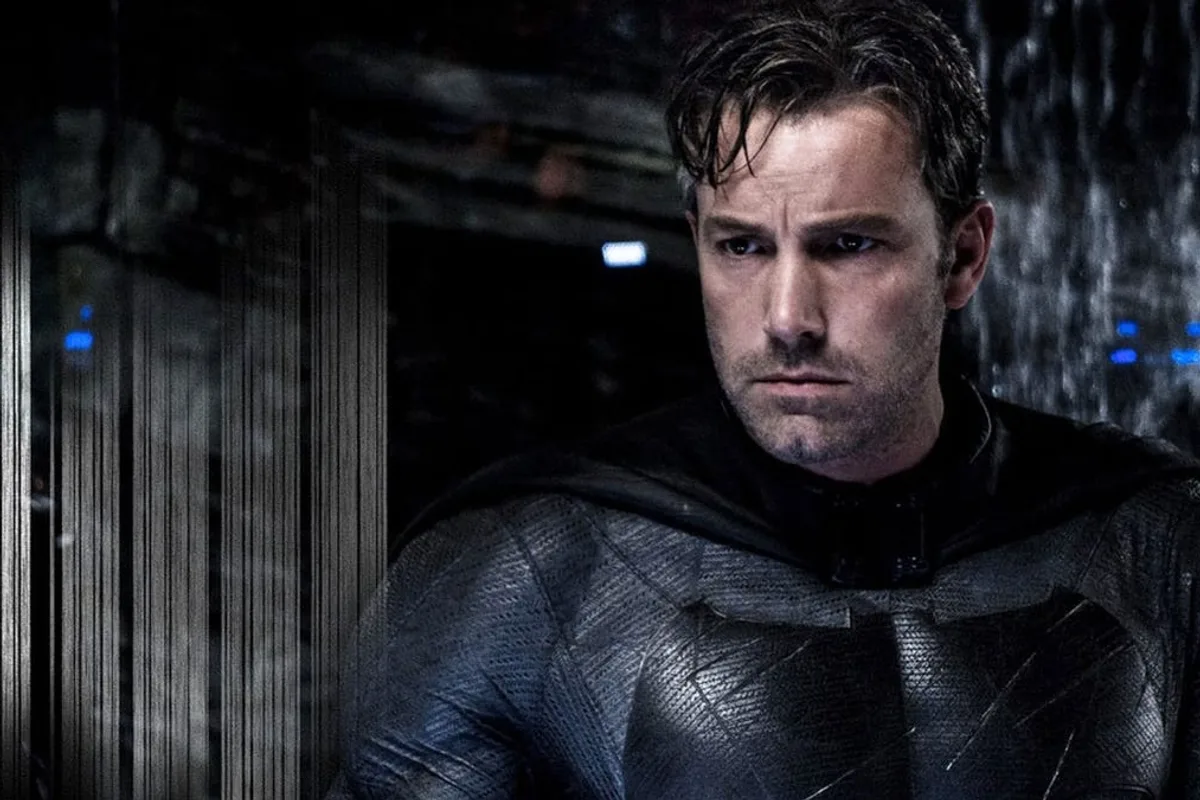
Together, these ideas suggest a thriller built around the protagonist's increasing inability to protect his own environment.
Deathstroke would not merely have been dangerous in combat.
He would have been a predator capable of anticipating Batman's responses and turning his personal relationships into weaknesses.
Batgirl would have joined a nearly fatal confrontation
Bloodlines also provides details involving a character who had not previously appeared in this version of the DC screen universe: Batgirl.
According to Manganiello, the proposed movie contained a fight in which Deathstroke would nearly kill Batman and Batgirl.
The two heroes would ultimately escape using an elevated train.
The sequence suggests a physically intense action film in which the assassin could compete against multiple highly trained opponents.
It also indicates that Affleck's story would not necessarily have focused exclusively on Bruce Wayne.
Introducing Batgirl could have expanded his relationship with other Gotham vigilantes.
However, Manganiello does not identify an actress attached to the character.
It would therefore be incorrect to associate Leslie Grace automatically with the canceled Affleck production.
Grace was cast for a different Batgirl film that was subsequently shelved.
These were distinct projects at different points in DC's development history.
Batgirl's involvement in Affleck's film remains part of Manganiello's account of the proposed story, with no confirmed screen performance or production footage.
The final battle took inspiration from Batman: Arkham Asylum
The movie's climax was reportedly designed as a direct confrontation between Batman and Deathstroke in the streets of Gotham.
Manganiello recalls Affleck discussing an animated sequence connected to the Batman: Arkham Asylum video game as a visual reference for the final fight.
The connection is interesting because it illustrates the influence of Batman video games on modern representations of the character.
The Arkham series is particularly recognized for close-quarters combat, fluid movement and spectacular demonstrations of Batman's physical abilities.
Released in 2009, Batman: Arkham Asylum helped establish a combat style built around technique, speed and anticipation.
Affleck apparently wanted to translate some of that physical intensity into live action.
However, this would not have been an official adaptation of the game's storyline.
The connection concerned the intended visual language of an action sequence.
Manganiello's recollection does not provide enough detail to reconstruct the exact choreography that would have been filmed.
Nevertheless, a climactic duel between two highly trained human fighters would have distinguished the project from superhero films that escalate toward worldwide destruction.
Deathstroke was meant to become a major DC movie villain
For Joe Manganiello, the canceled Batman film would have provided the opportunity to turn a brief screen appearance into a substantial role.
The actor appeared as Deathstroke in the 2017 theatrical release of Justice League, in a scene involving Lex Luthor that suggested future developments within the shared DC universe.
Speaking to Entertainment Tonight in March 2021, Manganiello explained that he had originally been cast as the antagonist of Affleck's solo Batman movie.
His Justice League appearance was intended to establish that future confrontation.
The canceled feature would therefore have been his first opportunity to explore Slade Wilson as a central cinematic character.
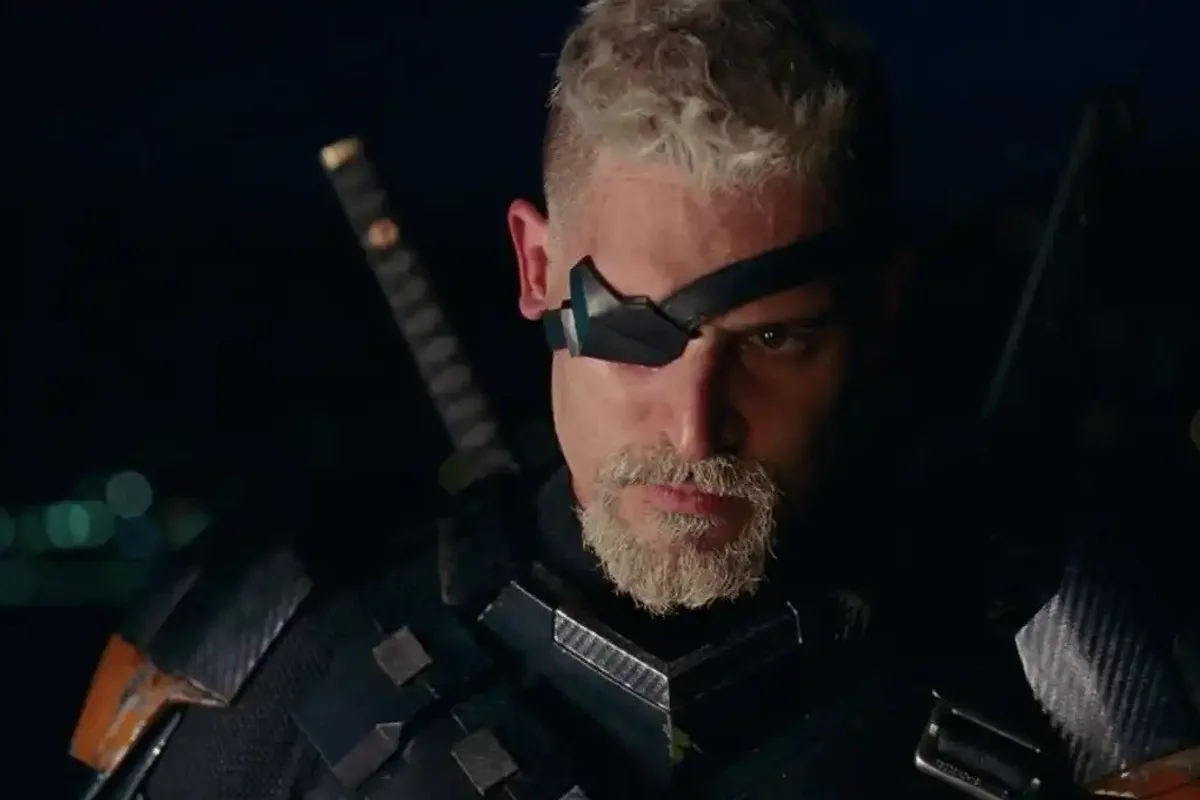
Deathstroke possesses several qualities that would have made him a credible opponent for Affleck's Batman.
He is an experienced fighter, skilled tactician and methodical assassin.
His threat does not necessarily depend on extraordinary powers or fantastical technology.
Opposite Affleck's older and more physically aggressive Batman, the confrontation could have examined the limits of two formidable combatants.
But the proposed storyline's real distinction lay in combining physical violence with psychological destruction.
Deathstroke intended to understand Bruce Wayne well enough to attack his private life as effectively as his body.
Affleck faced an enormous creative workload
Manganiello also recalls expressing concern about the number of responsibilities Affleck intended to assume.
The filmmaker was attached to star, direct, co-write and produce the movie.
Combining those duties is not unprecedented in Hollywood.
Affleck had already demonstrated his ability to direct and act in major projects, including The Town and Argo.
Nevertheless, a superhero production within an interconnected cinematic universe presents additional demands.
It requires substantial technical coordination, complex action sequences, visual effects and the management of studio expectations.
Manganiello remembers pointing out the extent of that workload.
His recollection does not establish that those responsibilities independently caused the cancellation.
He describes a conversation about the project's ambition, not a documented studio decision based on one specific concern.
Justice League deeply affected Affleck's experience with DC
The history of the unmade solo film cannot be separated from the difficulties surrounding Justice League.
The 2017 production experienced major changes after Zack Snyder departed and Joss Whedon oversaw extensive additional filming.
Affleck recently revisited that period during an appearance on the Happy Sad Confused podcast.
According to comments reported by Variety, he described the Justice League reshoots as one of the most negative experiences of his career.
He discussed production difficulties, creative disagreements and personal circumstances.
Those statements provide important context for the abandonment of his Batman project.
They do not justify reducing the decision to a single cause.
The actor's circumstances and Warner Bros.' corporate and creative decisions evolved over several years.
Any retrospective account should therefore distinguish personal testimony, studio strategy and the observable outcome.
Deathstroke also lost his proposed solo movie
The cancellation of Affleck's Batman did not immediately end every possibility for Deathstroke.
Manganiello has explained in several interviews that Warner Bros. subsequently considered developing a film centered on the assassin.
Gareth Evans, known for The Raid, was attached to direct.
That project could have explored Slade Wilson through a more self-contained action story.
It also failed to move into production.
Manganiello has discussed other possible appearances within the former DC Extended Universe.
Some abandoned versions of projects associated with Suicide Squad might have included Deathstroke.
None of these possibilities should be presented as a movie currently in production.
They belong to the history of projects proposed, revised or abandoned before the restructuring of DC Studios.
Matt Reeves' Batman belongs to a separate continuity
As Affleck moved away from directing his solo film, Warner Bros. continued developing a different interpretation of the character.
Matt Reeves eventually directed The Batman, released in 2022 with Robert Pattinson in the leading role.
That film established a separate continuity centered on a younger version of Bruce Wayne.
This does not mean the Deathstroke revenge storyline was simply rewritten for Pattinson.
Reeves' movie has its own characters, antagonists and filmmaking identity.
It should also be distinguished from the newer DC Universe developed under James Gunn and Peter Safran.
In January 2023, DC Studios introduced plans for The Brave and the Bold, another project involving Batman.
Manganiello's recent revelations do not announce his participation in that production.
They do not confirm Deathstroke's return or the revival of Affleck's abandoned movie.
Why the canceled movie still fascinates fans
The storyline Manganiello describes contains several elements that help explain the project's enduring appeal.
First, it offered a personal antagonist capable of attacking Bruce Wayne without threatening to destroy the entire world.
Second, it had an identifiable artistic direction, combining psychological thriller influences associated with David Fincher and the physical action style of the Arkham games.
Finally, it would have confronted Affleck's older Batman with an enemy capable of endangering his allies, family relationships and even his secret headquarters.
On paper, that combination promised something substantially different from the team-based spectacle of Justice League.
However, a promising screenplay is not automatically evidence that a finished movie would have been successful.
Direction, editing, acting and the balance of competing ideas would ultimately have determined its quality.
Those elements cannot be evaluated for a feature that was never completed.
This is precisely what makes abandoned projects so unusual.
Their creative potential can be discussed indefinitely, while their possible weaknesses remain impossible to measure.
The Batman movie audiences will probably never see
Joe Manganiello's memoir provides a substantially clearer picture of the Batman movie Ben Affleck hoped to make.
Deathstroke would have murdered Gordon, kidnapped Alfred, invaded the Batcave and confronted Batman and Batgirl before a final duel across Gotham.
The resulting story resembles an unusually brutal revenge thriller, centered on the psychological destruction of its protagonist rather than a global catastrophe.
However, the revelations do not change the project's industrial status.
The movie was abandoned. There is no completed production, confirmed release date or officially announced revival.
Affleck's Batman has since given way to other cinematic versions of the character.
Bloodlines therefore does not promise a return.
It offers a valuable retrospective account of a creative possibility lost during the transformation of DC's cinematic universe.
One detail remains particularly striking.
In the Batman film Affleck imagined, Deathstroke did not need to destroy Gotham to win.
He only needed to convince Bruce Wayne that everything he loved could be taken away.