
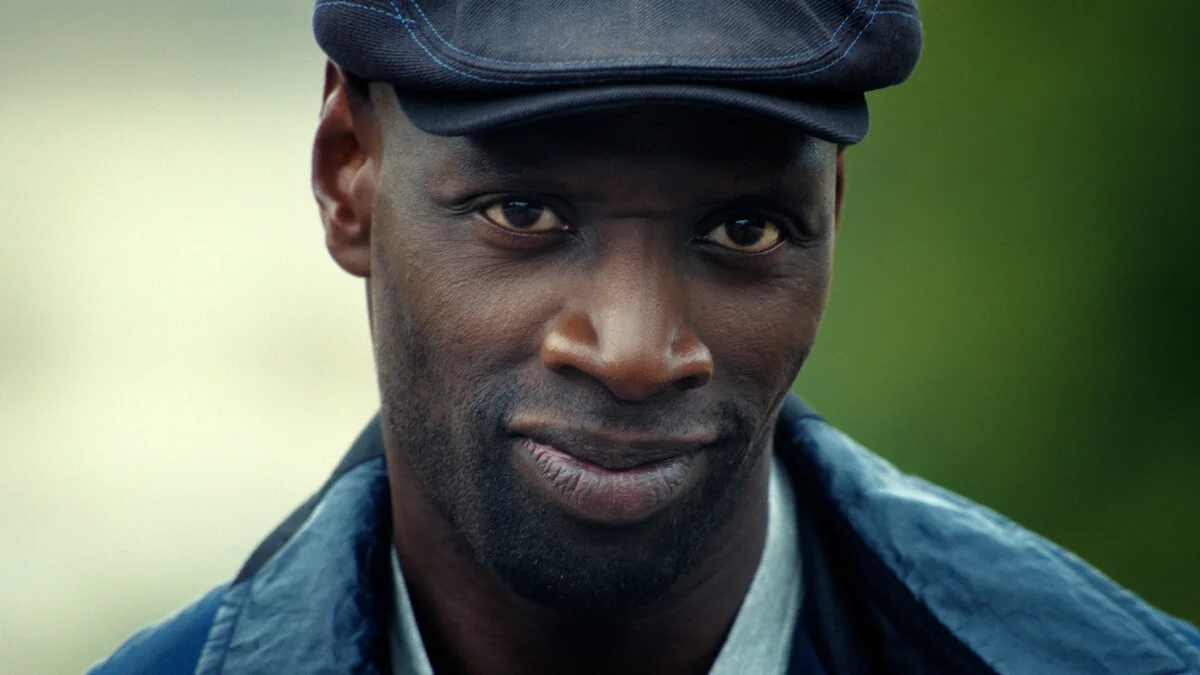
All eight episodes of Lupin Part 4 arrive October 23
Netflix has confirmed that Lupin Part 4 will premiere globally on Friday, October 23, 2026.
All eight episodes will be released simultaneously, according to the company's official French programming calendar and the September 14 announcement published through Netflix Tudum.
As of October 16, the new installment is still one week away.
Its episodes have not premiered, and no claims can yet be made about the completed storyline, critical reception or viewing performance.
Netflix continues to use the official designation Part 4, although viewers often describe the installment as Season 4.
That terminology follows the structure used throughout the show's history.
The third part premiered in October 2023, leaving approximately three years between the real-world releases.
Within the fictional narrative, a longer interval has passed.
The fourth part begins four years after Assane's decision to surrender to the authorities.
That time jump allows the story to reopen with a character who appears to have accepted his circumstances.
In Lupin, however, apparent stability has rarely lasted very long.
Four years later, Assane is still behind bars
The ending of Part 3 marked a significant change in Assane Diop's life.
After repeatedly escaping the police and manipulating his enemies, he voluntarily surrendered to protect the people closest to him.
Claire, their son Raoul and his other loved ones had spent years living with the consequences of his elaborate schemes.
Netflix's official synopsis confirms that Assane remains in prison when Part 4 begins.
He no longer wants to plan another spectacular robbery.
Instead, he intends to complete his sentence, abandon the identity of Lupin and fulfill a promise to his son.
The plan is to travel to Senegal and meet their extended family.
This represents a meaningful development for a character whose criminal adventures have always been connected to intensely personal motivations.
Much of the earlier story concerned the injustice suffered by Assane's father, Babakar.
His pursuit of the truth brought him into conflict with wealthy and influential enemies, while repeatedly forcing him to hide information from the police and his own family.
Even when his schemes succeeded, they created new problems.
Surrendering was therefore a form of sacrifice.
Assane accepted the loss of his freedom in the hope that Claire and Raoul could eventually live without fear.
Part 4 begins just as that decision might finally offer a path toward a different future.
Unfortunately, someone has decided to resurrect Lupin without his permission.
A mysterious copycat targets multiple museums
Netflix has revealed a premise designed to turn Assane's familiar skills against him.
While he is still imprisoned, a mysterious announcement signed "Lupin" promises simultaneous robberies at several museums.
Authorities respond by strengthening security.
The precautions prove insufficient.
The robberies take place as announced, and the evidence appears to point directly toward Assane.
The official synopsis introduces an even more troubling detail.
Surveillance footage apparently places Assane inside one of the museums during a robbery in which police captain Sofia Belkacem is seriously injured.
How could a man who has remained in prison be recorded at the scene of a crime?
The question forms part of the central mystery.
It would be easy to speculate about disguises, lookalikes, manipulated footage or an elaborate conspiracy.
None of those explanations has been confirmed by Netflix.
The established facts are that someone is using the Lupin identity, carrying out the announced crimes and leaving evidence that implicates Assane.

The decision to focus on museums brings the series back toward one of its earliest defining elements.
The first episode famously opened with a robbery at the Louvre.
Since then, valuable objects, prestigious locations and elaborate security systems have repeatedly served as the foundations of Assane's adventures.
Part 4 introduces a crucial reversal.
Assane is no longer the person designing the heist.
He is the target of someone else's plan, forced to interpret the clues left behind by an opponent.
For the first time, Assane must confront his own legend
Since its debut in 2021, Lupin has been built around a clever distinction.
Assane Diop is not Maurice Leblanc's original Arsène Lupin.
He is a modern character who grew up reading the gentleman thief's adventures and uses their methods as inspiration for his own schemes.
Disguises, misdirection and manipulation are fundamental to his identity.
But a recognizable identity has a weakness.
Once a legend becomes familiar, someone else can reproduce its appearance.
Part 4 turns one of Assane's greatest advantages into a liability.
His methods, reputation and public image no longer belong entirely to him.
Someone understands the legend well enough to imitate its recognizable characteristics and exploit the assumptions other people make about the man behind it.
The reversal is particularly appropriate for the series.
Throughout its previous installments, Assane repeatedly gained the upper hand by controlling the information available to his opponents.
Police officers saw what he wanted them to see.
Enemies misunderstood his intentions.
Even the audience sometimes discovered that important stages of a plan had been concealed until the final reveal.
Now Assane appears to be trapped in the same position he once imposed on others.
He must interpret misleading clues, question appearances and understand the logic of an elaborate trap.
The concept is promising, although its execution will depend on the coherence of the mystery and its eventual explanations.
For now, the premise has one particularly effective contradiction: Assane must become Lupin again in order to stop someone else from being Lupin.
Omar Sy returns to a role defined by charm and intelligence
Omar Sy reprises the role of Assane Diop, one of the most recognizable characters in Netflix's French-language programming.
The actor has been central to the show's identity from the beginning.
Assane moves between confidence and vulnerability, humor and seriousness, often within the same sequence.
That flexibility allows the series to present elaborate and sometimes improbable schemes without maintaining an entirely grim tone.
The character can prepare a complex theft, invent a disguise and distract an opponent with an apparently casual remark.
Viewers are encouraged to admire his cleverness while recognizing that it repeatedly places his loved ones in danger.
In Netflix's September announcement, Sy described Lupin as an extraordinary creative playground that he enjoys returning to.
The comment reflects the series' playful appeal.
However, the new premise also introduces a more personal kind of conflict.
Assane is not simply trying to execute another brilliant plan.
He must discover why someone is deliberately manipulating his identity and apparently framing him for crimes he denies committing.
The trailer confirms the return of recognizable elements including disguises, suspense and Parisian landmarks.
It does not establish the quality or overall tone of the completed eight-episode season.
Those questions will have to wait until the official premiere.
Claire and Raoul remain the reason Assane wanted to stop
Ludivine Sagnier returns alongside several familiar cast members.
In earlier installments, Claire Laurent repeatedly challenged Assane's willingness to pursue another dangerous scheme.
She understood his intelligence and his commitment to their son, but also had to live with the consequences of his deception.
Raoul represented another emotional conflict.
Assane wanted to be a reliable father, yet disappearing without explanation had become almost a professional skill.
The official synopsis of Part 4 places renewed emphasis on the promise made to his son and the intention of visiting relatives in Senegal.
That detail expands the character's emotional motivation beyond the usual pursuit of freedom.
Assane wants to reconnect with a wider family history and build a life that does not depend on escaping the police.

Netflix has not confirmed precisely how that proposed journey develops.
The existence of a promise does not establish that the characters will actually travel to Senegal during the new episodes.
Nevertheless, the detail makes Assane's priorities clear.
Freedom no longer means simply escaping confinement.
It means becoming someone who can finally keep a promise to his child.
The mysterious copycat threatens that possibility before it can become real.
Sofia Belkacem becomes part of the danger
Shirine Boutella returns as Sofia Belkacem, a familiar figure within the police investigation surrounding Assane.
Netflix confirms that Belkacem is seriously injured during one of the robberies associated with the mysterious copycat.
That development changes the stakes beyond the theft of valuable objects.
Assane's earlier schemes were often presented with a playful tone, particularly when the apparent victims were powerful or corrupt individuals.
A serious injury involving a police officer familiar to the audience makes the new situation more disturbing.
The copycat may be reproducing the visible style of Lupin's crimes, but the consequences are clearly dangerous.
Soufiane Guerrab is also confirmed to return.
He portrays Youssef Guédira, the police officer whose familiarity with Maurice Leblanc's stories has repeatedly allowed him to recognize references that others overlook.
Guédira has often occupied an unusual position between investigator and admirer.
He is fascinated by the fictional Arsène Lupin while pursuing the real man who has adopted the character's methods.
In a story built around a false Lupin, that knowledge could become particularly important.
This remains a narrative possibility rather than a confirmed description of his specific role in the unreleased episodes.
Paris is once again more than a backdrop
Lupin has always maintained a distinctive relationship with Paris.
The city is not merely a collection of famous landmarks included for international audiences.
Its museums, streets, monuments and underground spaces often form essential parts of the show's escape routes and elaborate plans.
The fourth part appears to continue that tradition.
Netflix's official promotional photographs include an ornate museum gallery and a nighttime operation beneath the Eiffel Tower.
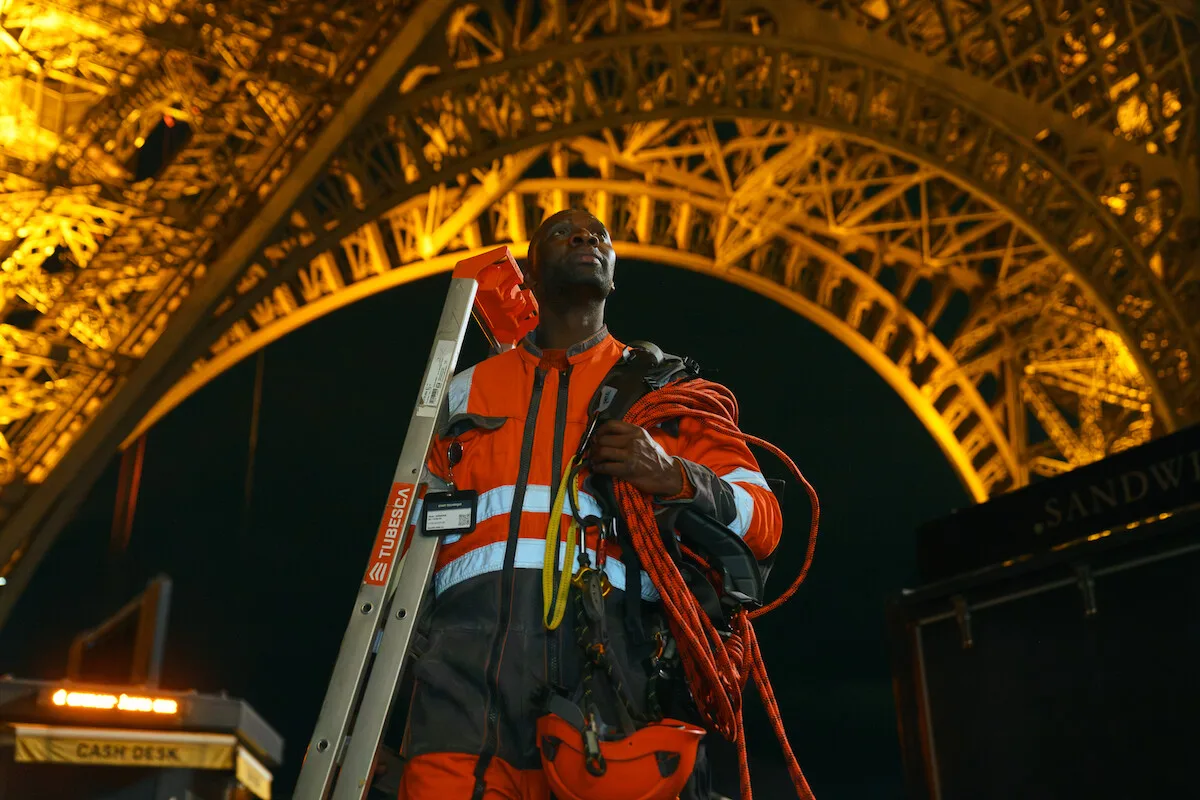
The images do not reveal the full context of those sequences.
They do, however, confirm that recognizable Parisian locations remain central to the visual presentation of the new episodes.
The simultaneous museum robberies also provide an intriguing storytelling framework.
A single heist allows police resources and audience attention to concentrate on one location.
Multiple thefts announced for the same time create a much broader security challenge.
They might also serve to distract attention from another operation, although that possibility has not been established in the official synopsis.
What Netflix has confirmed is that the robberies appear coordinated and succeed despite additional security measures.
For a series whose appeal partly depends on revealing how apparently impossible plans were accomplished, the setup is especially suitable.
Eight episodes to untangle the conspiracy
The fourth part's eight-episode structure provides room for several connected lines of investigation.
The first concerns the copycat's identity.
Who has decided to use the name Lupin, and why have they chosen this particular moment?
The second concerns the evidence against Assane.
How can a man who has supposedly remained in prison become the principal suspect in a series of museum robberies?
The third is personal.
What remains of Assane's attempt to abandon his former life if proving his innocence requires him to escape custody?
These questions connect police mystery, heist adventure and family drama.
The episode count does not guarantee that all three strands will be handled effectively.
A longer format can support gradual character development and a carefully constructed investigation.
It can also create the temptation to rely on too many twists or explanations.
Only the released episodes will establish whether the writers have found the right balance.
For now, Netflix has presented a clear narrative foundation without revealing the full course of the season.
The creative team combines familiar names and new directors
Part 4 maintains its connection with the creators of Lupin.
George Kay remains credited as creator in collaboration with François Uzan, with contributions from Marie Roussin, Florent Meyer and Tigran Rosine.
Netflix France lists Mathilde Arnaud, Jean-Yves Arnaud, Tigran Rosine and Florent Meyer as writers of the new installment.
The episodes are directed by Edouard Salier, Everardo Gout and Hugo Gélin.
Omar Sy and Louis Leterrier serve as showrunners.
Gaumont produces the series with the participation of Carrousel Studios.
These credits establish the production's creative structure, but they do not provide a reliable basis for predicting every stylistic choice.
Multiple directors can bring different approaches to individual episodes while working under a common creative direction.
Sy's continued involvement in supervising the series provides an important connection to its earlier installments.
Assane's personality and the actor's performance remain among the strongest elements of continuity.
The creative challenge will be to retain that identity while allowing the copycat to become a sufficiently distinctive adversary.
Otherwise, the new conflict risks feeling like another variation on the same familiar set of tricks.
Maurice Leblanc's fictional thief remains the foundation
Netflix's Lupin is not a direct adaptation of a specific Arsène Lupin novel.
It follows a contemporary protagonist who grew up reading Maurice Leblanc's stories and uses their underlying principles to construct his own adventures.
That approach gives the television series considerable freedom.
Assane can move through modern Paris, manipulate surveillance technology and confront contemporary institutions without reproducing plots written at the beginning of the twentieth century.
Leblanc's stories provide an intellectual model and a continuing collection of references.
The gentleman thief is defined by more than his ability to steal valuable objects.
He is also fascinated by riddles, performance, deception and the possibility of maintaining multiple identities.
Part 4 appears ready to explore that last characteristic from a different perspective.
If Lupin is an identity someone can adopt, Assane never possessed exclusive rights to its methods.
The appearance of a second figure using the name raises an almost literary question.
What separates the legitimate successor to a fictional character from someone merely imitating its recognizable characteristics?
Assane built himself around the example of a fictional hero.
Now he faces someone apparently attempting to do the same thing with him.
Netflix is bringing back an internationally recognized French series
Lupin occupies an important position in the history of Netflix's French-language programming.
Since its January 2021 debut, the production has helped demonstrate that a thriller made primarily in French can attract audiences far beyond its domestic market.
Sy's international popularity contributed to that reach, but the show's concept is also easy to recognize.
A charismatic protagonist, improbable robberies and plans revealed through carefully timed twists form an accessible entertainment formula.
The October 23 return therefore has a clear industry dimension.
Netflix is reviving an established property after a long interruption, turning the new installment into a significant event within its release calendar.
Releasing all eight episodes at once allows subscribers to experience the complete new story immediately.
It may also encourage rapid online discussion of the mystery, with the familiar risk that major plot revelations circulate before every viewer has finished watching.
The series' historical popularity must nevertheless be distinguished from the performance of its unreleased fourth part.
As of October 16, no viewing total, opening-week ranking or critical consensus can legitimately be assigned to the new episodes.
The achievements of earlier installments provide commercial context, not proof that the latest story will achieve identical results.
Assane returns because he cannot let someone else become Lupin
The fourth part's central contradiction feels especially appropriate for Assane Diop.
He wanted to abandon the life that repeatedly endangered his family.
Yet defending himself now appears to require returning to the skills and behavior that sent him to prison.
The mysterious copycat has stolen more than his name.
The impostor is manipulating Assane's reputation, exploiting the assumptions others make about him and transforming his carefully constructed identity into evidence against him.
For someone who has spent three installments using appearances to deceive his opponents, the reversal is almost perfectly designed.
Part 4 may therefore explore something more personal than another string of ambitious robberies.
It can also examine the difficulty of changing when everyone around you continues to define you through your past.
Assane wants to become a father who keeps his promises.
But to the police and those familiar with his reputation, he remains Lupin.
The question is whether he can reclaim that identity long enough to defeat a new adversary without becoming trapped by it once again.
Netflix will begin providing answers on October 23, when all eight episodes premiere together.
Until then, one thing is clear.
Assane no longer needs only a convincing disguise to escape his enemies. He must discover who has decided to disguise themselves as him.