
Thirty volunteers enter a real prison
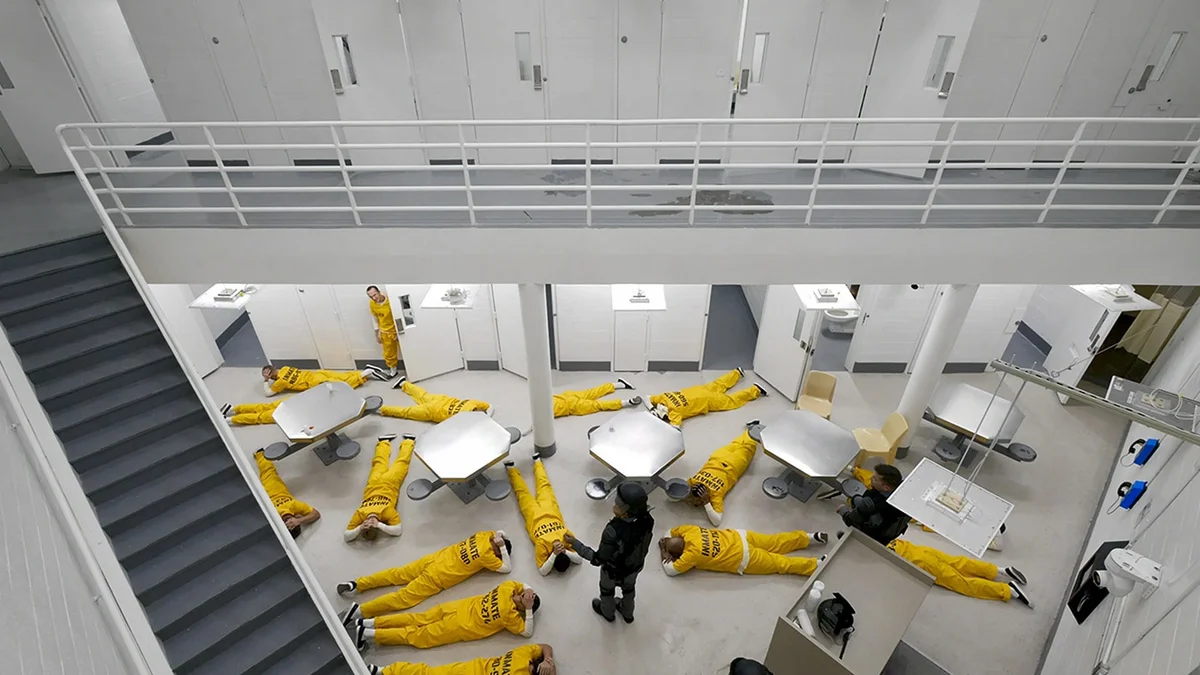
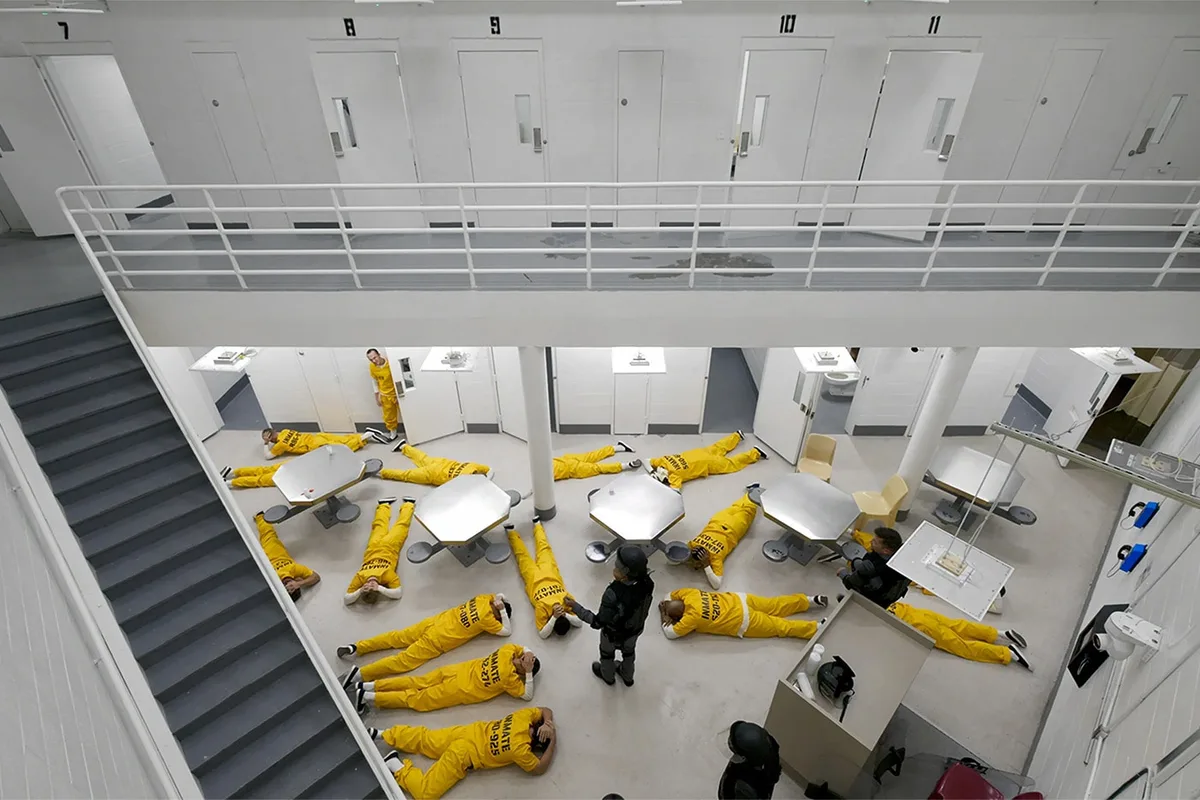
The setting of The New Stanford Prison Experiment resembles a prison drama. Participants wear inmate uniforms, others assume guard roles, and cameras record their interactions inside a confined environment. But this is neither a conventional scripted drama nor a historical documentary. Netflix has commissioned a new unscripted social experiment inspired by the 1971 Stanford study.
Variety detailed the production in an October 19, 2026 investigation, two days before the series' scheduled release. Thirty volunteers agreed to participate in an arrangement lasting approximately two weeks. Eight were assigned to guard roles and twenty-two to prisoner roles.
The guards were divided into day and night shifts. Participants then entered a structure defined by uniforms, rules, hierarchy and the restrictions of a simulated prison environment.
Filming took place in a decommissioned section of the Adult Detention Center in Cherokee County, Georgia. Unlike the university simulation of 1971, this was an actual correctional facility still operating in other parts of the building.
That decision contributes to the intensity the producers wanted. It also raises questions about the setting itself. When a location already functions as a real place of imprisonment, its psychological effects cannot necessarily be reduced to the uniforms worn by participants.
Six people reportedly left before the experience ended
One of the most significant details in Variety's report concerns participants who withdrew from the program. Executive producers Jane Lipsitz and Dan Cutforth say six people left before the scheduled conclusion.
They describe the experience as more emotionally demanding than physically dangerous, explaining that some participants discovered they struggled to tolerate their assigned circumstances.
According to the producers, the volunteers could hear actual prisoners shouting through the walls. This proximity to the functioning institution intensified the feeling of confinement and may have contributed to several departures.
Variety also describes substantial tensions around the sixth day, including disciplinary decisions by one group of guards that reportedly disturbed members of another shift.
The production subsequently introduced changes to the rules and power structure, including role reversals. The report does not establish every detail of the events or the precise way they will appear in the finished episodes.
As of October 19, the series has not yet premiered. These details should therefore be attributed to the producers and Variety's reporting rather than presented as independent observations of the completed show.
The troubling legacy of Stanford's 1971 experiment
Understanding the controversy requires returning to the study from which the series takes its name. In August 1971, psychologist Philip Zimbardo organized a prison simulation at Stanford University involving twenty-four recruited male students.
Some were assigned guard roles, while others became prisoners. The experiment took place in university facilities converted into a mock jail. Its stated purpose was to investigate the effects of authority and institutional circumstances on human behavior.
Originally planned to last between one and two weeks, the study ended after six days. Abusive conduct by some guards and the psychological distress of participants became the most widely remembered elements of its history.
For decades, the experiment was frequently presented as evidence that ordinary individuals quickly become cruel when a system grants them authority over others.
That interpretation has faced substantial scientific criticism. The study is increasingly discussed as an example of flawed experimental design and ethical oversight rather than definitive proof of a universal principle of human nature.
This distinction is essential when a global streaming service uses the same historical episode as the foundation for a new television production.
The original experiment's scientific validity is heavily disputed
Criticism of the Stanford study extends beyond the ethical failures associated with its conduct. Researchers have also questioned how its data were produced, collected and interpreted.
In 2019, Thibault Le Texier published an investigation in American Psychologist based on archival research and interviews with fifteen former participants. His findings challenged several central elements of the familiar account.
The research highlighted instructions given to guards, incomplete and biased data collection, and the active role of the organizers. These factors complicate the claim that the observed behavior emerged spontaneously from the assigned social roles alone.
Another 2019 study by Jared Bartels in The Journal of Social Psychology examined how instructions given to guards affected their expectations. Its findings supported concerns that the experimenters' language could influence subsequent behavior.
That distinction is fundamental. If participants understand that they are expected to act harshly or adopt certain attitudes, their behavior cannot simply be interpreted as an inevitable consequence of receiving authority.
Psychologists discuss this type of problem through the concept of demand characteristics, in which people respond to what they believe researchers expect from them.
The Stanford prison experiment remains famous, but that reputation should not conceal the serious questions about its scientific meaning.
Netflix promises stronger psychological protections
The producers behind the new series are aware of the historical problem. In interviews with Variety and Netflix Tudum, Jane Lipsitz explains that her team spent considerable time determining how to revisit the concept without reproducing the conditions of 1971.
According to the production, volunteers underwent background checks and psychological screening, and received information about the program before agreeing to participate.
Psychologists and medical professionals were available throughout filming. Participants also received a safe word, pineapple, allowing them to request assistance or leave.
Experienced correctional officers remained available if an incident required intervention. Remote-operated cameras were used to reduce the physical presence of the film crew in the spaces occupied by volunteers.
A specialist panel also observed the process. It included Harvard Business School behavioral scientist Alison Wood Brooks, former federal correctional professional Michael Cantrell, and Pulitzer Prize-winning journalist Trymaine Lee.
These measures represent meaningful differences from the criticized historical arrangement. They do not independently establish that every risk has been eliminated.
The descriptions largely come from the production itself. Without a detailed external assessment of its procedures and outcomes, it would be premature to conclude that the series has definitively resolved the ethical problems associated with its model.
Reality television is not automatically a scientific experiment
Netflix's presentation of The New Stanford Prison Experiment is one of the project's most delicate aspects. Its official synopsis asks a familiar question: does power inevitably change the people who possess it?
The question is fascinating. But observing thirty people in a setting designed for television does not automatically provide a general scientific answer.
Participants know they are taking part in a recorded program. They have been selected, placed in an artificial situation and subjected to rules that may change during filming.
The final episodes are also products of editing. Producers must select events from a much larger body of recorded material to construct six coherent and engaging installments.
That transformation of observations into a narrative is normal in television production. The problem arises if dramatic conclusions are presented as validated scientific findings without independent evidence.
The series may reveal interesting individual reactions and stimulate discussion about authority. It cannot automatically determine how all people would behave under comparable circumstances.
The involvement of experts should therefore be understood as a means of commentary and oversight, not as an automatic guarantee of an independently validated research protocol.
Using an operating prison raises additional ethical questions
The production chose a decommissioned section of a still-operational correctional institution. Lipsitz explained to Netflix Tudum that the team wanted an atmosphere that could not be fully recreated on an artificial set.
The decision has an understandable narrative logic. Authentic prison architecture, locked doors and the sounds of an actual detention facility create a different experience from a studio environment.
But the pursuit of authenticity also complicates informed consent. Volunteers may agree to a simulated experience and still discover that the physical and emotional reality of the setting exceeds their expectations.
The six departures reported by Variety demonstrate at least that several people chose to end their participation. The existence and use of that option matters, although it does not independently establish the longer-term psychological outcomes.
Producers maintain that actual correctional officers did not need to physically intervene during the program. That is reassuring within their account, but it is not an independent assessment of every risk involved.
The production therefore contains an inherent tension: the more convincing the prison simulation becomes, the greater the responsibility to explain how participants were protected.
The growing business of social-experiment reality television
The New Stanford Prison Experiment belongs to a broader evolution in unscripted entertainment. Streaming platforms have increasingly commissioned formats that isolate participants, divide them into groups or place them in artificial circumstances designed to alter their relationships.
Executive producers Jane Lipsitz and Dan Cutforth have extensive experience with unscripted television, including Top Chef and Project Runway. Their company, Alfred Street Industries, is responsible for the new Netflix production.
The distinction from culinary or artistic competitions lies in the nature of the stakes. Here, the stated objective is to explore authority and morality through a situation resembling incarceration and institutional domination.
The series does not offer a major final prize comparable to the rewards in many competition shows. Producers say participants were paid but did not disclose the amounts.
Lipsitz explained that she did not want financial compensation to become the dominant motivation for participating. That remains the production's explanation, without public information sufficient to evaluate each volunteer's personal reasoning.
The entertainment dimension nevertheless remains. Even without an enormous prize, conflict and emotional tension may become the principal attractions of the finished program.
Cameras everywhere do not create a neutral perspective
To reduce direct influence on participants, producers say they relied on remotely operated cameras and limited interactions with the film crew inside the simulated detention areas.
Such methods may reduce some effects of constantly having technicians nearby. They do not necessarily eliminate awareness of being filmed.
Netflix Tudum reports that participants even began speaking directly to cameras during the experience. That behavior demonstrates how deeply recording technology has become integrated into contemporary ways of presenting oneself.
It also raises a question that distinguishes 2026 from 1971. Modern participants are likely to be familiar with reality television, social media and the performance of personality before a camera.
Some actions may be influenced by a desire to be understood, admired or noticed, separately from the power arrangements constructed inside the prison.
Those influences do not make the footage meaningless. They simply need to be considered when interpreting it.
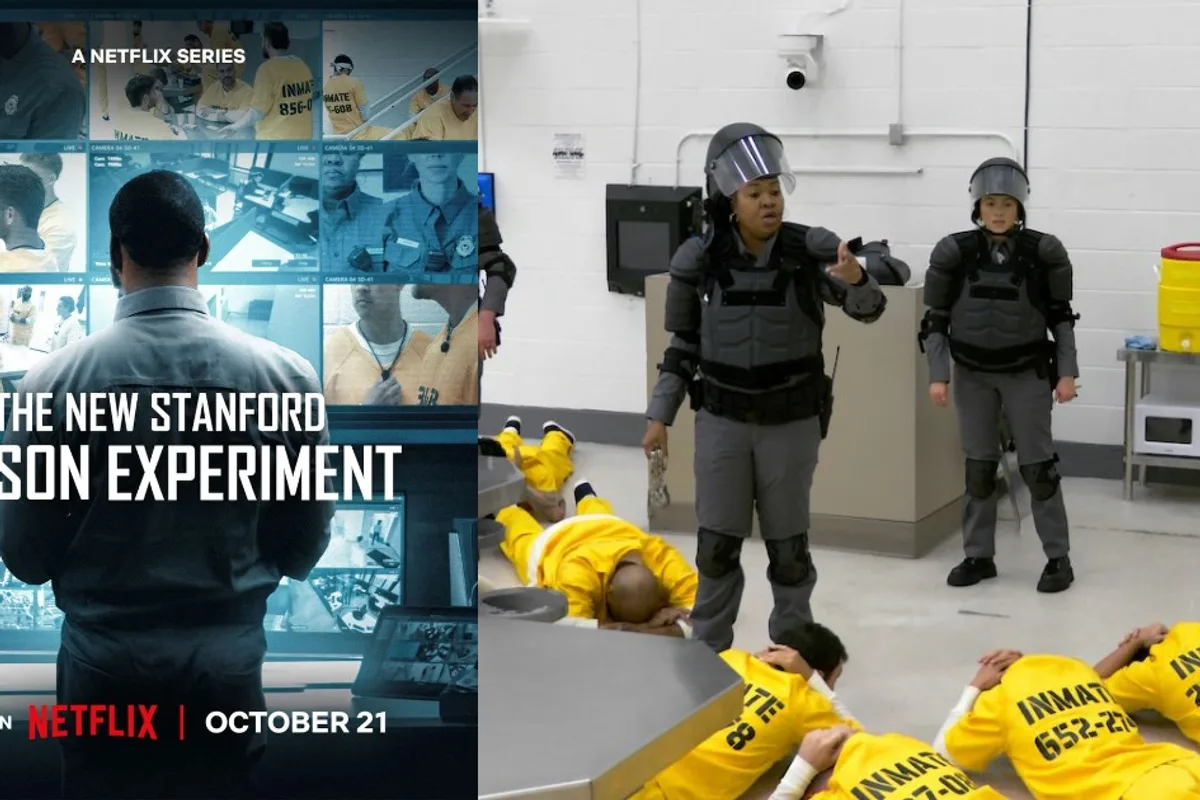
A documentary can capture genuine behavior while remaining an editorial construction. Scene selection, chronology and expert commentary all influence what audiences believe they have witnessed.
The New Stanford Prison Experiment should therefore be evaluated for its transparency and storytelling choices as much as for its dramatic intensity.
Participants with prison experience add another dimension
Variety reports that the new production allowed people with criminal histories to participate, unlike the selection criteria employed in the original Stanford study.
One volunteer discussed in the report, Larry Foy, speaks about his previous experience of incarceration. Producers say his background and personal development were considered during the selection process.
Including people familiar with the justice system can change the dynamics of a group assembled to simulate prison life.
Such participants may not interpret cells, uniforms or institutional discipline in the same way as individuals without comparable experience.
However, it would be inappropriate to assume specific responses from anyone solely because of their past. A person's criminal history does not independently predict how they will behave in a different setting.
This diversity raises a potentially meaningful question: when a simulation claims to investigate domination, how does it incorporate the perspectives of people already familiar with its real-world consequences?
The answer will depend on the content of the episodes and how the participants' experiences are contextualized.
The comparison with 1971 will shape the public response
The series premieres on October 21, fifty-five years after the original experiment. Netflix's promotional campaign makes the historical connection central to its identity.
That reference is simultaneously the program's greatest source of curiosity and one of its largest editorial risks.
Viewers may arrive believing that Stanford conclusively demonstrated that power inevitably makes ordinary people cruel. That conclusion is precisely what several researchers have challenged.
The danger would be presenting conflict in the new series as straightforward confirmation of the traditional narrative.
A more careful interpretation would distinguish individual behavior, the influence of instructions, production decisions and the conclusions offered by specialists.
The same caution applies in the opposite direction. If some participants resist authoritarian behavior or develop supportive relationships, those observations will not establish a universal scientific conclusion about human nature either.
Reality television can provide a starting point for public discussion. It does not replace independent, reproducible research designed to test clearly defined hypotheses.
Netflix turns a scientific controversy into a television event
Netflix's strategy is clear. The platform has taken a recognizable historical episode associated with shocking events and immediate moral questions, then developed a visually intense unscripted series likely to generate strong reactions.
The operating prison, uniforms, surveillance footage and possibility of conflict between guards and inmates give the program a compelling visual identity.
But the appeal of the premise should not obscure the responsibility of those creating it. When a production presents itself as an investigation of domination, its own decisions necessarily become part of that investigation.
Who establishes the rules? Who decides when they change? How are conflicts encouraged or restrained? What freedom do participants have to refuse an experience?
Producers insist that safeguards and continuous monitoring were established. Those measures are relevant, but their adequacy must be examined alongside the actual content and conduct of the production.
An educational intention does not automatically make an undertaking ethically successful.
An October 21 premiere, but no verdict before the episodes
The New Stanford Prison Experiment is scheduled to premiere on Netflix on October 21, 2026, with six episodes.
Two days before that release, Variety's investigation has already revealed several important details: thirty volunteers were assigned guard and prisoner roles, six withdrew, and producers acknowledge periods of significant emotional strain.
The production maintains that it introduced safety procedures intended to address failures associated with the original study. It also describes surprising developments and shifting power relationships during filming.
None of those statements is sufficient to evaluate the finished series as a whole. The balance between observation, spectacle, editorial construction and scientific interpretation remains to be examined.
That is the central challenge of the adaptation. Netflix can produce compelling television about authority without claiming to demonstrate a universal law of human behavior.
And if the six episodes reveal a more complicated picture than the traditional opposition between cruel guards and helpless prisoners, they may at least stimulate a more nuanced public conversation.
One contradiction remains especially striking. To examine the dangers of power, Netflix has created another situation in which a production team possesses the authority to establish rules, record behavior and decide what audiences will eventually see.
Perhaps the most interesting question is not simply what the volunteers did inside the prison. It is how television has chosen to tell us about it.