
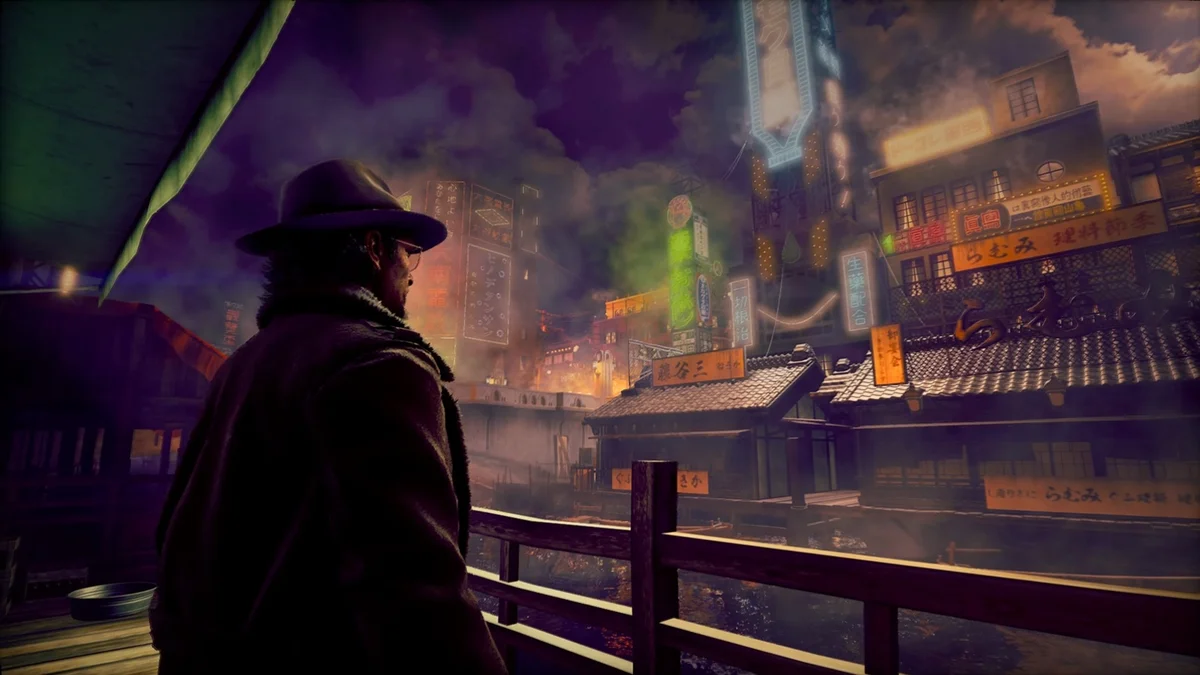
Makoto Daito moves between cities and decades, but one question appears to follow him throughout his journey: where does he belong?
That concern forms a central part of Stranger Than Heaven's newly detailed story. RGG Studio, best known for Like a Dragon, is developing a historical action adventure spanning approximately fifty years.
The latest PlayStation preview covers four sections of Daito's life, beginning in San Francisco in 1915 and continuing through Japanese cities in 1915, 1929 and 1943.
A protagonist searching for a home
The opening takes place in San Francisco in 1915.
Framed for murder and pursued by the police, Daito escapes aboard a departing ship.
He encounters another stowaway and the vessel's captain, Orpheus.
His earlier experiences include losing his parents and facing racial discrimination, circumstances that contribute to his isolation.
The preview also establishes his willingness to help others. In one encounter, he risks his safety to protect another passenger discovered by the crew.
These scenes suggest a protagonist shaped by vulnerability as well as violence.
A relationship in Kokura
The next presented chapter moves to Kokura in Japan, still in 1915.
Here, Daito meets Tae, a woman who becomes an important source of stability in his life.
PlayStation's report describes a quietly emotional moment when Tae welcomes him home.
For someone struggling to find a place where he belongs, the gesture carries obvious significance.
The preview emphasizes subtle facial expressions and small movements in their developing relationship.
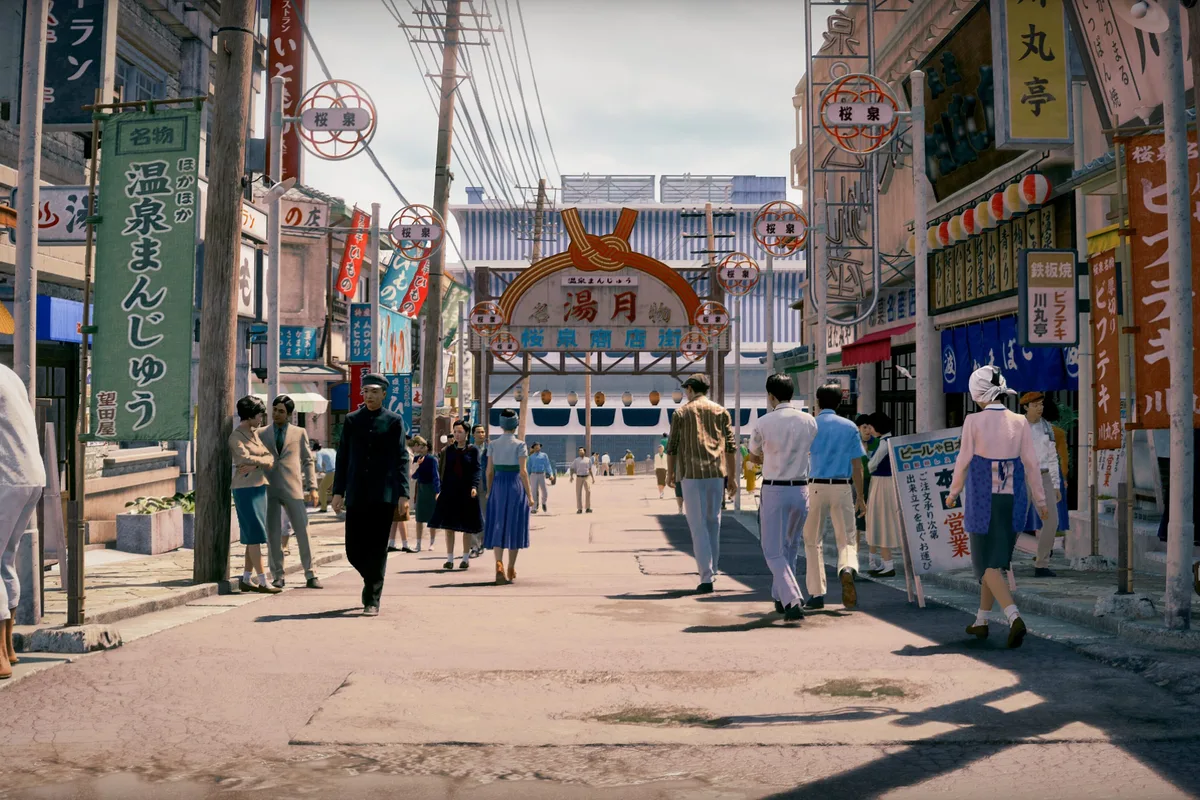
Kokura itself is presented as a busy port city, with factories, streets, stalls and industrial activity.
These details allow the setting to convey everyday life rather than functioning only as a backdrop for action.
The preview does not establish the full historical accuracy of the reconstruction, but it demonstrates RGG Studio's interest in portraying different urban environments.
Violence exists alongside intimacy
Stranger Than Heaven also includes demanding close-quarters combat.
The game uses separate inputs for attacks from the left and right sides of Daito's body.
Heavy weapons can deliver devastating blows, while lighter weapons favor faster attacks.
This physical violence provides a sharp contrast with the quieter scenes involving Daito's relationships.
The combination suggests a story interested in both personal connection and the dangers surrounding its protagonist.
Music becomes part of the historical journey
The 1943 Osaka chapter introduces a substantial show-business system.
Daito gathers sounds from the environment, takes them to a composer and creates music that can be arranged in different ways.
An everyday sound, such as a dog barking, can become a source of musical inspiration.
Some sounds can only be discovered at certain times, encouraging exploration beyond major story events.
Once composed, songs can be performed in different eras.
This gives music a potentially important role in connecting the periods of Daito's life.
The business behind the performance
The musical activities also involve managing actual performances.
Players select singers, musicians, stage effects and other production elements while balancing costs against revenue goals.
Daito operates lighting and effects during shows, with successful actions improving the presentation and its earnings.
Music production is therefore presented as a structured system involving composition, management and performance rather than a simple rhythm minigame.
It also offers another way to characterize Daito, presenting him as someone capable of organizing creative work as well as participating in violent conflicts.
An unusual expansion of RGG Studio's storytelling
RGG Studio has long combined crime narratives with urban exploration and elaborate secondary activities.
Stranger Than Heaven builds on those interests while moving across several historical periods.
That structure creates opportunities to show cities changing, relationships developing and cultural elements surviving between generations.
However, the preview does not establish how all the chapters connect or how the game handles every major period of Daito's life.
Those questions remain for the full release.
The story begins in January 2027
Stranger Than Heaven is scheduled to launch on PlayStation 5 on January 15, 2027.
The October 21 preview provides a substantial look at several gameplay and narrative systems, but it is not a review of the final game.
Its most distinctive idea may be the combination of personal drama and historical change.
For Makoto Daito, the journey is not only about surviving fights. It also concerns the people who offer him a home, the cities he inhabits and the music that remains as decades pass.