
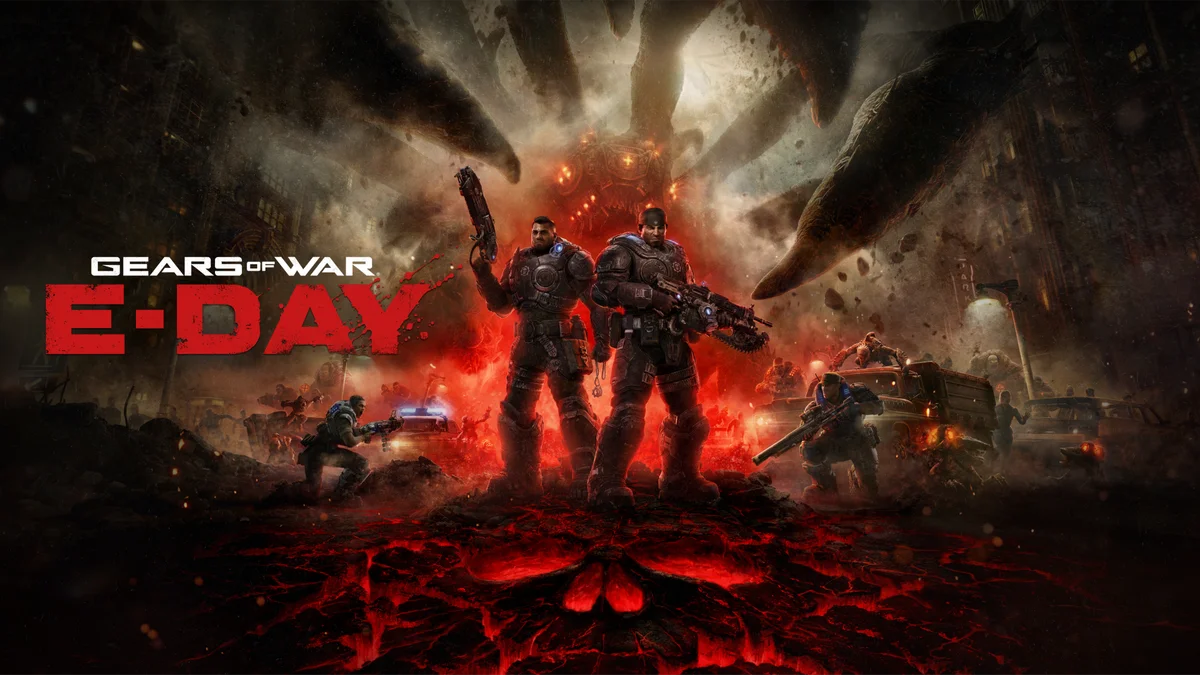
Knowing the Disaster Does Not Diminish Its Impact
A prequel faces a particular challenge: the audience already knows the protagonists cannot prevent the catastrophe. E-Day depicts Emergence Day, when the Locust erupt from beneath Sera. The broad outcome is known. The story must therefore derive its strength from the people experiencing it.
The Coalition understands this by setting the adventure in Kalona, a city that has not yet become a ruin. Its streets, buildings, businesses and inhabitants create a sense of ordinary life. Destruction carries weight because something recognizable existed before it.
In later Gears games, characters frequently cross landscapes devastated long ago. Here, they witness a world disappearing.
Marcus Fenix Before Years of Exhaustion
E-Day returns to Marcus before the full horror of the Locust War has shaped him. He is not an innocent recruit, however, having already experienced another conflict.
His relationship with Dominic Santiago is the emotional center of the story. Their history gives them a bond that becomes essential as the disaster unfolds.
The game does not attempt to transform Marcus into an unfamiliar character. Instead, it illuminates the origins of his reserve, sense of duty and instinct to protect his companions.
That approach works, although it limits surprise. The protagonists already resemble the men they will become, making this prequel more enriching than transformative.
Kalona Tells Stories Beyond Dialogue
The city is among E-Day's strongest narrative achievements. Residential areas, public spaces and transport infrastructure make it feel like a functioning society interrupted by catastrophe rather than an arrangement of military arenas.
Fleeing civilians and scenes of panic give the opening hours essential emotional force. Soldiers are not simply fighting a new enemy faction. They are witnessing the destruction of their home.
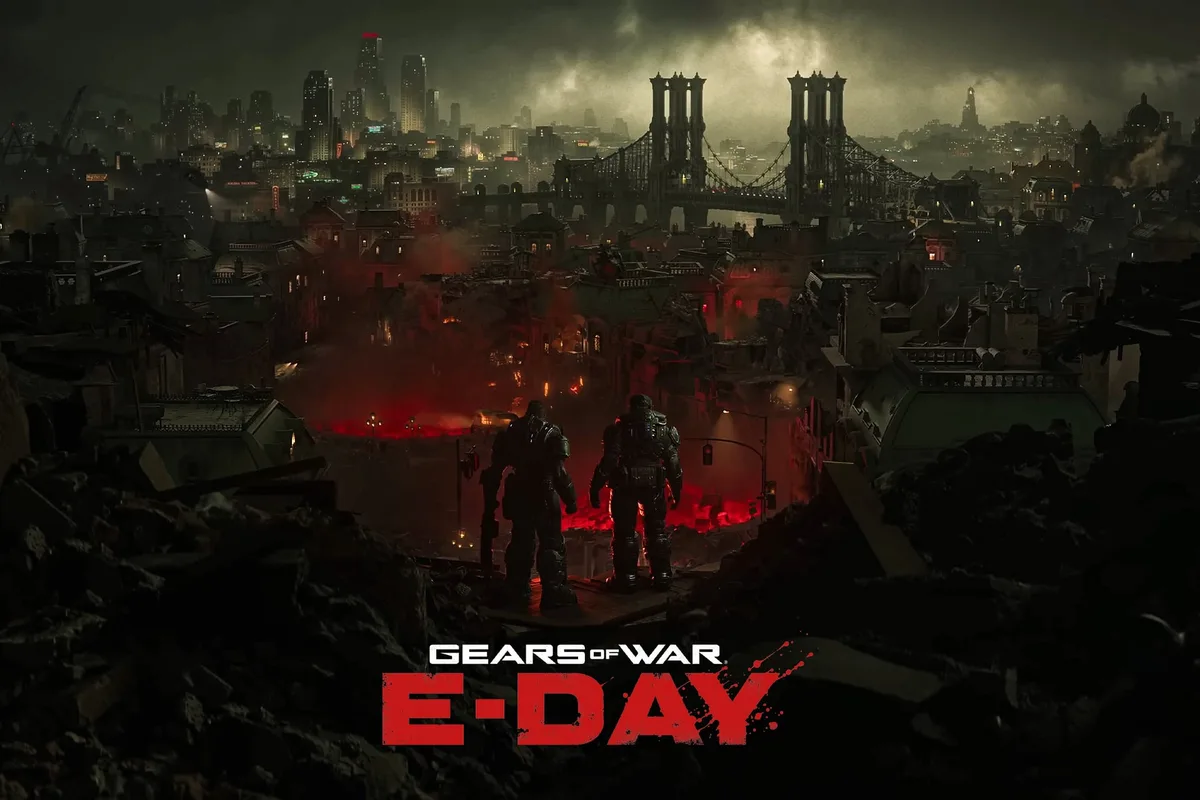
Lighting, facial detail and environmental density strengthen this impression. Technology is not merely producing beautiful scenery; it makes the city believable before dismantling it.
Yet E-Day could have devoted more attention to its ordinary inhabitants. The victims of the invasion sometimes disappear too quickly behind military objectives.
The Locust Become Frightening Again
Across the franchise, the Locust have gradually become familiar opponents. Their behavior and appearance no longer surprise experienced players.
Returning to their first arrival restores uncertainty. The protagonists do not know the scale of the invasion or the true nature of the enemy. Early encounters consequently possess something close to survival-horror intensity.
That atmosphere gradually weakens as combat becomes routine. With stronger weapons and greater experience, the creatures once again become enemies to eliminate systematically.
Narrative Urgency Meets Gameplay Detours
The campaign depicts a desperate emergency but frequently allows optional diversions. Expanded areas, resources and weapon upgrades do not always fit the need to save a collapsing city.
Its strongest directed sequences move effectively from discovery through panic to survival. Their confidence makes the weaker detours particularly noticeable.
The story also accumulates battles without always leaving enough space for its characters to process what has happened. A quiet conversation or another civilian encounter might occasionally have provided more emotional value than another firefight.
Spectacle Cannot Always Replace Intimacy
E-Day succeeds in making Sera feel vulnerable again. The sheer scale of the invasion and the care invested in Kalona lend the world considerable weight.
However, the narrative could have explored the protagonists' personal transformation more deeply. Marcus and Dom are convincing together, but their friendship is expressed primarily through action, where quieter scenes could have added further depth.
The 8/10 score reflects a prequel defined by atmosphere and a sincere portrayal of loyalty. The Coalition does not revolutionize Gears mythology, but it makes a compelling case for revisiting the beginning of these soldiers' story.