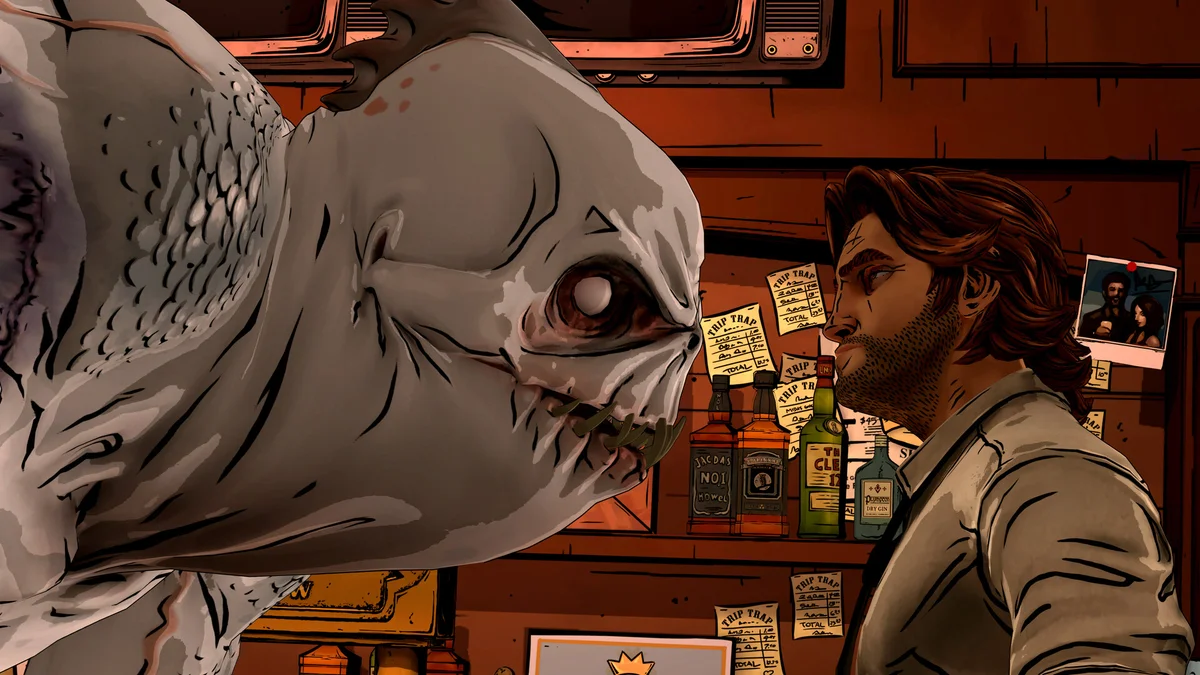
What happens to fairy-tale characters after their stories have ended?
The Wolf Among Us provides a particularly unsettling answer: they move to a modern city, find jobs, accumulate debts, argue and sometimes commit crimes.
Inspired by the Fables comic-book universe, Telltale's game builds its story around that premise.
Mythical characters no longer inhabit a world where goodness necessarily defeats evil. They must face ordinary problems in a society that resembles a film noir more than a children's picture book.
With The Wolf Among Us Remastered scheduled for October 29, 2026, Telltale aims to bring that atmosphere back into the spotlight.
The Big Bad Wolf Becomes a Sheriff
Bigby Wolf has a reputation that precedes him.
In traditional stories, he is a predator threatening vulnerable characters. In Fabletown, he now attempts to enforce the law.
That transformation is one of the character's most compelling qualities.
Bigby may seek justice, but he retains a violent temperament and a dangerous side that other residents have not forgotten.
Being sheriff does not automatically earn him respect.
Players must decide how he behaves, choosing between patience, firmness, intimidation and anger.
Each decision may strengthen his identity as a protector or remind others that they are dealing with a creature once feared throughout the fairy-tale world.
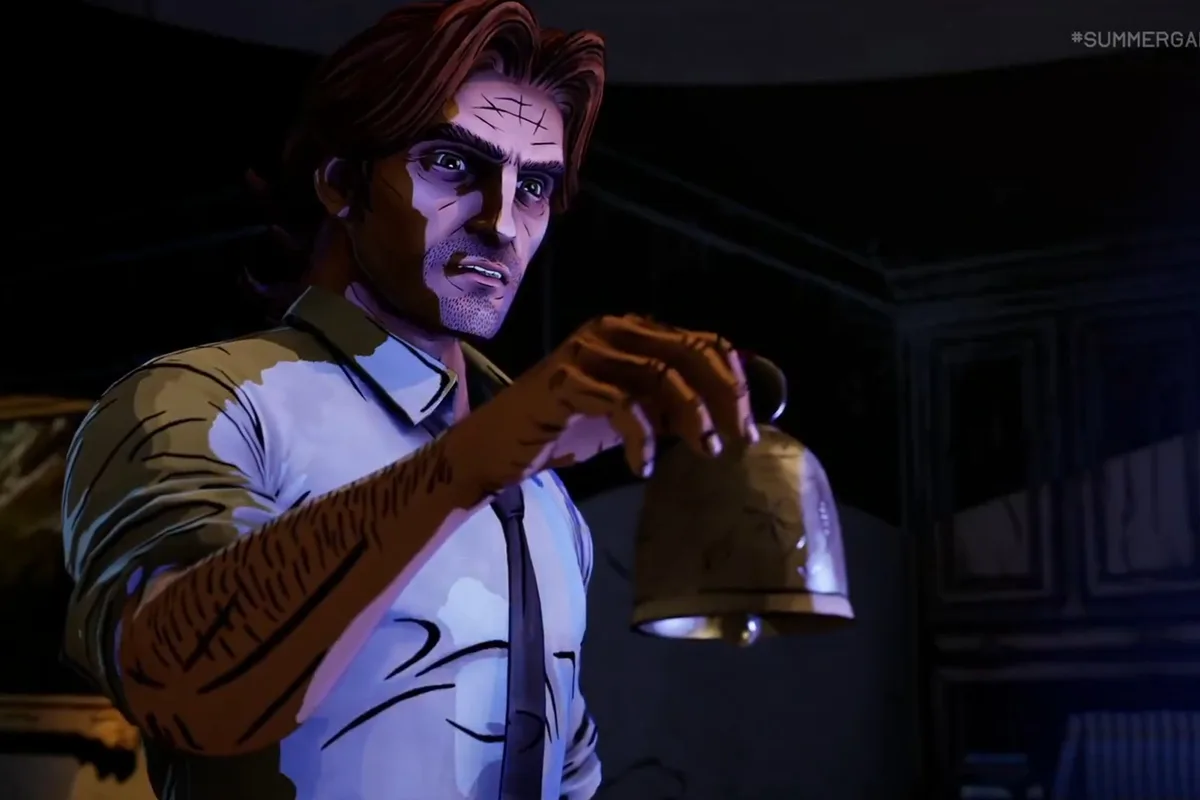
This ambiguity defines the experience. The protagonist is not innocent, and the characters he meets cannot always be divided into simple categories of good and evil.
A Fairy-Tale Community in a Troubled City
Fabletown operates as a distorted version of urban life.
Former heroes and monsters seek ordinary existence, but their past continues to shape how they are treated.
Some residents occupy comfortable positions, while others struggle financially or live at the margins of society.
Neon-lit streets, aging apartment buildings and unpleasant bars replace enchanted forests and palaces.
The setting transforms recognizable folklore figures into crime-fiction characters.
Traditional fairy tales frequently use relatively clear moral structures. The Wolf Among Us prefers a world where power, fear and conflicting interests complicate almost every decision.
Film Noir as a Visual Language
The game's identity extends far beyond its narrative premise.
The Wolf Among Us uses a comic-book-inspired aesthetic, combining bold outlines, artificial colors and dramatic contrasts.
Shadows divide faces, neon lights dominate interiors and city streets become places of suspicion.
The presentation connects naturally with film noir and neo-noir, traditions in which criminal investigations frequently reveal deeper social contradictions.
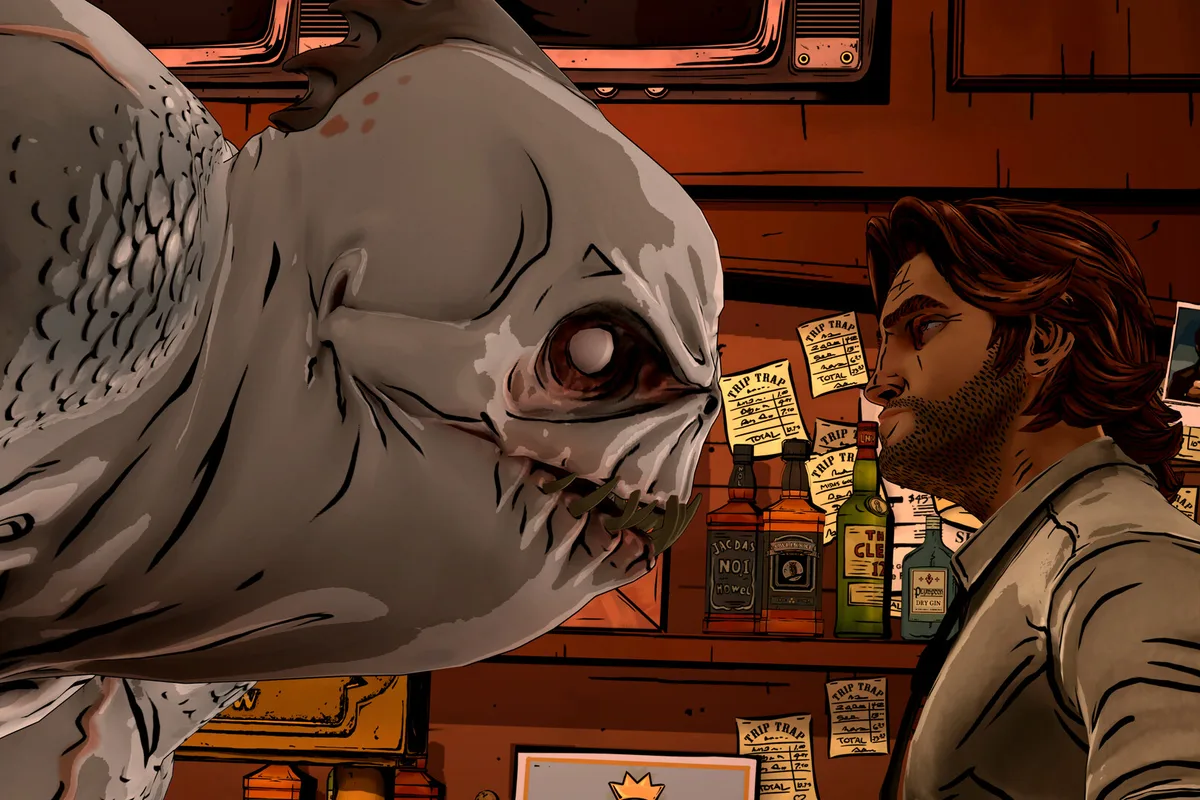
The remaster extends that influence with a fully black-and-white visual option.
Game director Matt Saia describes Noir Mode as a direct tribute to classic detective films.
Players can switch between monochrome presentation and the familiar color palette.
There is an interesting paradox here: electric colors were central to the original game's identity, yet removing them can reveal another interpretation of its atmosphere.
Familiar Characters With Unfamiliar Lives
The game also succeeds because of how it treats recognizable fairy-tale figures.
These characters are not merely references intended to provoke nostalgic recognition.
They have relationships, resentments and motivations that can differ considerably from their traditional portrayals.
Snow White, for example, plays an important role in Fabletown's administration. She is not simply a princess waiting for someone else to resolve every problem.
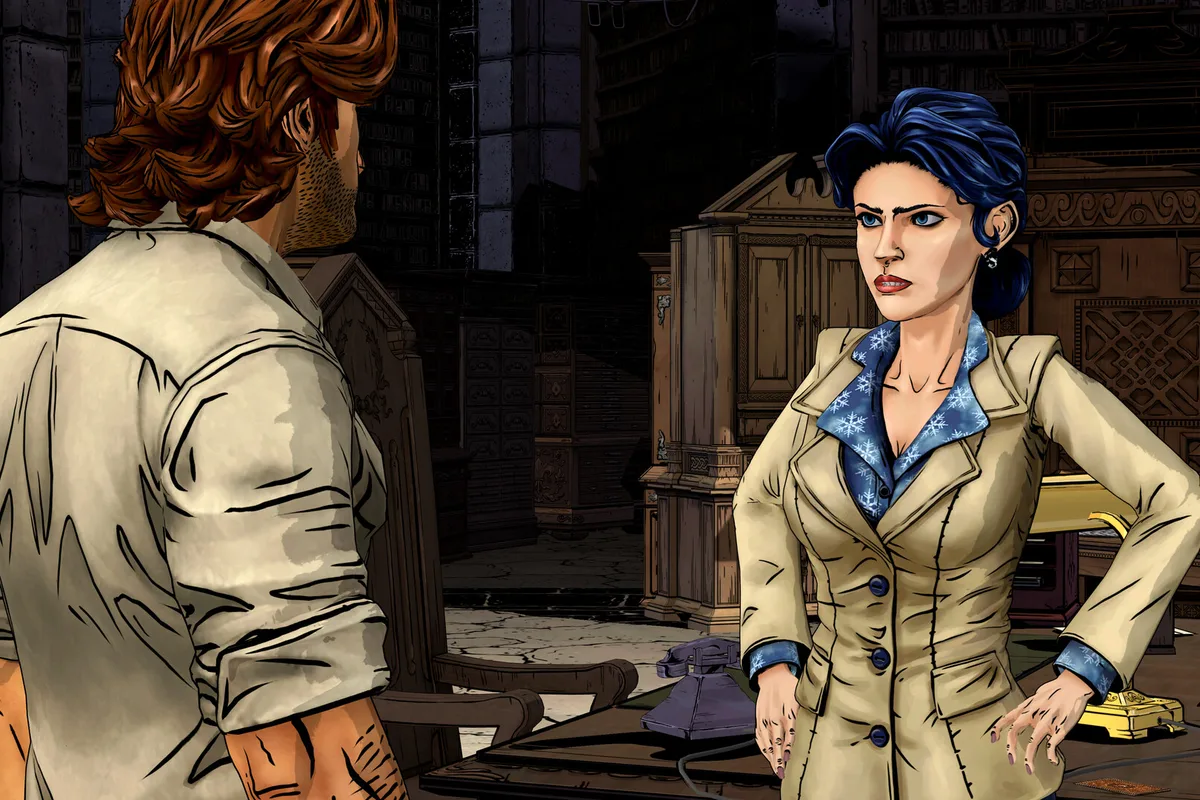
This reinterpretation works because it uses what audiences already know about the characters while giving their personalities new complexity.
Fantasy becomes a language for examining deeply human subjects: prejudice, power, responsibility and the difficulty of changing one's identity.
A Detective Story Shaped by Player Choices
Telltale built much of its reputation around adventures where player decisions matter.
In The Wolf Among Us, conversations frequently require quick responses.
Players sometimes have to choose what to say without knowing all the relevant information.
That restriction fits Bigby's work particularly well. A detective must make decisions under uncertain circumstances without knowing all their consequences.
The remaster preserves this structure.
Telltale says it deliberately avoided rewriting the story or changing its fundamental directorial choices.
The objective is to present the original work in a modernized form without erasing the qualities that made it distinctive.
Why Rebuild the Characters Instead of Changing the Story?
Telltale's answer is largely about preservation.
Matt Saia explains that the team wanted to respect the original game's identity while updating its presentation for modern platforms.
Character models and textures have therefore been rebuilt while preserving familiar silhouettes and expressions.
Developers also reworked the lighting throughout every scene.
These changes can affect how audiences experience an existing work without altering its narrative.
More detailed lighting can emphasize facial expressions. Improved animation can give additional weight to reactions. Refined textures can make environments easier to understand.
However, changes also carry a risk of altering the impression created by the original.
The remaster's success will therefore depend on balancing fidelity with modernization.
Archives Reveal How the Original Was Made
The Wolf Among Us Remastered also includes material devoted to the creation of the original adventure.
Telltale promises more than an hour of interviews and videos, artwork galleries and playable deleted scenes.
These additions may appeal particularly to players interested in video games as creative works whose development deserves documentation.
Exploring a discarded scene can reveal the authors' creative decisions, development constraints or narrative possibilities that were ultimately abandoned.
The exact material and how it is contextualized will become clearer at launch.
For now, the intention is evident: Telltale wants the remaster to offer meaningful historical material beyond cosmetic rewards.
A Return Before the Next Chapter
The Wolf Among Us Remastered is scheduled to launch digitally on October 29, 2026.
Physical editions are planned for the first quarter of 2027.
Meanwhile, Telltale is developing The Wolf Among Us 2, a separate narrative sequel currently planned for 2027.
This distinction helps explain the remaster's purpose.
Rather than replacing the new installment, it brings Bigby's first investigation back in an updated form.
For newcomers, it provides access to an unusually distinctive fictional world. For returning fans, revisiting Fabletown offers another encounter with characters whose lives remain far removed from traditional happy endings.
That may be the enduring appeal of The Wolf Among Us: beneath the Big Bad Wolf and the figures of childhood stories, Telltale created a thoroughly adult thriller in which the real monsters are not always the ones fairy tales taught us to fear.