While parts of the entertainment industry are exploring ways to generate images from written prompts, one American animation studio continues moving physical puppets through miniature sets, one frame at a time.
That studio is LAIKA.
Its films include Coraline, ParaNorman, The Boxtrolls, Kubo and the Two Strings and Missing Link.
Its latest feature, Wildwood, is an ambitious fantasy adventure that required years of work, elaborate mechanical systems and a large team of artists.
For director and LAIKA chief Travis Knight, the difficulty involved is not simply a problem waiting to be eliminated.
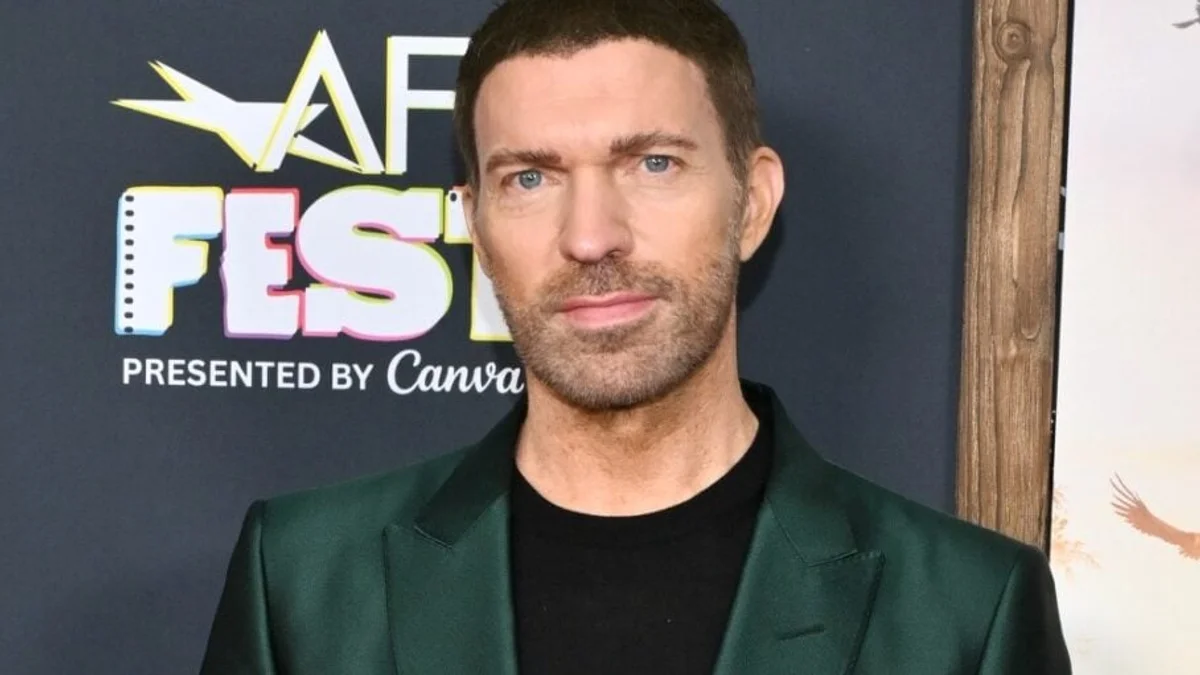
Speaking to reporters during the opening night of AFI Fest on October 21, he criticized the use of generative AI to replace artistic labor.
Variety published his comments on October 22 and 23, while The Verge and The Playlist explored the subject in more extensive interviews.
The timing gives his position particular relevance.
Knight is not discussing handmade animation only as an artistic ideal.
He is releasing a film whose production embodies the approach he is defending.
Knight opposes AI when it replaces creative people
In his conversation with Variety, Knight acknowledged that artificial intelligence is an impressive technological achievement.
His objection concerns its use as a replacement for artists rather than as an instrument that supports their work.
He argues that stories about love, grief, pain and personal experience should retain a meaningful connection to the people who create them.
In The Verge, he developed the distinction between using technology to expand an artist's capabilities and asking a system to reproduce work derived from existing artistic material.
He was especially critical of systems that use artists' creations to generate new content without adequately respecting their contribution.
His concern therefore extends beyond the visual appearance of generated images.
It involves authorship, creative control and the relationship between an artwork and the experiences of its makers.
Knight believes that a computer cannot draw on lived human emotion in the same way as a person.
That conviction shapes his opposition to allowing generative systems to replace creative labor.
It is important to identify this as his artistic position rather than an independently established judgment about the value of every possible use of generative AI.
His argument is about the kind of filmmaking LAIKA wants to pursue.
LAIKA already relies on advanced digital technology
Knight's position can easily be misunderstood if stop-motion is treated as an inherently anti-technology medium.
LAIKA does not make movies using only techniques available to early animation pioneers.
Its artists use computers, digital modeling, sophisticated manufacturing systems and advanced photography.
Three-dimensional printing has played a major role in creating the facial components that allow many of its characters to display a wide range of expressions.
Digital designs can become physical objects that animators manipulate in front of the camera.
The resulting process combines sculpture, engineering, painting, textiles, cinematography and computer-based tools.
Wildwood incorporates several technical advances.
According to The Verge, some puppets include mechanisms that allow their bodies to simulate breathing.
LAIKA has also improved the materials used for clothing, fur and hair, as well as the structures supporting movement.
Those innovations expand what animators can achieve.
They do not necessarily remove animators from the creative process.
That distinction is central to Knight's argument.
A sophisticated tool can help an artist make a more expressive choice without independently determining the artistic result.
More than 230 puppets helped bring Wildwood to life
The scale of the production illustrates the ambition of LAIKA's latest feature.
The Verge reports that Wildwood involved more than 230 puppets.
Thirty-six separate versions of the central character, Prue, were created.
Forty-nine animators worked on the production, while more than 1,000 artists contributed in different capacities.
Those figures do not mean every contributor was physically moving puppets on a set.
The production also required people responsible for environments, costumes, lighting, engineering, materials and visual effects.
Stop-motion filmmaking depends on this combination of specialties.
A single character may require several physical versions to accommodate different shots, expressions or practical requirements.
Each movement has to be planned and carried out with great precision.
When the images are assembled, individual adjustments become the illusion of continuous motion.
A few seconds of finished animation can represent a substantial amount of preparation and physical work.
Wildwood adds another challenge through the complexity of its fantasy environment.
The forest contains animals, vegetation, buildings and objects that must work together within a coherent visual world.
Modern technology helps the production team solve those problems.
But Knight believes the resulting images should remain connected to the decisions of the people who design and animate them.
Sixteen years of development and roughly five years of production
Knight has frequently referred to Wildwood as a project that took sixteen years to reach audiences.
That figure requires context.
It represents the long period over which the film was developed and pursued.
It does not mean animators spent sixteen uninterrupted years shooting the movie.
The Verge describes approximately five years of production work.
The difference matters when discussing the time required to create a stop-motion feature.
A project can spend years being conceived, financed and prepared before physical animation begins.
At AFI Fest, Knight explained that the ambition of creating a large fantasy spectacle could not, on its own, sustain a project through such a long process.
For him, the story also needed emotional meaning.
That belief helps explain why he is skeptical of the idea that faster production must always be the primary goal.
Some difficulties, in his view, are connected to the qualities that make the finished artwork distinctive.
The statement does not prove that a longer production automatically creates a better movie.
It reflects the priorities Knight has established for this particular project.
Wildwood follows a girl into a forbidden forest
The movie adapts Colin Meloy's novel Wildwood, published in 2011.
Its story begins near Portland, Oregon.
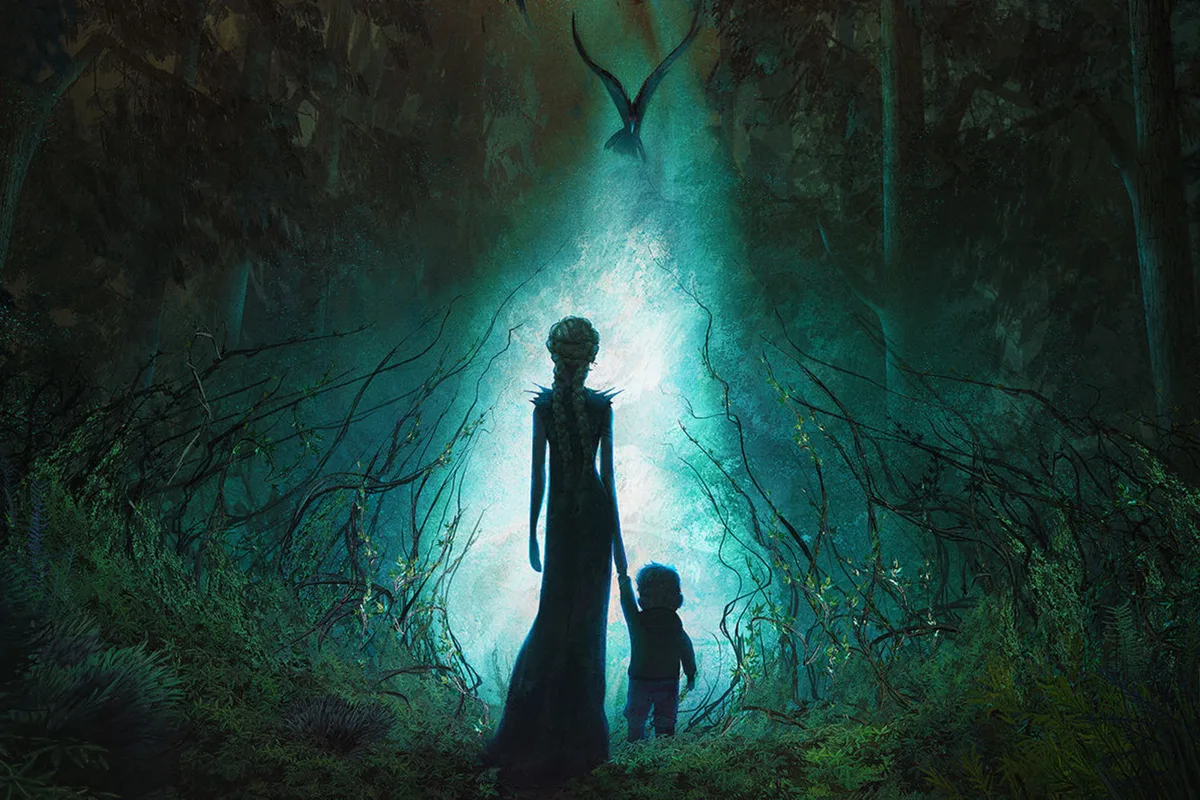
Prue McKeel is a determined teenager whose younger brother, Mac, is abducted by a group of crows.
To rescue him, she enters a mysterious forest known as the Impassable Wilderness.
The territory contains talking animals, bandits and powerful figures whose ambitions threaten the forest's balance.
Prue is joined by Curtis Mehlberg, a classmate who becomes involved in her increasingly dangerous journey.
Their rescue mission gradually develops into a larger conflict.
Prue must discover abilities and reserves of courage she did not previously recognize.
The narrative includes familiar elements of fantasy adventure.
There is an unfamiliar world, a forbidden landscape and a protagonist forced to confront forces she does not understand.
But beneath the scale of the setting lies a simple emotional objective.
Prue wants to save her brother.
That family relationship provides an intimate reason for the audience to care about the wider adventure.
It also illustrates the emotional focus Knight describes when discussing the film's long development.
Peyton Elizabeth Lee and Jacob Tremblay lead the voice cast
Peyton Elizabeth Lee provides Prue's original voice.
Jacob Tremblay plays Curtis.
The ensemble also includes Carey Mulligan, Mahershala Ali, Angela Bassett, Awkwafina, Jake Johnson and Charlie Day.
Amandla Stenberg, Maya Erskine, Jemaine Clement, Tantoo Cardinal, Tom Waits and Richard E. Grant are among the additional performers confirmed by the American Film Institute.
The cast brings together actors with experience across film, television and music.
Their performances are an important part of creating the characters.
But voice acting is only one stage of the animation process.
Animators must translate vocal rhythm, emotion and intention into physical movement.
That translation is particularly demanding when the characters exist as tangible puppets.
An expression or gesture must be produced through real materials, mechanical parts and carefully controlled changes between frames.
The objective is not merely to synchronize mouth movements with recorded dialogue.
It is to convince the audience that an artificial figure can think, feel and respond.
Wildwood opened AFI Fest on October 21
Wildwood served as the opening-night film of the 40th AFI Fest in Los Angeles on Wednesday, October 21, 2026.
The American Film Institute confirmed the screening in an official announcement dated September 9.
The event marked the movie's US premiere.
It was not its world premiere, as the film had previously appeared on the international festival circuit.
Knight's comments on generative AI emerged from interviews conducted around the Los Angeles event.
The date of the screening therefore differs from the publication dates of the articles reporting his remarks.
Those appeared on October 22 and 23.
The movie then opened in US theaters on Friday, October 23.
That domestic release should not automatically be described as a simultaneous worldwide theatrical opening.
International schedules may vary between territories.
The current story connects the film's American launch with the director's comments about its creative philosophy.
Knight is rejecting substitution, not every form of AI
One of the most important details in the interviews is Knight's willingness to distinguish between different technologies and uses.
LAIKA already depends on sophisticated digital tools.
Knight also acknowledges that artificial intelligence may offer major benefits outside artistic production.
Speaking with The Verge, he pointed to medicine and scientific research as areas in which the technology could make valuable contributions.
His strongest objections concern replacing creative workers and using existing artistic output without appropriate respect for its creators.
This distinction prevents the story from becoming a simplistic argument between innovation and nostalgia.
Not every form of automation performs the same function.
Software helping an animator prepare a mechanical component is different from a system generating an entire visual sequence from previously created material.
The implications for authorship, consent, compensation and employment can differ considerably.
There is also a question of control.
Knight wants artists to remain responsible for the expressive choices that audiences encounter.
That principle defines his view of LAIKA's approach.
The interviews do not establish an absolute AI-free certification
It might be tempting to summarize Knight's comments by claiming that Wildwood was made without any form of artificial intelligence.
That would go beyond what the available evidence establishes.
The director is clearly opposed to generative AI replacing creative labor.
His statements do not constitute a complete technical audit of every software system and external supplier involved in the film.
In another interview, he acknowledged that a large production may not know every technique used by outside vendors.
The supported conclusion therefore concerns his stated artistic position and LAIKA's overall production methods.
The studio builds films around physical puppets, sets, animators and specialist technical teams.
It also uses advanced digital technologies.
Those facts are compatible.
They should not be turned into an unsupported guarantee about every individual procedure used during production.
LAIKA occupies a distinctive place in animation
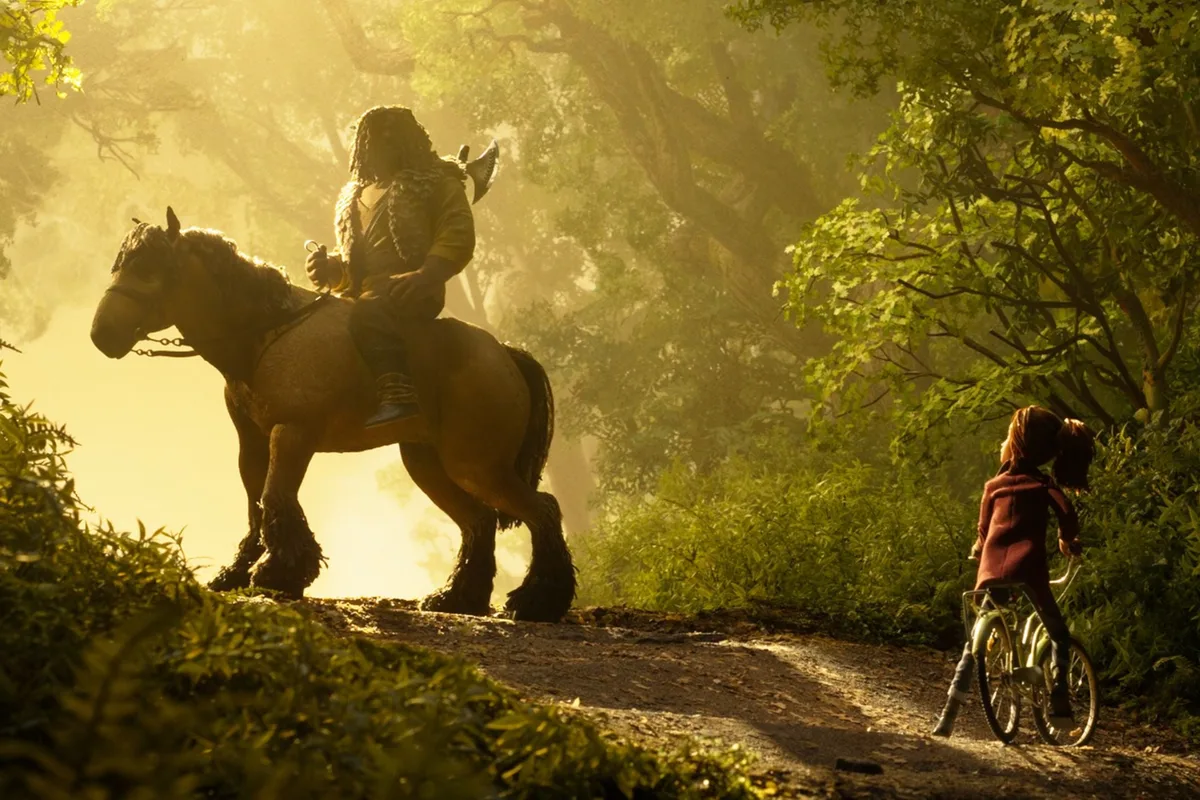
Since Coraline, LAIKA has established a recognizable creative identity.
Its films combine fantasy worlds, emotionally complicated characters and physical textures that remain visible even within sophisticated cinematic images.
The studio has not avoided technological innovation.
Instead, it has introduced new manufacturing and animation techniques while retaining a fundamentally physical production process.
Wildwood pushes that approach toward a larger scale.
Its characters and environments require engineering solutions that earlier generations of stop-motion filmmakers could not easily have imagined.
Yet its animation still depends on people making a long sequence of small, deliberate decisions.
That continuity is what Knight wants to preserve.
At a time when rapid image production is becoming an increasingly significant economic consideration, LAIKA is defending an approach that accepts extended production schedules as part of its identity.
That does not mean it is the only legitimate form of animation.
It represents a particular combination of aesthetic choices, technical methods and industrial priorities.
The finished film must still be judged on what audiences experience rather than the difficulty of its manufacture alone.
The generative AI debate extends beyond stop-motion
Knight's concerns reach well beyond LAIKA.
Generative AI is becoming part of discussions about screenwriting, concept art, visual effects, dubbing and digital recreations of performers.
These applications raise different questions.
An actor may be concerned about control over their likeness.
An illustrator may want to determine how existing artwork is used.
A production company may see opportunities to reduce the time and cost of certain tasks.
The same technological developments that assist some workers could threaten the conditions under which others earn a living.
Knight's position represents one response to those changes.
He wants significant creative decisions to remain attached to identifiable human artists.
Other filmmakers and studios are more willing to experiment with generative systems.
The broader debate is therefore not simply about whether technology should exist in entertainment.
It concerns how creative work will be organized, valued and controlled.
Wildwood provides a particularly tangible example because its production relies on a famously labor-intensive animation technique.
Wildwood opened in US theaters on October 23
LAIKA's latest feature reached American theaters on Friday, October 23, 2026, two days after its AFI Fest presentation.
Directed by Travis Knight and written by Chris Butler, the adaptation of Colin Meloy's novel follows a teenager entering a magical forest to rescue her younger brother.
Its release has become an occasion for the director to explain his opposition to generative AI replacing artists.
He is not asking filmmakers to abandon computers, 3D printers or advanced mechanical systems.
He wants those technologies to remain tools used by people with the experience and imagination to make meaningful artistic decisions.
That belief cannot settle every debate about AI or establish the artistic merits of Wildwood by itself.
It does, however, underline why the process of making a film can be an important part of its creative identity.
For LAIKA, the time spent moving a puppet through a miniature forest is not merely a production expense.
It is part of the way the studio has chosen to tell its stories.