A finished screenplay, but no announced production
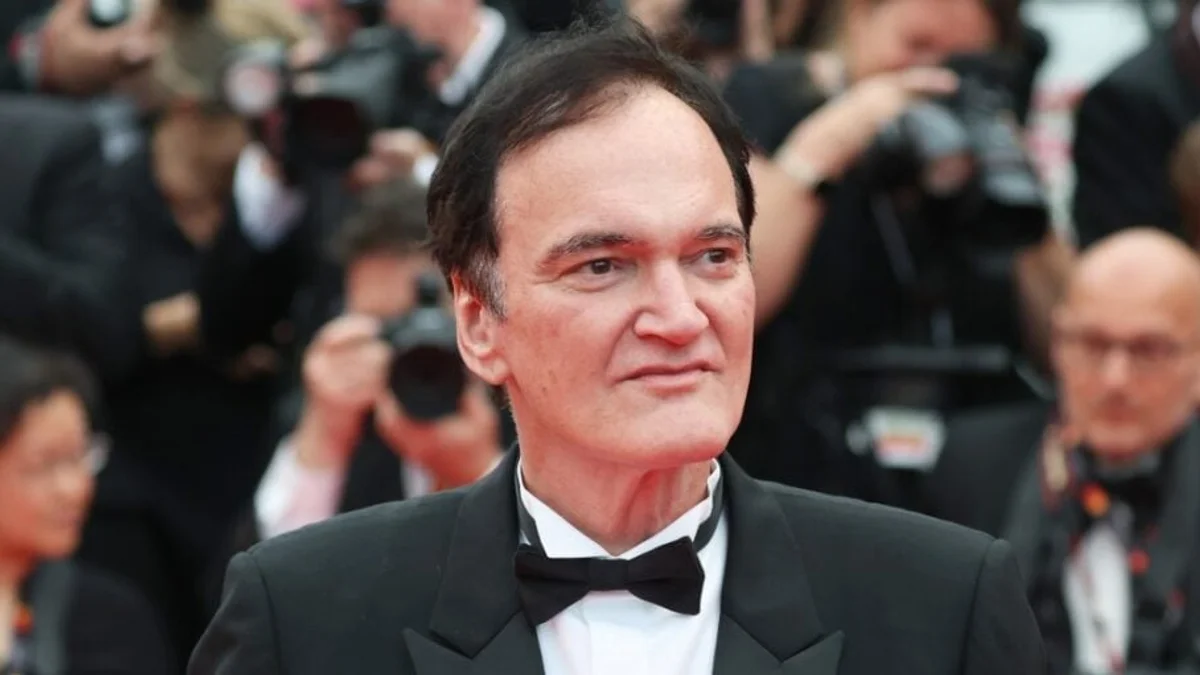
Quentin Tarantino has provided an update on his next film, and it offers both encouragement and frustration for audiences waiting to see him return behind the camera. The director says he has written a screenplay he genuinely likes. He has not revealed its title, storyline or potential cast, however, and he has not announced a production schedule.
The comments came during his appearance on The Graham Norton Show, broadcast on BBC One on October 16, 2026. According to reports published by Variety and Première on October 18, Tarantino intends to concentrate on theater first, then spend time with his family before deciding what to do next.
Two separate facts should therefore be kept distinct. A new screenplay exists, according to its author, and he is pleased with the result. There is no confirmation that it has entered production or that Tarantino has irrevocably decided to make this particular script his final directorial feature.
The distinction matters because every statement about his tenth film has become a major entertainment news event. The project is awaited not simply as another movie, but as a possible conclusion to one of contemporary cinema's most recognizable bodies of work.
Tarantino appears determined not to allow that expectation to control his pace.
The burden of a final movie discussed for years
The filmmaker has long spoken about his intention to stop directing after ten features. It is not a studio decision or contractual requirement, but a personal philosophy about filmmaking and the legacy he wants to leave behind.
Under his own accounting, Kill Bill: Vol. 1 and Kill Bill: Vol. 2 count as a single movie because they were conceived as one work before being released in two parts. That makes 2019's Once Upon a Time... in Hollywood his ninth feature, with the next one potentially becoming his tenth.
The approach has divided fellow directors. In July 2026, Christopher Nolan told The Telegraph, in remarks subsequently reported by Variety, that he hoped Tarantino would not follow through with the retirement plan. Nolan argued for a different understanding of filmmaking, treating each new project with complete seriousness rather than deciding the limits of a career in advance.
The disagreement reveals two contrasting artistic philosophies. Tarantino regards his filmography as something that could be deliberately shaped into a complete collection. Other filmmakers prefer to treat creation as an open-ended process without a predetermined final entry.
His latest comments do not settle that debate. They demonstrate that he is not ready to commit the next stage of his life to the symbolic weight of his supposed final film.
The Movie Critic was already abandoned
This caution is not entirely new. Before the screenplay he has now discussed, Tarantino had intended to make The Movie Critic as his tenth feature. The project was associated with a story about film criticism in 1970s America.
He ultimately abandoned it, later explaining that the material no longer excited him sufficiently. Part of the difficulty was its resemblance to work he had already undertaken while recreating historical Los Angeles for Once Upon a Time... in Hollywood.
That abandoned project provides an essential warning against treating a screenplay as an inevitable production. Tarantino has already demonstrated that he can set aside a script even after discussing it as the conclusion of his directing career.
No verified source establishes that his newly mentioned screenplay is a revised version of The Movie Critic. Its subject remains undisclosed. Describing it as the return of that abandoned project would turn speculation into a false statement of fact.
What is established is Tarantino's satisfaction with his writing. That represents genuine creative progress, but not yet an official movie announcement.
The West End comes before Hollywood
The director's immediate priority has a title: The Popinjay Cavalier. Written and directed by Tarantino, his first stage play is scheduled to begin performances at London's Phoenix Theatre on February 23, 2027. The announced run currently extends through June 13.
Sacha Baron Cohen will play Rupert Sebastian Thomas Jr., an actor traveling to Paris in the 1830s to perform at the Comédie-Française. His ill-judged comments about the French lead to an increasingly dangerous series of adventures involving disguises, deception and swordplay.
The production is presented by Sonia Friedman Productions and Sony Pictures Entertainment. Its official publicity describes a swashbuckling comedy inspired by classic adventure films and the romantic spectacle of Hollywood's earlier eras.
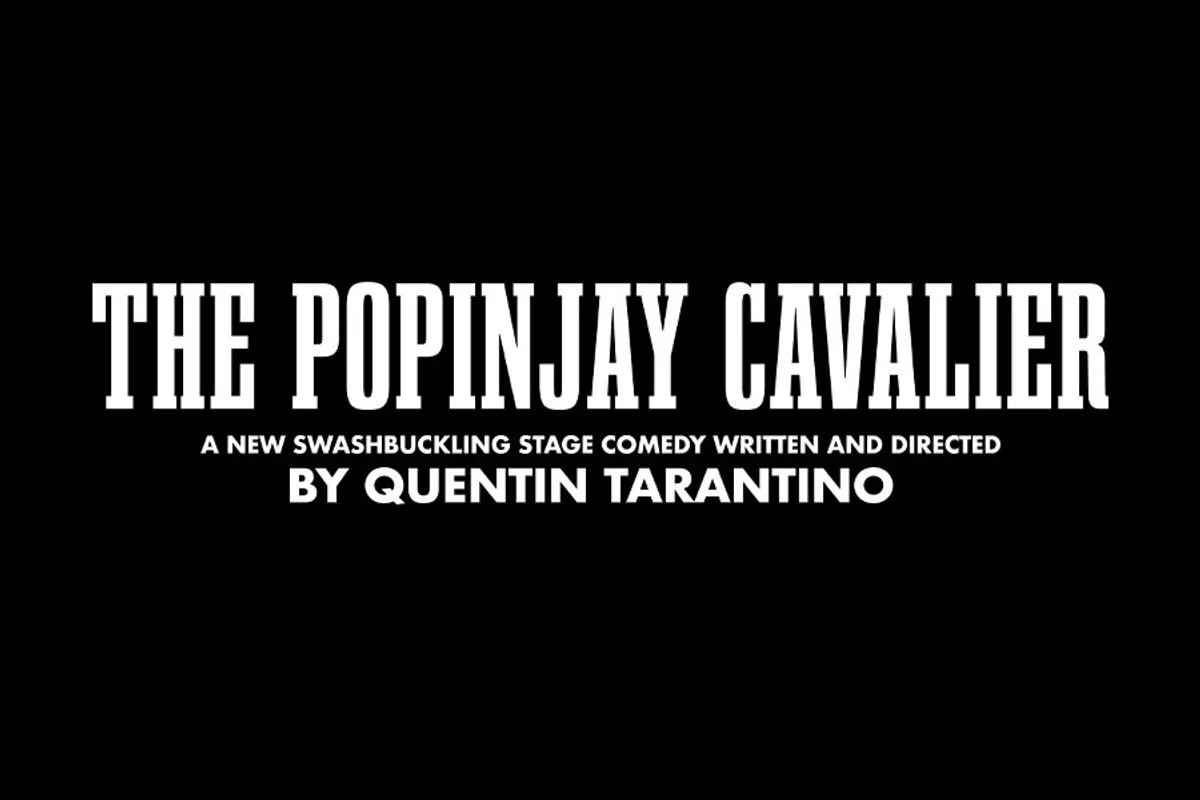
Tarantino explained that The Popinjay Cavalier initially began as a movie screenplay. While developing it, he decided the story would work better onstage. That evolution helps explain why theater has become such an important focus: the production is not merely an activity designed to occupy him before the tenth movie, but a meaningful artistic choice.
Theater also imposes very different creative constraints. Cinema allows scenes to be constructed through editing, camera placement and multiple takes. A live performance depends on uninterrupted acting, physical staging and the immediate response of an audience.
For a director so closely associated with dialogue, rhythm and prolonged dramatic tension, the experience could become an important creative development. Audiences will nevertheless need to wait for the first performances before judging how his filmmaking sensibilities translate to the stage.
Sacha Baron Cohen is an intriguing creative partner
Casting Sacha Baron Cohen in the leading role adds another dimension of interest. The actor has extensive experience with comedy, improvisation and situations designed around social discomfort. His most recognizable characters frequently exploit the collision between provocative behavior and established conventions.
A collaboration with Tarantino is intriguing without guaranteeing the result. The filmmaker has always enjoyed talkative characters, verbal power struggles and scenes in which tension suddenly transforms into violence or absurd comedy.
The European setting of the 1830s also offers something different from his previous work. Tarantino has repeatedly reinvented the conventions of Westerns, crime movies, war films and exploitation cinema. A swashbuckling stage comedy gives him another tradition of popular entertainment to explore.
It would nevertheless be premature to predict exactly how those influences will combine. The play is officially scheduled and its leading performer is confirmed, but its critical reception and eventual artistic success remain unknown.
Why Tarantino does not appear eager to say goodbye
The anticipation surrounding his tenth feature contains a contradiction. The more Tarantino describes his next movie as his final directorial project, the more every detail surrounding it becomes a cultural event. Script ideas, possible actors and changes of schedule acquire unusual significance.
It is possible that this pressure contributes to his caution, but that remains interpretation rather than an established explanation. Tarantino has not said that audience expectations or fear of disappointing viewers determine his current timetable. His stated priorities are experiencing the theater production, spending time with his family and living beyond the demands of filmmaking.
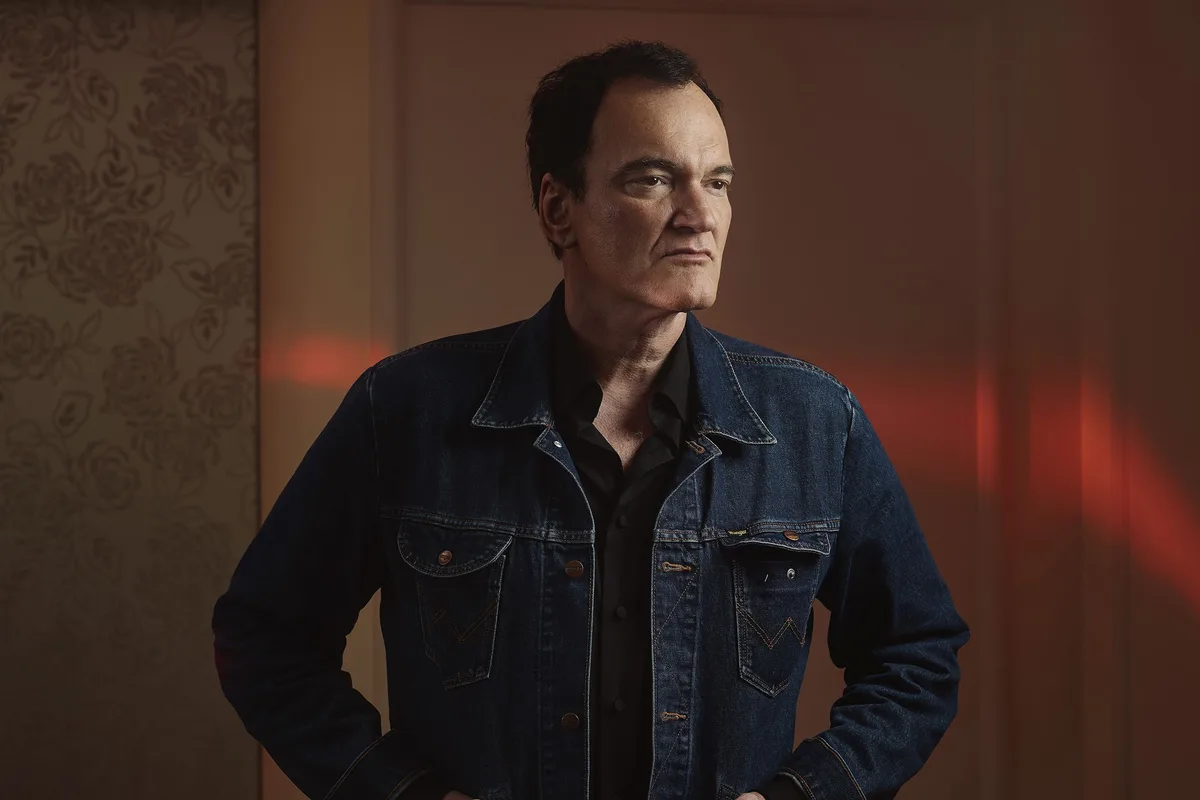
His position also reflects a degree of creative independence. Tarantino has achieved sufficient recognition that he does not need to release a feature every few years to maintain his identity within popular culture.
Since 2019, he has remained active through writing and projects connected to cinema history. His relationship with filmmaking no longer depends exclusively on the features he directs himself.
Theater extends that freedom. It allows him to develop and present an entirely new work without immediately passing the symbolic threshold of his tenth directed film.
The Cliff Booth movie is not his tenth directed feature
The situation can appear confusing because another Tarantino-related movie is also moving toward release. The Further Mis-Adventures of Cliff Booth continues the fictional world of Once Upon a Time... in Hollywood, with Brad Pitt returning as stuntman Cliff Booth.
David Fincher directs the film, while Tarantino provides the screenplay. That distinction is crucial: the movie is not being directed by Tarantino and therefore does not count as his tenth feature under the method he uses to describe his own filmography.
The collaboration nevertheless illustrates an interesting evolution. Tarantino is allowing another filmmaker to direct a character and world he originally created. His screenwriting career can continue independently of his decision to limit the number of films he directs.
It also explains why announcements concerning his writing should not automatically be treated as news about his directorial retirement.
A screenplay written by Quentin Tarantino and a movie directed by Quentin Tarantino are two different creative events, even when they attract similar levels of attention.
An artist determined to choose his own ending
Once Upon a Time... in Hollywood remains Tarantino's most recent feature as director. Seven years have passed without another directorial release, transforming his tenth movie into an object of almost permanent speculation.
The October 18 announcement provides a partial answer. Tarantino has continued writing and possesses a screenplay he considers promising. But he is not yet ready to move into production.
His next artistic step is considerably more concrete. The Popinjay Cavalier has a theater, a leading performer, a production team and scheduled performances. Unlike the proposed tenth movie, it is an officially programmed production.
It might be tempting to interpret his theater debut as an effort to postpone retirement from cinema indefinitely. His statements do not establish that. He says he wants to undertake a new creative experience and then decide what happens next.
For the moment, his tenth film exists as a screenplay without a public title, announced cast, confirmed shooting schedule or release date. The only certainty is that its author does not intend to rush it.
For a filmmaker who has built his reputation on controlling the shape of his stories, the decision seems appropriate. Quentin Tarantino still wants to choose when the final act begins.