
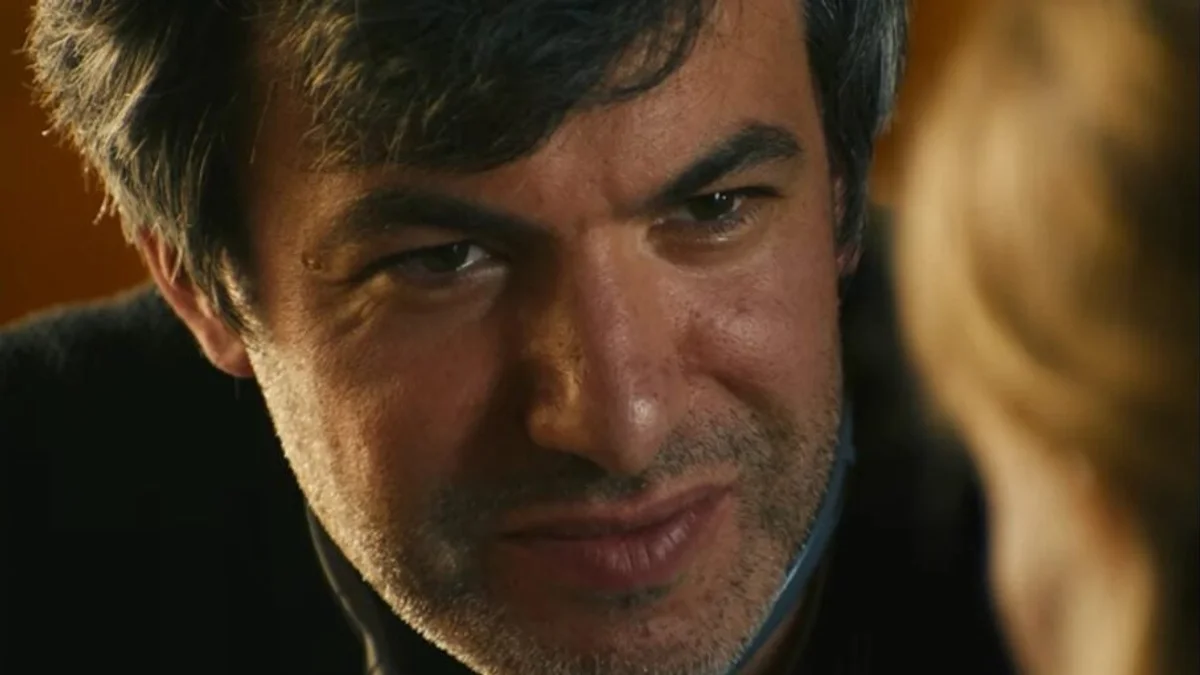
When a studio finances a movie, the expected result is usually straightforward: a completed movie.
The agreement behind You Can See Everything reportedly allowed for a very different outcome.
Nathan Fielder and Lance Oppenheim could begin filming, investigate Elizabeth Holmes and ultimately decide to deliver nothing.
That unusual arrangement was described by Oppenheim in an interview with IndieWire and reported by Variety Australia on October 25, 2026.
Fielder wanted a mechanism that would allow the filmmakers to terminate the project if they failed to discover a sufficiently compelling story.
The condition was especially significant because Holmes's rise and fall had already generated extensive media coverage.
The directors did not want to make another documentary merely because they had been given access to a notorious public figure.
They wanted to find something that justified telling the story again.
Why Fielder wanted an escape clause
Elizabeth Holmes was already one of the most extensively documented figures in recent Silicon Valley history.
Her company Theranos promised to revolutionize medical testing through technology that supposedly required only small blood samples.
Investigations subsequently exposed serious discrepancies between those claims and the company's actual capabilities.
Holmes was eventually convicted of fraud-related charges involving investors.
By the time Fielder and Oppenheim considered making a film, the story had already inspired investigative articles, books, podcasts and screen productions.
The documentary The Inventor: Out for Blood in Silicon Valley had examined the company's collapse.
Hulu's The Dropout, starring Amanda Seyfried, dramatized the same broad events.
Fielder was concerned that another project might simply repeat an established narrative.
That did not mean the subject lacked importance.
It meant the filmmakers needed a reason to return to it.
They wanted to begin filming without promising that the process would necessarily produce a new perspective.
A24 reportedly agreed that the filmmakers could deliver nothing
According to Oppenheim, Fielder approached A24 with a specific proposal.
The directors would explore the possibility of a documentary and begin shooting.
But if the material failed to develop into a meaningful story, they wanted the ability to stop without delivering a finished film.
Oppenheim says the company accepted the request.
Fielder described the same principle in a separate interview with Wired.
He explained that he was intrigued by Holmes but had not yet discovered a clear documentary angle.
He wanted to see what would happen if cameras entered her life.
The option to abandon the project meant he did not have to force the footage into a satisfying narrative simply because filming had begun.
An important qualification applies.
The directors have publicly described the arrangement, but the contract itself has not been published in the sources reviewed.
Its precise legal wording, financial limitations and cancellation procedures are therefore unknown.
The verified reporting concerns what Fielder and Oppenheim say A24 allowed them to do.
It does not establish every term of the underlying agreement.
The arrangement changed how they approached filming
Oppenheim describes the condition as transformative.
It allowed the filmmakers to explore situations without immediately having to prove that every scene would become part of a finished movie.
The distinction matters in documentary production.
Fiction films normally begin with scripts that organize their narratives, even when the material changes during shooting.
Documentary investigations often develop in less predictable ways.
An initial theory may prove inaccurate.
An apparently promising conversation may reveal very little.
A subject may refuse to cooperate or respond in ways the filmmakers did not anticipate.
Under conventional production pressure, such developments can create serious problems.
Budgets and schedules still have to be justified.
The team may feel compelled to identify a story whether or not the evidence supports it.
The possibility of abandonment changes those incentives.
It allows filmmakers to pursue questions without necessarily determining the answers in advance.
That freedom does not guarantee an honest or successful documentary.
It does, however, create room for a more exploratory process.
Filming began 34 days before Holmes went to prison
The timing of the original production was unusually tight.
Holmes was preparing to begin her prison sentence in May 2023.
She agreed to let Fielder, Oppenheim and a small film crew document her private life.
Filming began 34 days before her incarceration.
Her partner Billy Evans also participated.
For Holmes and Evans, the cameras offered an opportunity to present their lives and perspectives directly.
They disputed aspects of the public narrative surrounding the Theranos case.
But gaining access to the couple did not require the filmmakers to accept those claims as factual.
Fielder approached the material with considerable skepticism.
In earlier comments reported by Variety, he described the unsettling experience of finding Holmes personally convincing while remaining doubtful about her credibility.
That contradiction became part of the film's central tension.
Unusual access did not eliminate questions of reliability.
It made those questions increasingly important.
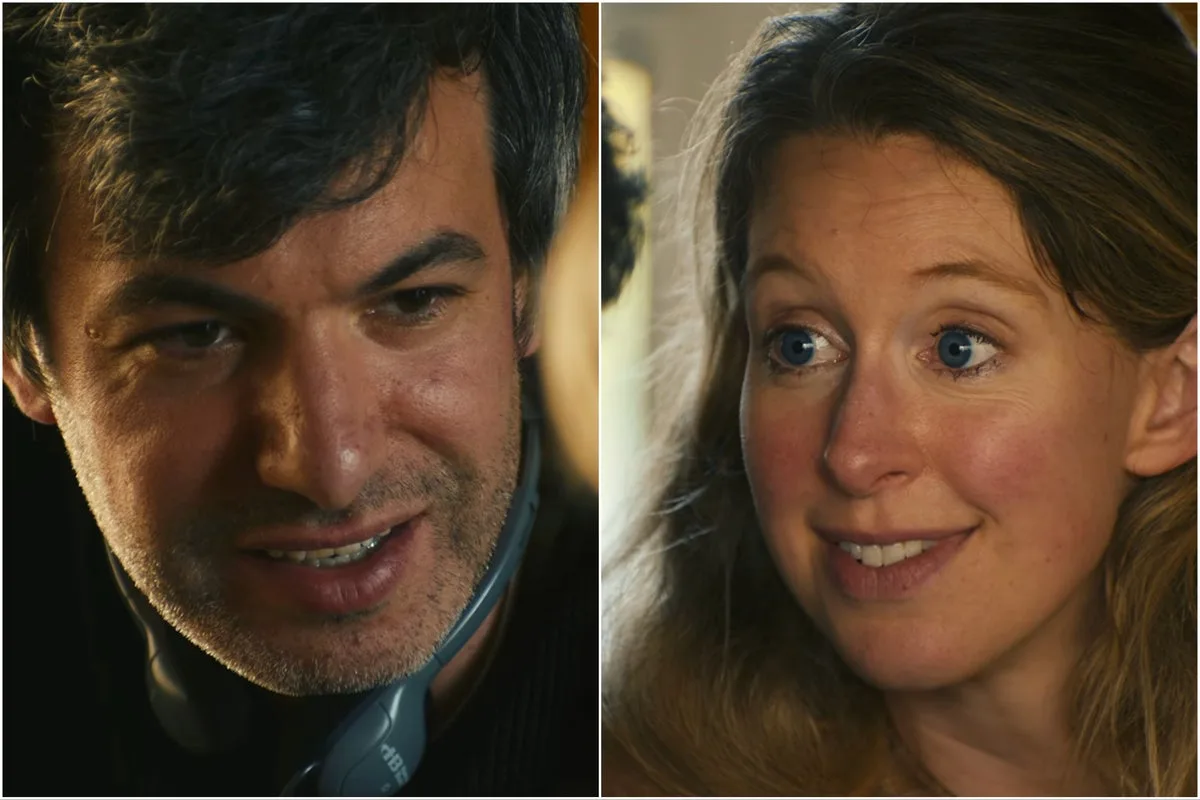
The directors often disagreed about what they were seeing
Fielder and Oppenheim did not always interpret the filmed events in the same way.
After certain interactions, they discussed what they believed had happened.
Their conclusions could be strikingly different.
One might see a revealing moment, while the other recognized a performance designed for the cameras.
Those disagreements helped shape the project.
Fielder has explained that the documentary became especially interesting when the filmmakers realized they could watch the same situation and disagree about its meaning.
That raises a fundamental question about nonfiction filmmaking.
A camera can record an action without revealing the motives behind it.
A person may sound sincere while attempting to persuade an audience.
They may also be sincere and strategic at the same time.
The presence of a camera can influence behavior even when participants appear relaxed.
Documentary filmmaking therefore involves interpretation as much as observation.
Editing decisions determine which moments are presented together and how viewers understand their relationships.
You Can See Everything turns those uncertainties into an important part of its subject.
Fielder brings his interest in staged reality to the project
Fielder is widely known for work that blurs the boundaries between spontaneous behavior and constructed situations.
His television projects include Nathan for You, The Rehearsal and The Curse.
These productions frequently examine how people behave when placed inside unusual social environments.
Nathan for You combined eccentric business proposals with reactions from real participants.
The Rehearsal explored attempts to prepare for personal experiences through elaborate simulations.
Both works raised questions about performance, responsibility and control.
With Elizabeth Holmes, those concerns acquire a different significance.
The documentary's central subject is not merely someone with an unusual public personality.
She is a former technology executive convicted in a case where the credibility of corporate claims played a central role.
The filmmakers must therefore examine what they are being told without automatically accepting the account.
At the same time, their own decisions influence what audiences eventually see.
The resulting tension is consistent with Fielder's established artistic interests.
Lance Oppenheim contributes a different documentary approach
Oppenheim's career brings another perspective to the collaboration.
He previously directed Some Kind of Heaven, a documentary about residents of a large retirement community in Florida.
His work often examines how people understand their lives within distinctive social environments.
He also uses carefully composed images that sometimes resemble the visual language of fiction.
That approach can create uncertainty about how much a scene is being observed and how much its presentation influences the audience.
The partnership with Fielder therefore connects two filmmakers interested in the relationship between behavior and self-presentation.
They do not always agree about what their images mean.
But those differences became productive rather than preventing the film from developing.
The creative freedom described by Oppenheim gave them room to investigate those contradictions.
It also allowed their questions to evolve after the initial filming period.
Holmes wanted to tell her side of the Theranos story
By the time the cameras arrived, the Theranos scandal had already been examined extensively.
The company had promised major advances in blood testing.
Investigations and legal proceedings subsequently challenged the accuracy of those claims.
Holmes was convicted of fraud against investors and began serving her sentence in 2023.
She and Billy Evans allowed the filmmakers unusual access to their home.
That access created an opportunity for the couple to present a more personal account.
However, their willingness to speak does not alter the established legal outcome.
Nor does the documentary's existence establish that their version of events is accurate.
The filmmakers' responsibility includes examining such claims critically.
That is especially important when a documentary subject has a direct personal interest in changing public perceptions.
Giving someone an opportunity to speak is not the same as endorsing what they say.
The tension between those ideas helps explain why questions of truth and representation became central to the project.
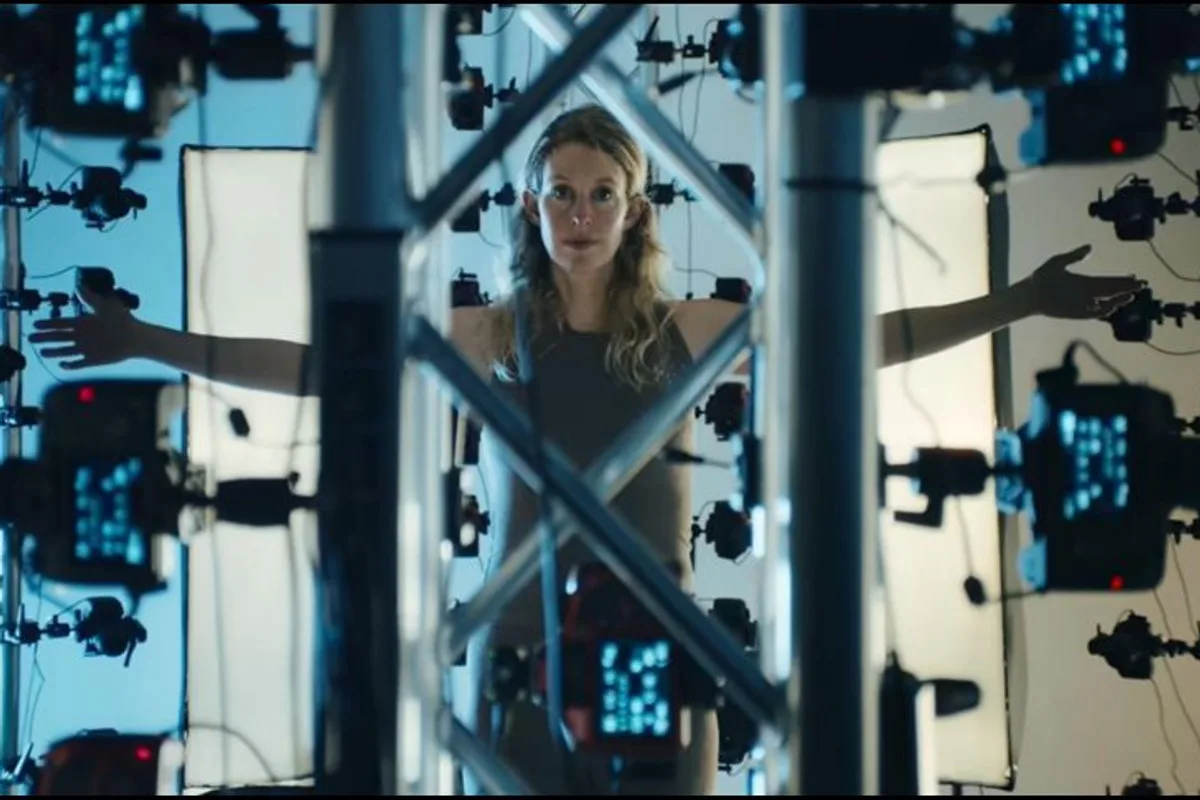
The title questions the promise of complete visibility
You Can See Everything sounds like a promise of unrestricted access.
The filmmakers enter Holmes's private world and record situations that would ordinarily remain unseen.
But more footage does not necessarily lead to greater certainty.
A person can provide extensive explanations without becoming easier to understand.
A gesture may support several incompatible interpretations.
Editing can create relationships between events that participants themselves did not recognize.
The film therefore examines the limits of documentary knowledge.
Viewers are asked to consider not only what Holmes and Evans say, but also how Fielder reacts to them.
The filmmakers become part of the material they are attempting to understand.
This approach distinguishes the project from a straightforward chronological account of Theranos's collapse.
The question is not only what happened at the company.
It is also whether extraordinary access to someone's private life can ever reveal their intentions with certainty.
A film that might never have been completed
The reported arrangement with A24 changes how the finished movie can be understood.
Today, You Can See Everything exists.
It has screened at festivals, opened in theaters and attracted extensive critical discussion.
But its creators explain that none of those outcomes was guaranteed when they began.
They did not know whether the initial encounters would reveal anything new.
They could not predict how the story would develop after Holmes entered prison.
They also lacked a predetermined narrative structure that could organize the entire project.
Such uncertainty is not unusual in documentary filmmaking.
What is less common is an explicitly described agreement allowing the project to end without a completed deliverable.
That made the arrangement a risk for both filmmakers and studio.
A24 could have invested resources in material that never reached audiences.
In return, the directors could pursue their questions without forcing a conclusion.
The arrangement should not be assumed to apply to other A24 productions.
The evidence concerns this specific film and the freedom its directors say they received.
An unusual deal in an industry built around deliverables
Film financing usually involves schedules, budgets and delivery obligations.
Producers need to anticipate what will be completed and when.
Distributors organize release plans around works expected to exist.
Allowing a documentary to be abandoned after filming begins introduces an additional layer of uncertainty.
In some circumstances, that freedom could prove expensive.
It may also encourage more rigorous exploration.
A filmmaker who discovers that the material does not support a compelling story can walk away rather than manufacture an argument.
Such freedom cannot eliminate mistakes or guarantee artistic success.
But it changes the relationship between investment and creative obligation.
Instead of financing only a predetermined final product, the studio is also supporting an inquiry.
That is the distinction Oppenheim emphasizes when discussing the experience.
A24 has supported numerous filmmakers with unconventional approaches.
Nevertheless, there is no verified basis for claiming that the company routinely grants similar terms to every director.
The reported agreement remains distinctive to You Can See Everything.
The documentary is already playing in American theaters
You Can See Everything is no longer an unfinished project.
A24 confirms its United States theatrical release on October 16, 2026.
The film also appeared at major festivals, including the New York Film Festival.
Film at Lincoln Center describes it as a work examining the limits of documentary observation and the unstable relationship between reality and performance.
Its runtime is approximately two hours and fifty-five minutes.
International release schedules are different.
Variety reports that the United Kingdom and Australia are scheduled to receive the film on November 20.
Sony Pictures Germany lists December 3, 2026, for the German theatrical release.
The fact that the documentary is already playing in the United States does not mean it has opened everywhere.
As of October 26, several international markets are still awaiting their local releases.
The right to fail helped make the film possible
The revelation about Fielder's agreement with A24 is more than an unusual production anecdote.
It reveals a distinctive approach to documentary creation.
Fielder did not want to announce a conclusion and then search only for images that supported it.
He wanted to begin with an unanswered question.
Oppenheim shared that curiosity while bringing his own interpretations to the material.
Their disagreements became part of the exploration.
The resulting film does not claim that extraordinary access automatically produces complete knowledge of its subjects.
Instead, it questions how truth, performance and interpretation interact whenever a camera enters someone's life.
The October 25 disclosure highlights a paradox at the heart of nonfiction filmmaking.
To discover something genuinely new, filmmakers may first need the freedom to discover nothing at all.
According to Fielder and Oppenheim, A24 accepted that possibility.
The documentary was eventually completed, but part of its creative identity may come from the fact that it did not have to be.