

The London Film Festival marks 70 years by looking forward
The 70th BFI London Film Festival takes place from October 7 to October 18, 2026, with screenings and events in London and selected venues across the United Kingdom. Its official program comprises 251 works from 88 countries, including feature films, shorts, series and immersive productions.
The British Film Institute has announced 33 world premieres, 16 international premieres and 20 European premieres. These descriptions refer to different stages of a film's public exhibition. A European premiere, for example, does not mean a movie has never been screened anywhere in the world.
The BFI also reports that 109 works in the program were made by women filmmakers, representing 43 percent of its announced selection. That figure describes the festival's programming rather than gender representation across the film industry as a whole.
Kristy Matheson, Artistic Director of BFI Festivals, has framed the anniversary edition around the social and political turbulence of the present, highlighting stories concerned with community, care and moral uncertainty alongside genre filmmaking and cinematic spectacle.
The combination reflects an important function of international festivals. They are not simply platforms for the filmmakers whose names audiences already recognize. They also bring together films that might otherwise struggle to reach the same distributors, critics and viewers.
Elsinore opened the festival, with The Debut set to close it
The opening gala took place on October 7 at London's Royal Festival Hall with the European premiere of Elsinore, directed by Simon Stone. Andrew Scott portrays British actor Ian Charleson in a story connected to his acclaimed theatrical career and his performance as Hamlet.
The venue gives the screening a particularly meaningful location. The Royal Festival Hall stands near the National Theatre, one of the institutions closely associated with the events depicted in the film. The opening therefore brought a major London cultural story back to the neighborhood in which much of its significance was established.
Elsinore has not yet received its general UK theatrical release. Studiocanal has scheduled that opening for January 29, 2027, while Focus Features has announced a limited American release on November 20, 2026. A festival premiere should not be confused with immediate commercial availability.
Jesse Eisenberg's The Debut is scheduled to close the festival on Sunday, October 18, with its UK premiere. The film centers on community theater, giving the anniversary edition another story concerned with the collective relationships that make artistic creation possible.
As of October 16, the closing event has not yet taken place, and the festival's main competition winners have not been announced.
From Koreeda to Rubaiyat Hossain, the competition crosses borders
Ten films are competing for the BFI London Film Festival's Best Film Award. The selection brings together productions from Europe, Asia and Latin America, representing filmmakers with very different creative backgrounds.
Japanese director Hirokazu Koreeda presents Look Back, a coming-of-age story about two girls united by their ambition to create manga. The project returns to themes associated with much of his work, including friendship, emotional vulnerability and the relationships through which individuals understand themselves.
Rubaiyat Hossain's The Difficult Bride is an international co-production rooted in Bangladesh. It follows a young woman whose wedding preparations become a source of pressure over her body and appearance. The film uses fantasy and body horror to examine expectations imposed on women.
Brazilian filmmaker Benjamín Naishtat brings Glaxo, a period thriller set in Argentina. Sergei Loznitsa enters the competition with Imperium, a documentary examining Soviet history through archival footage captured by Italian camera operators during the early 1970s.
Other competing works include Carol Morley's 7 Miles Out, Christine Molloy and Joe Lawlor's Act 3, Giovanni Tortorici's Ketticè, Lili Horvát's My Notes on Mars, Małgorzata Szumowska and Michał Englert's The Idiot(s), and May el-Toukhy's Woman Unknown.
The competition does not demand a single interpretation of auteur filmmaking. An archival documentary, an intimate account of grief, a story of adolescence and a work drawing on supernatural horror can all compete within the same selection.
American documentary filmmaker Sam Pollard chairs the Official Competition jury alongside filmmaker Mariano Llinás and industry executive Julie La Bassiere. The Best Film winner is due to be announced on October 18.
First features receive more than a passing mention
The festival also dedicates a separate competition to debut features through the Sutherland Award. Its ten contenders include Olive Nwosu's Lady, Marie-Clémentine Dusabejambo's Ben’Imana, Aung Phyoe's Fruit Gathering and Sompot Chidgasornpongse's 9 Temples to Heaven.
These films reflect the event's interest in emerging filmmakers working across diverse cultural settings. Lady, set in Lagos, approaches urban Nigerian life through the experiences of a female taxi driver. Its selection offers exposure that can be especially valuable for a film without the marketing resources associated with a major commercial release.
The First Feature Competition jury is led by British Egyptian actor and producer Amir El-Masry. It is evaluating work by filmmakers at a particularly important stage: establishing themselves through an initial feature and trying to create the conditions for further projects.
Festival recognition may help secure industry meetings, distribution interest and future financing opportunities. It does not automatically guarantee international theatrical distribution or provide the funding required for a second feature.
That distinction is worth emphasizing. Festival announcements can create the impression that every selected work is destined for a comparable international career, when the realities of independent distribution remain considerably more uneven.
Documentaries and shorts offer different ways of telling stories
The Documentary Competition, associated with the Grierson Award, features eight works. Among them are Ashley Duong's Ba's Book, Asmahan Bkerat's Concrete Land, William Greaves and David Greaves' Once Upon a Time in Harlem, and Erik Shirai's Sumo: Spirit Weighs Nothing.
The jury is chaired by Sandhya Suri, the British filmmaker whose Hindi-language drama Santosh attracted international attention following its 2024 Cannes premiere. Her career across documentary and fiction reflects the festival's openness to different approaches to storytelling.
Short filmmaking also has a substantial presence. The competition includes Rahul Roye's Aman, Elizabeth Hobbs' Daughters of the Late Colonel, Meriem Sakrouhi's Mon Taxi and Fatima Wardy's White Musk. Producer and writer Helen Simmons leads the jury for the Best Short Film Award.
Beyond the competition, Saoirse Ronan makes a directorial contribution with Paper Plane, one of several shorts by recognizable performers and filmmakers. Such work demonstrates that the short format is not only an entry point for newcomers. It remains a space for artistic experimentation throughout a career.
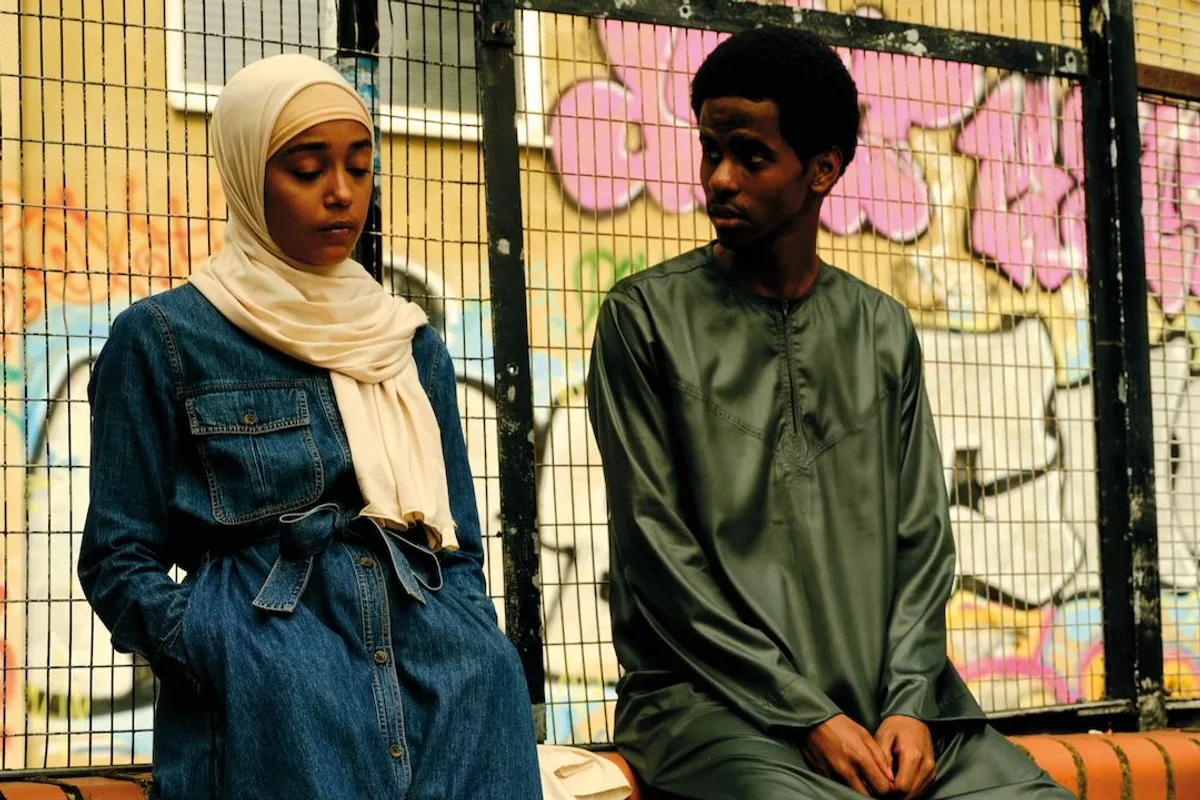
Short-film programs create a different viewing experience from a single feature. Several storytelling approaches can coexist within one screening, encouraging audiences to encounter filmmakers and subjects they might not otherwise select individually.
At a time when visibility is strongly influenced by streaming distribution and theatrical commercial expectations, that curatorial role remains one of a festival's most useful contributions.
Danny Boyle and Lee Chang-dong provide the major-event appeal
The emphasis on discovery does not exclude established directors. The anniversary edition features several internationally recognized filmmakers whose projects were attracting attention long before the festival began.
Danny Boyle presents Ink, a drama concerning a period of Rupert Murdoch's career in British newspapers. The film serves as the Mayor of London's Gala, connecting its story directly to the country's media history.
Lee Chang-dong returns with Possible Love, following his acclaimed Burning. Taika Waititi presents Klara and the Sun, adapted from Kazuo Ishiguro's novel. Cristian Mungiu brings Fjord, while Paweł Pawlikowski's Fatherland explores the fractured world of postwar Germany.
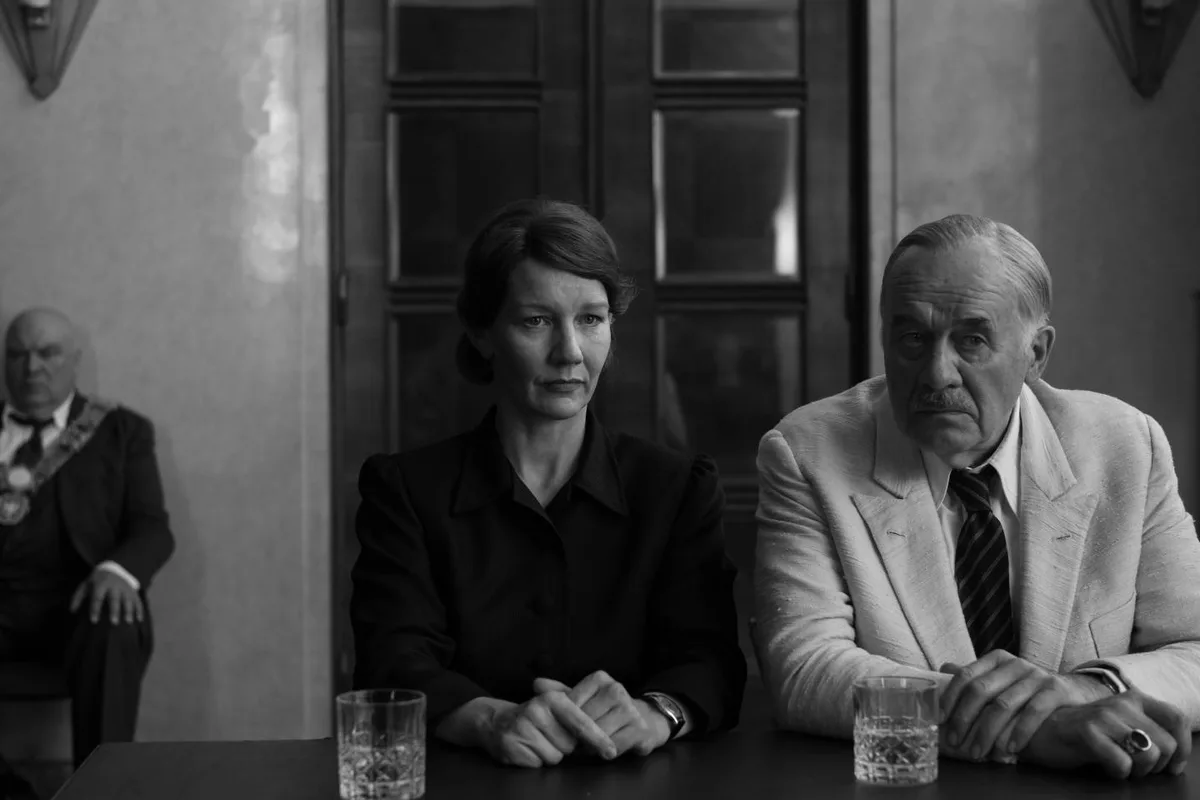
The broader lineup also includes new work associated with Martin McDonagh, James Gray, Mike Leigh, Andrew Haigh, Rodrigo Sorogoyen and Andrey Zvyagintsev. Their presence gives the event substantial visibility among audiences and media outlets that might not follow a festival devoted exclusively to emerging filmmakers.
This relationship between major names and discoveries is fundamental to the festival's identity. Established directors generate attention, while lesser-known productions can benefit from belonging to an event with an international reputation.
Exposure is not distributed equally, of course. Gala premieres command publicity that smaller screenings rarely receive. The challenge is to move some of that attention toward films that require more active discovery.
Television, virtual reality and AI expand the festival's boundaries
The BFI London Film Festival now extends beyond films designed for conventional theatrical projection. Television series, digital installations and immersive experiences occupy an increasingly visible place in the program.
Michael Winterbottom presents The Trip to the Northern Lights, bringing Rob Brydon and Steve Coogan together again for another journey combining travel, food and conversation. Its inclusion reflects the festival's willingness to showcase episodic productions alongside feature filmmaking.
The LFF Expanded section contains nine projects involving immersive art, virtual reality, artificial intelligence and video games. Water Body, created by Marshmallow Laser Feast, explores unseen connections between natural environments through a location-specific installation.
Another project, Red the Ocean Around U, developed by CROSSLUCID and Orion Facey, creates an AI-guided digital environment influenced by the presence and decisions of visitors.

These experiences should not be treated as equivalent to conventional movies. They require different forms of participation and may involve different technical and physical settings. Their place within the festival nevertheless shows how established screen institutions are responding to evolving artistic practices.
The technological experiments do not replace traditional filmmaking. They complement it by raising questions about how stories can be experienced, navigated and sometimes influenced by their audiences.
The festival extends its reach beyond London
Despite its name, the BFI London Film Festival is not limited to audiences in the capital. Ten partner cinemas across the United Kingdom are presenting selections from the program.
Participating cities include Manchester, Cardiff, Glasgow, Belfast, Nottingham, Birmingham, Sheffield, Newcastle, Edinburgh and Bristol. Talks and other events also contribute to the broader national program.
The expansion addresses a practical cultural question: how much can an international festival achieve if most of its discoveries remain concentrated in a few prestigious theaters in one city?
The partner venues are not screening all 251 works. They are presenting curated selections, allowing audiences outside London to experience part of the festival without traveling to Southbank.
For independent films, these additional screenings may offer valuable first encounters with regional audiences whose viewing habits and access to cultural events differ from those of the capital.
The awards are still ahead, but the festival's ambition is clear
Two days before the closing ceremony, the 70th BFI London Film Festival has yet to announce its principal competition winners. The Best Film, First Feature, Documentary and Short Film awards are expected on Sunday, October 18. Audience awards also form part of this year's event.
It would therefore be premature to declare an artistic winner or present the edition as fully concluded. The announced program, however, already provides a clear indication of its priorities.
Globally recognized directors, regional filmmaking, first features, documentary projects and immersive installations are being presented within a shared festival framework, despite their different budgets, audiences and commercial prospects.
That diversity does not solve the financial and distribution challenges of independent cinema. It does make them visible, while providing opportunities for encounters that may continue to matter after the screenings finish.
As the BFI London Film Festival celebrates its seventieth edition, its program makes a compelling case for a cinematic world that cannot be reduced to familiar franchises or celebrated auteurs alone. Some of the most interesting titles are still unknown to most audiences. Creating space for those discoveries remains one of the festival's most important responsibilities.