
A different question about the cost of recognition
Jessie Buckley's comments should not be mistaken for an attack on the Academy Awards. Having won an Oscar this year for Hamnet, she understands how prestigious recognition can affect a film's visibility and an artist's career. That experience makes her intervention particularly relevant.
Speaking to The Guardian at the awards event, Buckley acknowledged that filmmakers have a responsibility to promote their work. Making a movie and expecting audiences to discover it without any publicity is no longer a realistic commercial strategy. Her concern was whether the industry had come to place disproportionate emphasis on expensive awards campaigns while overlooking the potential benefits of supporting new filmmakers at an earlier stage.
The distinction is important. Buckley was not calling for the abolition of publicity, marketing departments or awards ceremonies. She was challenging the balance between promoting a relatively small group of established contenders and creating opportunities for filmmakers who have yet to secure comparable attention.
Her remarks followed comments by John Malkovich about the role Oscar campaigns now play in bringing audiences into theaters. Buckley recognized the visibility problem while pushing the conversation toward an earlier point in the filmmaking process. A movie must first find the means to exist before anyone can market it.
Four filmmakers receive £80,000 in combined support
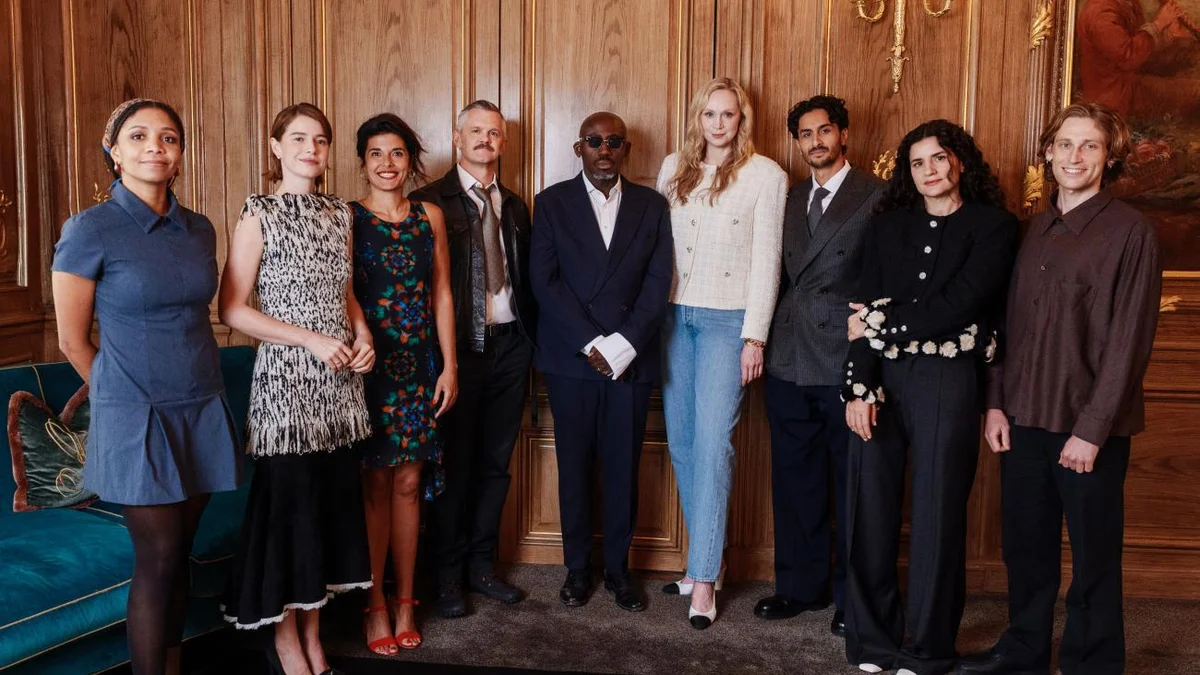
The BFI & CHANEL Filmmaker Awards offered a concrete illustration of that approach. At the October 14 ceremony at Claridge's in London, four emerging UK filmmakers were each awarded £20,000, bringing the total financial support distributed to £80,000.
The grants are not presented as full production budgets for four new features. Rather, they are intended to provide room for artistic development, experimentation and new collaborations. For an emerging director, that flexibility can be significant even when it falls well short of financing an entire production.
This year's jury included Jessie Buckley, Gwendoline Christie, Edward Enninful, Marie-Louise Khondji and BFI chief executive Ben Roberts. The winners were selected for their creative audacity and their ambition to develop their artistic practice.
Rich Felgate received an award for We, The Hated, a documentary exploring the experiences of Just Stop Oil protesters and the personal costs of taking part in a divisive movement. The jury highlighted its ability to engage with the political context while examining the individuals involved.
Olive Nwosu was recognized for Lady, her feature debut set in Lagos, Nigeria. Following a female taxi driver, the film examines relationships between women and the pressures shaping their lives. The jury praised Nwosu's cinematic ambition and the care with which she handled challenging material.
Imran Perretta was honored for Ish, a black-and-white coming-of-age drama centered on two twelve-year-old friends whose relationship is affected by a police stop and search. The film explores racial profiling, belonging and the experience of being treated as an outsider in one's own country.
Rachel Taparjan received the fourth award for Something Familiar, a personal documentary following her search for her missing sisters after being adopted from Romania and brought to the United Kingdom as a child. The film examines identity, family history and the lasting emotional consequences of separation.
British independent cinema reaches far beyond Britain
The four projects are strikingly different. They move between environmental protest, urban life in Lagos, racial discrimination and the intimate consequences of international adoption. What connects them is not a particular genre or commercial formula, but an appetite for stories that rarely occupy the center of mainstream film production.
That diversity gives Buckley's argument greater substance. Supporting emerging filmmakers is not simply a strategy for discovering tomorrow's blockbuster directors. It also creates opportunities for stories that might not fit comfortably within established production models.
The films' different release situations reveal another challenge. According to the BFI, We, The Hated is scheduled to open in selected UK cinemas on November 2, 2026, following previews beginning October 27. Lady is expected to reach UK audiences in spring 2027, while Ish is already available on BFI Player. Release details for Something Familiar have yet to be announced.
An award, therefore, does not automatically guarantee a nationwide theatrical release, substantial promotional backing or sustained access to audiences. Recognition and distribution are separate stages, and the path between them can be difficult for independent productions.
Oscar marketing and film development serve different purposes
Buckley's concern points toward a meaningful imbalance, but it deserves a careful distinction. An awards campaign and an early-career grant serve different functions. The first seeks to increase visibility for a finished film, strengthen its reputation and potentially extend its commercial life. The second helps provide the conditions in which another work may eventually be created.
It would be simplistic to argue that every pound spent on Oscar promotion could be redirected toward production without consequences. Independent films need distributors, publicists, festival exposure and marketing of their own. For a small film, visibility may be the difference between finding an audience and disappearing unnoticed.
The deeper issue is how resources are distributed. Awards spending varies considerably between studios, distributors and campaigns, and no verified comprehensive figure in this case establishes how many additional independent features could be financed through a hypothetical redistribution.
Buckley's comments are better understood as a challenge to industry priorities than as a detailed financial proposal. An industry that devotes considerable effort to celebrating its biggest achievements also needs to maintain the creative pipeline that produces future work.
What early support can achieve
Previous BFI & CHANEL Filmmaker Awards recipients suggest why early recognition can matter. The institute points to Harry Lighton, honored in 2025 for Pillion, Savanah Leaf, recognized in 2023 for Earth Mama, and Kathryn Ferguson, a 2022 recipient associated with Nothing Compares.
Those examples do not guarantee equivalent success for every filmmaker receiving support. They do demonstrate how carefully targeted opportunities can accompany careers that subsequently gain wider recognition.
The partnership with Chanel also reflects a broader question about private support for cultural production. Corporate sponsorship brings funding and publicity to an initiative associated with a major public cultural institution. That can help filmmakers who might otherwise struggle to access established networks, although no single awards program can address the structural problems of independent financing and distribution.
A filmmaker's challenge rarely ends with a promising debut. The difficult transition often comes afterward: securing the freedom, resources and industry confidence to make a second project, then a third. Occasional recognition helps, but long-term sustainability requires more than isolated successes.
Recognition matters, but so does the opportunity to keep creating
Gwendoline Christie noted that the strength of this year's candidates had persuaded the jury to recognize four filmmakers rather than three. The decision reflected the range of talent under consideration while also emphasizing the unavoidable choices involved in allocating limited resources.
Buckley pointed to films produced on very small budgets as examples of work that can connect with audiences through originality rather than established intellectual property or inherited commercial recognition.
The Oscars will remain an influential part of the international film industry. They can generate valuable attention, prestige and commercial opportunities. But they cannot substitute for developing new talent or taking creative risks before a film has become marketable.
In London, four filmmakers received tangible support while an established Oscar winner questioned the industry's broader priorities. The two developments belong to the same conversation. Celebrating achievement is important, but ensuring that the next generation has the means to make its films may be just as consequential.