
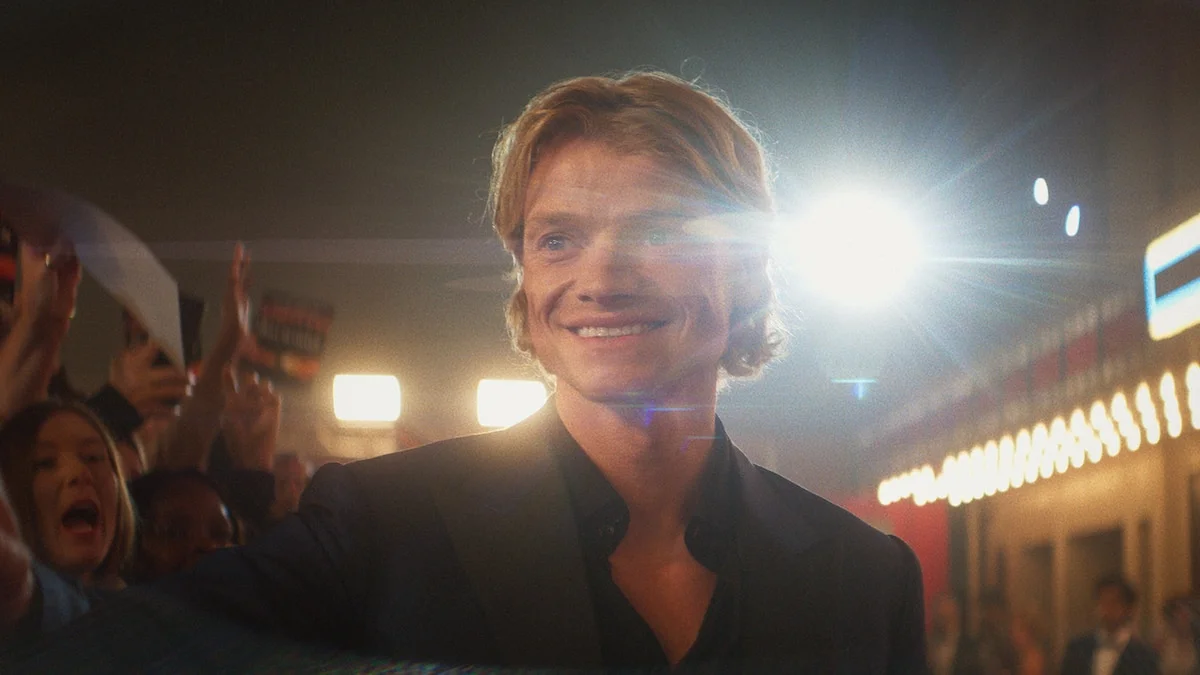
An actor loses his face and eventually loses control of his own body.
James Watkins built Clayface around that disturbing premise, drawing on the traditions of body horror rather than conventional superhero storytelling.
Now that the movie has opened in theaters, the director is discussing the decisions that shaped its most unsettling moments.
In a new Variety interview, Watkins explains how his team developed Matt Hagen's transformations, created a distinctly oppressive Gotham City and brought Aaron Paul into the film for a surprise appearance.
He also describes a creative principle that influenced the entire production.
Clayface needed to tell a complete story without depending on the promise of another Batman movie.
The following discussion contains substantial spoilers concerning the film's characters, major sequences and ending.
Why the filmmakers chose Matt Hagen instead of Basil Karlo
Clayface has not always referred to the same person in DC Comics.
Several characters have used the name, each with a different origin and relationship to the Batman mythology.
Basil Karlo, one of the earliest incarnations, is closely connected to the traditions of classic horror cinema.
Matt Hagen offers a different interpretation.
For Watkins' film, that version became the foundation.
The director explains that Mike Flanagan had already chosen Hagen during the screenplay's development.
Watkins subsequently studied several other versions of Clayface in the comics.
But he believed Hagen offered a more accessible way to construct a contemporary horror story.
The protagonist is an actor whose career collapses after a violent attack leaves him disfigured.
He seeks treatment to restore his appearance, only to discover that the procedure creates a much more disturbing problem.
The central story is therefore not simply about a criminal gaining extraordinary powers.
It concerns someone whose professional and personal identity has been destroyed along with his face.
An experimental procedure turns an actor into a monster
Tom Rhys Harries plays Matt Hagen, a young man who escapes a difficult childhood in Gotham and becomes a successful actor.
His career ends abruptly when a criminal attack leaves him severely disfigured.
Unable to continue his former life, he searches for a medical solution.
He encounters Dr. Caitlyn Corr, played by Naomi Ackie.
An experimental procedure appears to restore his appearance.
However, the treatment also produces uncontrollable physical transformations.
Matt's body develops the ability to change shape and imitate other people.
Rather than restoring his lost sense of security, those powers destabilize him.
He becomes increasingly obsessed with revenge against the people responsible for his suffering.
Watkins explains that this emotional transformation was central to what attracted him to the screenplay.
The real horror is not limited to the protagonist's changing body.
It also emerges from his decision to let anger govern his behavior.
Gotham draws inspiration from German expressionist cinema
Clayface introduces an important location within the rebooted DC cinematic continuity.
Following Metropolis in Superman, the new DC Universe now has its own live-action interpretation of Gotham City.
Watkins did not want simply to recreate the city familiar from previous Batman adaptations.
Working with production designer James Price, he explored several historical visual references.
German expressionist cinema from the 1930s was especially influential.
Those films frequently used imposing architecture, unusual angles and dramatic contrasts between light and darkness.
The team also examined photographs of New York taken during the 1970s, 1980s and 1990s.
Watkins was interested in the city's neon lighting, crowded streets, architectural density and visible dirt.
He wanted the buildings to dominate the characters.
The sky would be almost impossible to see.
Practical street lighting and strong shadows reinforced the impression of an overwhelming environment.
The resulting Gotham does not belong to one precisely identifiable historical period.
Instead, it combines elements from several decades to create a city that feels recognizable but slightly timeless.
Gotham and Coast City have deliberately different identities
Watkins describes Gotham as a deliberate contrast to Coast City.
The latter features brighter colors, open skies, the sea and vegetation.
Gotham operates according to the opposite visual logic.
Buildings fill the frame.
The streets feel compressed.
Shadows dominate the surrounding environment.
The contrast helps establish distinct identities for locations belonging to the same fictional universe.
A shared continuity does not require every city to look alike.
Different visual approaches can make the world feel larger and more convincing.
In Clayface, Gotham serves the story of someone increasingly trapped within a life he can no longer control.
The architecture becomes an extension of the protagonist's psychological condition.
It is an environment that seems capable of overwhelming him before his transformation has even begun.
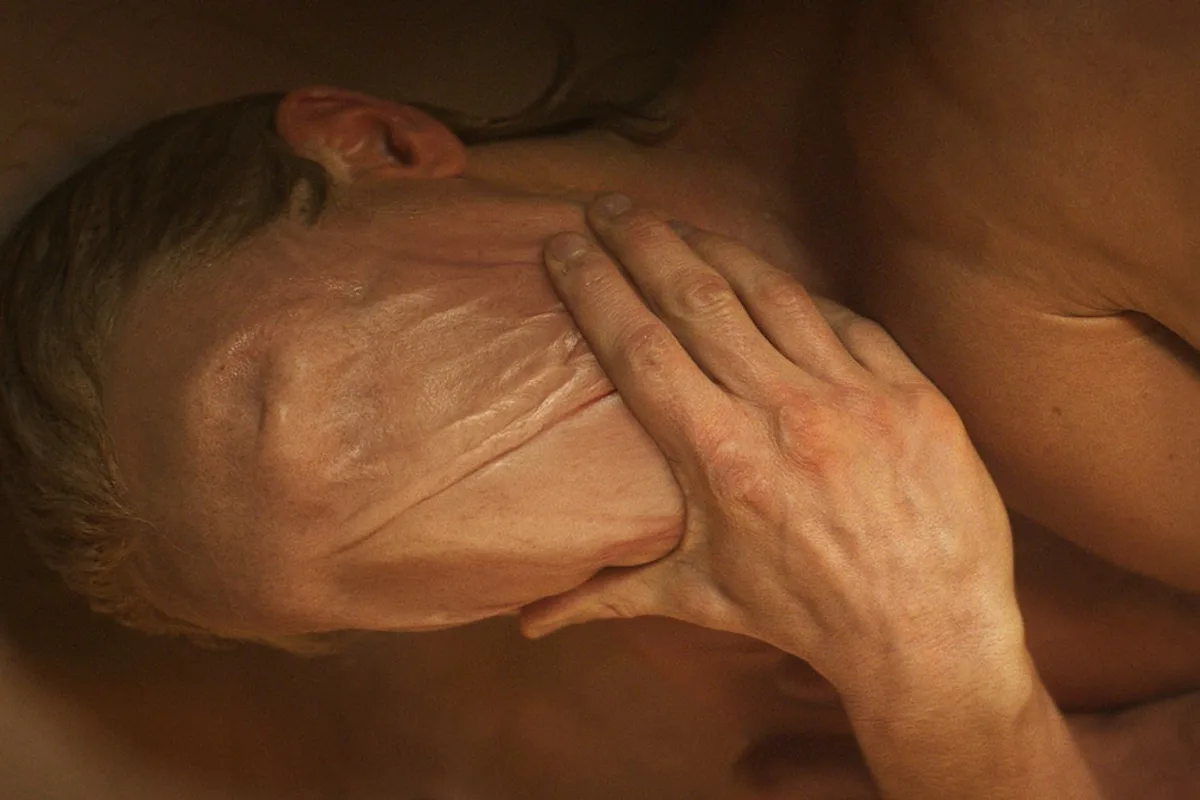
The monster went through approximately nineteen designs
Creating the final version of Clayface required extensive experimentation.
Watkins says the team developed approximately nineteen iterations of the creature.
Comic-book artists had already produced numerous interpretations over the years.
But a design that works on a printed page does not necessarily remain convincing in live action.
The shape of the face, surface textures and positioning of the eyes required careful consideration.
Watkins was particularly interested in the monster's left eye.
He wanted part of Matt Hagen to remain visible beneath the distorted exterior.
The creature needed to express pain.
Its voice also had to suggest that the human being inside had not completely disappeared.
Small changes could dramatically alter the final effect.
A fold of material or the shape of an opening might make the monster appear less tragic and more conventionally threatening.
The director wanted something frightening but emotionally recognizable.
His objective was not simply to create a spectacular comic-book creature.
He wanted audiences to see the person trapped inside it.
Practical prosthetics formed the foundation of the transformations
Clayface relies heavily on practical filmmaking techniques.
Watkins explains that he prefers creating effects directly in front of the camera whenever possible.
That does not mean the movie avoids digital effects.
Instead, it combines physical prosthetics, mechanical devices, stunt work and computer-generated imagery.
Practical elements give actors objects and materials with which they can interact.
Digital work can then extend transformations that would otherwise be physically impossible.
Watkins describes a sequence in which Matt pulls another character into his body.
The production created a wearable rig containing a cavity that allowed the actors to interact during the shot.
Visual effects were subsequently used to enhance the illusion.
The method allowed important parts of the performance to take place physically.
Bodies made contact.
Actors could respond to real movement and resistance.
For Watkins, that tactile quality helps create a more believable sense of horror.
The images begin with something tangible rather than an entirely imaginary environment.
The nightclub sequence used old-fashioned camera tricks
One of the film's most elaborate scenes takes place in a nightclub.
Matt Hagen repeatedly changes his appearance during a violent confrontation.
Instead of depending entirely on digital face replacement, Watkins employed concealed camera transitions.
The technique involves having a character pass behind a pillar or another piece of scenery.
The action can then be filmed again with a different performer.
During editing, the footage is combined at the moment the character disappears behind the obstacle.
The audience perceives a continuous movement in which one person transforms into another.
The method has existed for many decades.
Its effectiveness in Clayface demonstrates that sophisticated visual effects do not always require an entirely new technical process.
Watkins particularly enjoyed using these traditional techniques.
The finished sequence combines modern digital tools with methods inherited from earlier eras of filmmaking.
A contortionist made the physical horror even stranger
The same nightclub sequence demanded unusual physical performances.
Watkins recalls that the team initially filmed a fall involving two stunt performers.
After examining the footage, the filmmakers wanted the bodies to appear even more distorted.
They considered bringing in a contortionist.
This allowed the production to create unnatural-looking positions without constructing every movement digitally.
The objective was not simply to impress audiences.
It was to suggest that Matt's body no longer obeyed ordinary physical rules.
Extremely flexible movement can be disturbing because it remains physically possible while exceeding what most viewers expect from the human body.
The performers and stunt team therefore played an important role in the film's body-horror effects.
The transformations are not exclusively post-production creations.
They are also physical performances designed for the camera.
Aaron Paul makes a surprise appearance
One of the interview's most surprising revelations concerns Aaron Paul.
The Breaking Bad actor appears briefly in Clayface.
Watkins confirms that he portrays Matt Hagen's father.
During a shapeshifting sequence, Matt assumes his father's appearance.
The filmmaker wanted an actor capable of making the moment meaningful despite its limited duration.
He had long admired Paul's work.
When someone suggested approaching the actor, Paul agreed to participate.
His final appearance is extremely brief.
Watkins describes it as a small surprise for attentive viewers.
However, Entertainment Weekly has clarified that the role was originally larger.
Paul filmed additional scenes exploring Matt's childhood.
Most of that material was eventually removed from the theatrical version.
His remaining appearance is therefore a trace of a character who once played a more substantial part in the film's narrative.
Why Aaron Paul's larger role was removed
The reduction of Paul's part was a narrative decision.
Watkins did not want Matt Hagen's entire development to be explained by events from his childhood.
The story acknowledges difficult family relationships.
But the director wanted the focus to remain on the choices Matt makes as an adult.
That decision affects how audiences interpret the protagonist's violence.
A traumatic past may help explain certain behaviors.
It does not necessarily justify everything a person subsequently does.
Clayface is particularly concerned with the moment Matt turns his sense of injustice into a desire to punish.
Additional childhood scenes might have placed greater emphasis on inherited family trauma.
The theatrical edit gives more attention to the protagonist's responsibility for his present actions.
There has been no official announcement that Paul's deleted scenes will be restored in an extended edition.
Their existence should not be treated as confirmation of a future director's cut.

Why Batman is not central to the movie
Clayface belongs to Batman's world, but the Dark Knight is not the focus of the story.
Watkins says that independence was deliberate.
He was attracted to the opportunity to tell a complete narrative about the villain himself.
He did not want to insert Batman references simply to remind viewers that the film belonged to the DC Universe.
There are visual details and background elements that connect the story to its comic-book origins.
However, the director says he faced no pressure to overload the movie with appearances or references.
For Watkins, an Easter egg only has value when it fits the narrative.
The film needed to work on its own.
That separates Clayface from franchise installments designed primarily to prepare audiences for another production.
Matt Hagen is not introduced solely to become an opponent for a more famous superhero.
His personal tragedy is intended to support a complete dramatic experience.
A standalone story within James Gunn's DC Universe
Clayface belongs to the new continuity developed by DC Studios.
That universe includes Superman and the animated series Creature Commandos.
A version of Clayface previously appeared in Creature Commandos.
Watkins' film provides a live-action origin story.
It also establishes a new Gotham City for the shared continuity.
However, that setting should not be confused with the Gotham of Matt Reeves' The Batman.
Robert Pattinson's Batman exists within a separate fictional continuity.
This distinction matters when discussing the character's future.
Asked whether Clayface might confront Batman in another movie, Watkins did not confirm any such plans.
He referred the question to James Gunn.
His own priority was completing a standalone film.
He did not approach the character simply as preparation for another franchise installment.
Any future appearance remains a possibility rather than an officially announced project.
Mike Flanagan brought his horror storytelling experience
Mike Flanagan played an important role in developing the story.
His previous work includes Doctor Sleep, The Haunting of Hill House and Midnight Mass.
He is known for supernatural stories in which frightening events reflect human trauma and emotional conflict.
That sensibility fits Clayface.
Matt Hagen's physical transformation mirrors the destruction of his identity.
He loses his appearance, career and sense of security.
The experimental procedure then gives him almost unlimited freedom to change his body.
But those abilities do not solve his problems.
Instead, they allow his anger to take increasingly destructive forms.
Hossein Amini shares screenplay credit with Flanagan.
James Watkins directs.
The producing team includes Matt Reeves, Lynn Harris, James Gunn and Peter Safran.
The resulting project combines creative backgrounds in horror, thrillers and comic-book adaptations.
A monster designed to inspire fear and sympathy
For Watkins, creating a character capable of changing shape was only one part of the challenge.
He also needed to preserve Matt Hagen's tragedy.
The destruction of the actor's face begins the story.
But his deeper loss occurs when he abandons control over his anger.
The director therefore wanted the creature to retain recognizable traces of humanity.
That explains his attention to the eye, the expression of suffering and the qualities of the voice.
Those details encourage viewers to recognize the person behind the monstrous exterior.
The audience may understand Matt's initial desperation without approving of his subsequent actions.
That ambiguity is central to the film.
Clayface does not portray its protagonist simply as an innocent victim.
He becomes responsible for violence that eventually extends beyond those who originally harmed him.
The movie transforms a comic-book villain origin into a tragedy about revenge and personal responsibility.
Clayface is already playing in theaters
The October 27 interview accompanies a film that has already opened commercially.
Warner Bros. Pictures confirms the American theatrical release date as October 23, 2026.
International releases began on October 21.
The film carries an R rating in the United States, reflecting its graphic body-horror content.
The principal cast includes Tom Rhys Harries, Naomi Ackie, David Dencik, Max Minghella and Eddie Marsan.
Rob Hardy served as cinematographer, James Price as production designer and Volker Bertelmann composed the music.
Its complete commercial and critical performance will need to be assessed using the appropriate final figures.
But the film's artistic direction is already clear.
DC Studios has financed a story centered on a Batman antagonist without placing Batman at its narrative center.
The movie uses horror filmmaking techniques to examine identity, obsession and physical transformation.
No future Clayface project has been confirmed
Because Clayface exists within a shared universe, further appearances are possible.
But narrative possibilities are not confirmed productions.
Watkins has not announced a sequel schedule.
He has not confirmed that the character will confront Batman in a future film.
Instead, he explains that Clayface was designed to function as a complete work.
That philosophy shaped both its technical and dramatic choices.
The final creature needed to express emotion rather than merely introduce a threat for another installment.
Gotham's comic-book references needed to enrich the setting without interrupting the central story.
Aaron Paul's cameo had to serve Matt's transformation rather than become a separate promotional attraction.
Throughout the interview, Watkins returns to one essential idea.
Clayface was not supposed to be another piece placed on the DC Universe's increasingly complicated board.
It was supposed to tell the story of a man's downfall.
And the nineteen versions of its monstrous central character were developed in pursuit of a single objective: allowing the audience to recognize the human being who remains inside, even when almost nothing human appears to be left.