
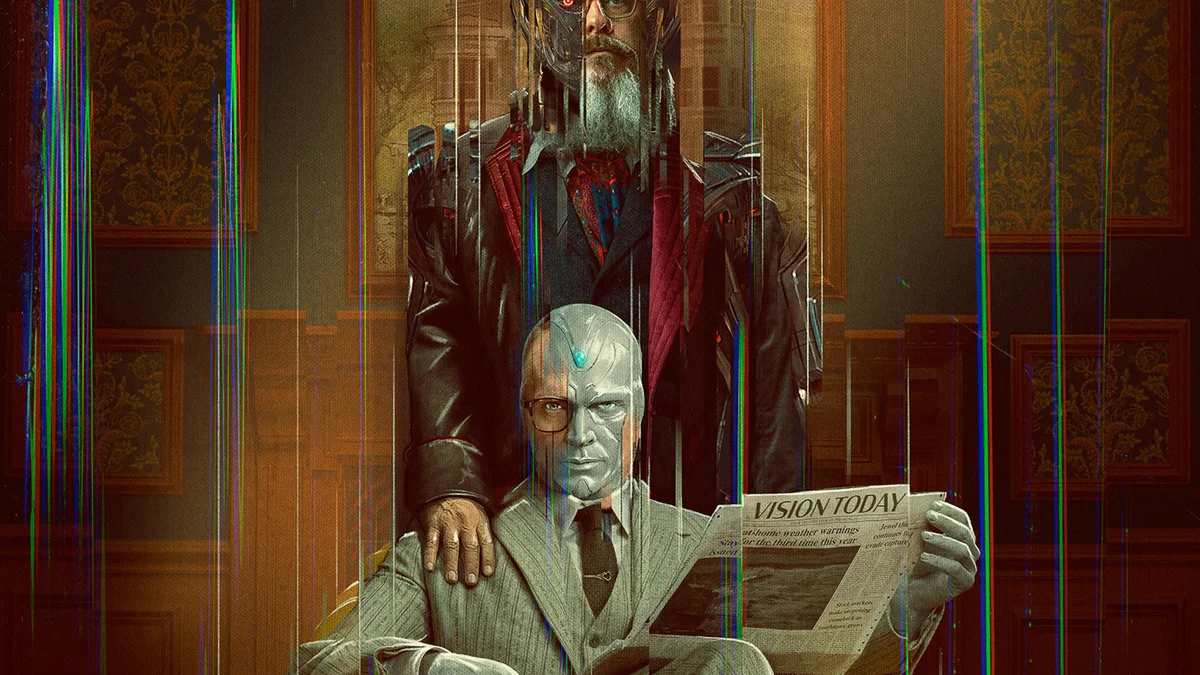
VisionQuest has premiered, but the full season is still unfolding
Marvel Television launched VisionQuest with two episodes on Disney+. The Walt Disney Company's American announcement identifies October 13, 2026, as the premiere date, while Marvel and Disney+'s international materials use October 14. Both dates refer to the show's opening rollout rather than separate seasons or releases.
The first season contains eight episodes, distributed over several weeks. Disney+'s published British schedule places episodes three and four on October 21, episodes five and six on October 28, and the final two installments on November 4 and November 11.
This approach gives the series room to develop its central mystery rather than delivering every answer in one weekend. For a story concerned with fractured memories, competing versions of identity and uncertain family relationships, an extended release schedule may prove especially appropriate.
Terry Matalas serves as creator and showrunner. Known for work on Star Trek: Picard and 12 Monkeys, he has been entrusted with concluding an interconnected narrative that began with WandaVision in 2021 and continued through Agatha All Along in 2024.
Vision has memories, but does he still have a past?
The premise follows directly from the unresolved fate of White Vision at the end of WandaVision. Reconstructed by S.W.O.R.D. and subsequently given access to memories associated with his previous existence, the android departed Westview without returning to the life he once shared with Wanda Maximoff.
VisionQuest finds him living discreetly in Edinburgh, working at a pub and attempting to build something resembling an ordinary existence. His immediate problem is not physical survival but a contradiction at the heart of his identity. He possesses memories of love, loss and personal experience without necessarily feeling that those experiences belong to him.
That distinction gives the series its philosophical foundation. Remembering an event is not always the same as feeling connected to it. Vision can recover information about his former life, but whether that information makes him the same individual remains an open question.
The dilemma has a recognizable human dimension. People define themselves partly through memory, relationships and the decisions they believe they have made. Vision has access to the corresponding records. What he lacks is certainty about his relationship to them.
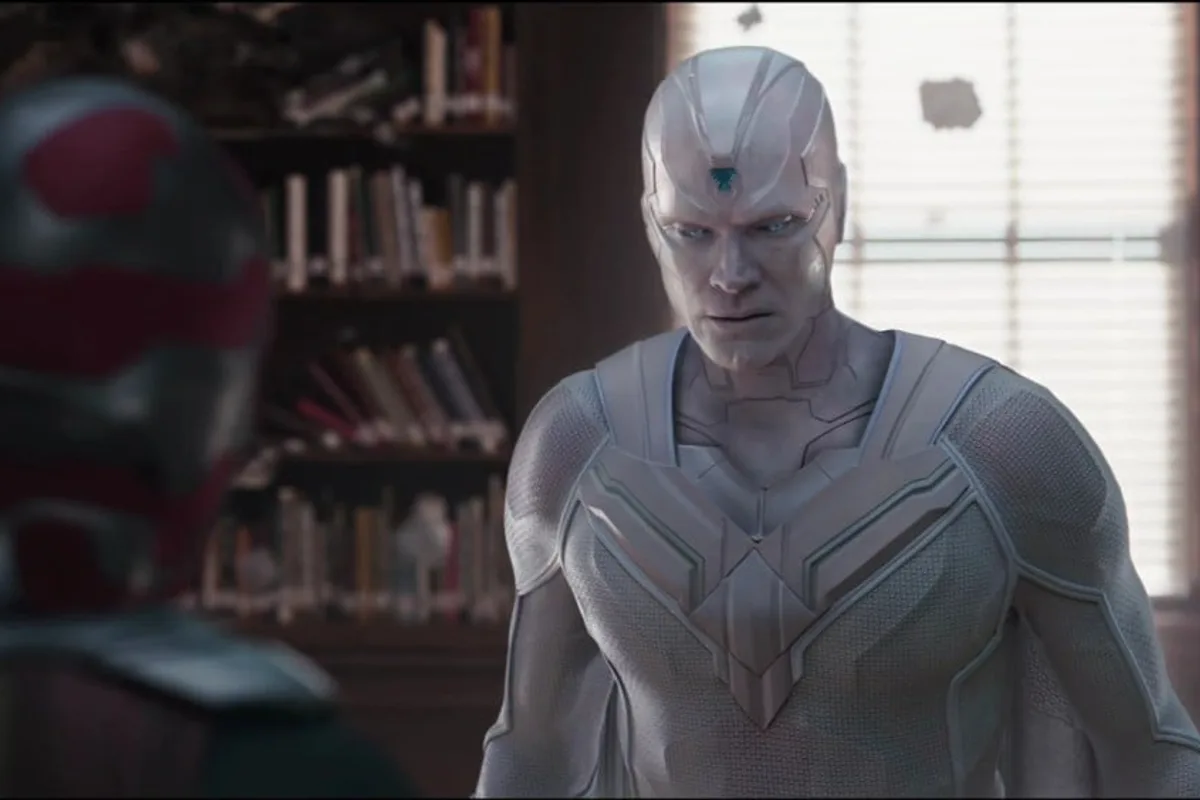
Paul Bettany consequently has an opportunity to approach the character from a different direction. Since Avengers: Age of Ultron, Vision has generally embodied composure, intelligence and an unusual curiosity about humanity. Now that curiosity is inseparable from a more personal problem: understanding what it means to live without the person who once gave his existence emotional continuity.
James Spader returns as a far more intimate kind of threat
James Spader's return as Ultron is among VisionQuest's most significant developments. More than a decade after Avengers: Age of Ultron, the actor revisits a villain whose connection to Vision goes far beyond a conventional superhero rivalry.
Ultron is one of the artificial intelligence personalities embedded within Vision's programming. That arrangement creates a disturbing intimacy. The former antagonist helped shape the circumstances of Vision's creation, yet his philosophy places him in fundamental opposition to the values Vision has tried to understand.
Rather than relying solely on another large-scale confrontation, the series uses that connection to explore disagreements about consciousness, purpose and humanity. Ultron can challenge Vision's assumptions from inside the very system the protagonist is attempting to understand.
Matalas explained in Disney's official behind-the-scenes material that he had long wanted to expand the final confrontation between Vision and Ultron in Age of Ultron. Imagining a longer philosophical encounter between those characters became one of the foundations of the series.
Spader's return therefore represents more than a nostalgic casting decision. Ultron's ability to analyze human behavior without embracing human values makes him a particularly unsettling companion for an android determined to discover what being human might actually involve.
Marvel gathers the artificial intelligences of the Stark era
Ultron is not the only digital presence within Vision. The series also brings back several artificial intelligences associated with Tony Stark and the wider MCU, transforming the protagonist's internal world into an unusual collection of technological personalities.
James D'Arcy portrays J.A.R.V.I.S., Orla Brady appears as F.R.I.D.A.Y., and Emily Hampshire plays E.D.I.T.H. Henry Lewis and Jonathan Sayer join them as DUM-E and U, further expanding the cast of artificial entities inhabiting Vision's consciousness.
The concept allows the show to give physical and dramatic form to thoughts that might otherwise remain abstract. Each intelligence has a distinct function and way of interpreting the world. Their conversations with Vision can become competing answers to his questions about personal identity.
In interviews released by Disney, Hampshire describes E.D.I.T.H. as possessing extensive knowledge while longing for the ability to experience life directly. That difference between information and experience reflects the central contradiction driving Vision's own story.
For Marvel television, the idea is unusually introspective, although it develops themes already present in WandaVision. VisionQuest is interested not only in whether a machine can think or feel, but also in whether someone created for a particular function can eventually decide what their own existence should mean.
Thomas Shepherd brings the question of family back into focus
Vision's internal search is interrupted by an external threat. A bounty has been placed on his head, and Paladin, a mercenary portrayed by Todd Stashwick, becomes involved in the pursuit. The resulting danger brings Vision into contact with Thomas Shepherd, played by Ruaridh Mollica.
According to the official synopsis, Thomas may be connected to Tommy, one of the children Wanda and Vision once considered their own. Marvel presents that possibility as part of the mystery rather than an answer viewers are expected to accept before following the story.
The relationship moves the identity debate into the territory of family. If a young man possesses a connection to a child who once existed within a different reality, what obligations might Vision have toward him? Is parenthood determined by shared memories, biological continuity or the relationship two people choose to build?
These questions grow naturally from WandaVision. The children created within Wanda's altered reality became essential to the family's story before the events of Westview changed everything. VisionQuest revisits the emotional consequences without making every outcome immediately explicit.
Marvel has repeatedly explored family relationships, but Vision's circumstances give that familiar subject an unusual science-fiction dimension. He is not simply trying to reconnect with someone from his past. He must determine whether he is the person who could legitimately claim that past in the first place.
The conclusion of a trilogy is not necessarily the end of a character
Disney officially describes VisionQuest as the final installment in the trilogy formed by WandaVision, Agatha All Along and the new series. Each production has approached its shared universe differently, from television history and grief to witchcraft, complicated relationships and now the nature of consciousness.
That designation should not be confused with confirmation that Paul Bettany is making his final appearance in the Marvel Cinematic Universe. The trilogy is reaching its announced conclusion, but Marvel has not established that Vision can never return in another production.
The distinction matters in a franchise built around characters moving between films and television series. VisionQuest can resolve a specific narrative while leaving open the possibility of different stories involving the same individual.
Its combination of Ultron, Stark-era artificial intelligences and possible connections to Wanda's children also illustrates how the MCU continues drawing on earlier productions. Elements introduced more than a decade apart become part of a single character's personal conflict.
A superhero series arriving at an unexpectedly relevant moment
Ultron's return feels different in 2026 than it did in 2015. When Avengers: Age of Ultron introduced the villain, the prospect of a hostile superintelligence was primarily understood through the extravagant conventions of blockbuster science fiction.
Artificial intelligence now occupies a much more visible place in everyday public discussion. Questions about digital memory, autonomous systems, machine behavior and identity consequently resonate differently, even when presented through a fictional superhero universe.
That does not mean VisionQuest should be treated as a literal examination of contemporary AI technology. Marvel's fictional systems operate according to rules designed for drama rather than scientific realism. Their value lies in providing a framework for questions that extend beyond the technology itself.
Bettany told Reuters during the promotional period that Marvel had transformed his career after a difficult professional stretch. The actor's own account gives an additional dimension to a character searching for an identity beyond the purpose originally assigned to him.
With its first two episodes available and six more to follow, VisionQuest still has to demonstrate that its complex collection of memories, artificial minds and family connections can produce a satisfying conclusion. Yet the premise already offers an intriguing departure from familiar superhero storytelling. Instead of asking Vision to save the world once again, Marvel is finally allowing him to ask who, exactly, would be doing the saving.