

The modern Korean entertainment industry is associated with sophisticated music production, international audiences and performers whose careers can extend across several continents.
Tantara looks much further into the past.
The upcoming Netflix drama takes place between the 1960s and the 1980s, when aspiring singers, composers and managers were working to establish themselves within a difficult and rapidly changing industry.
On October 22, 2026, Netflix officially confirmed that the series will premiere on December 11.
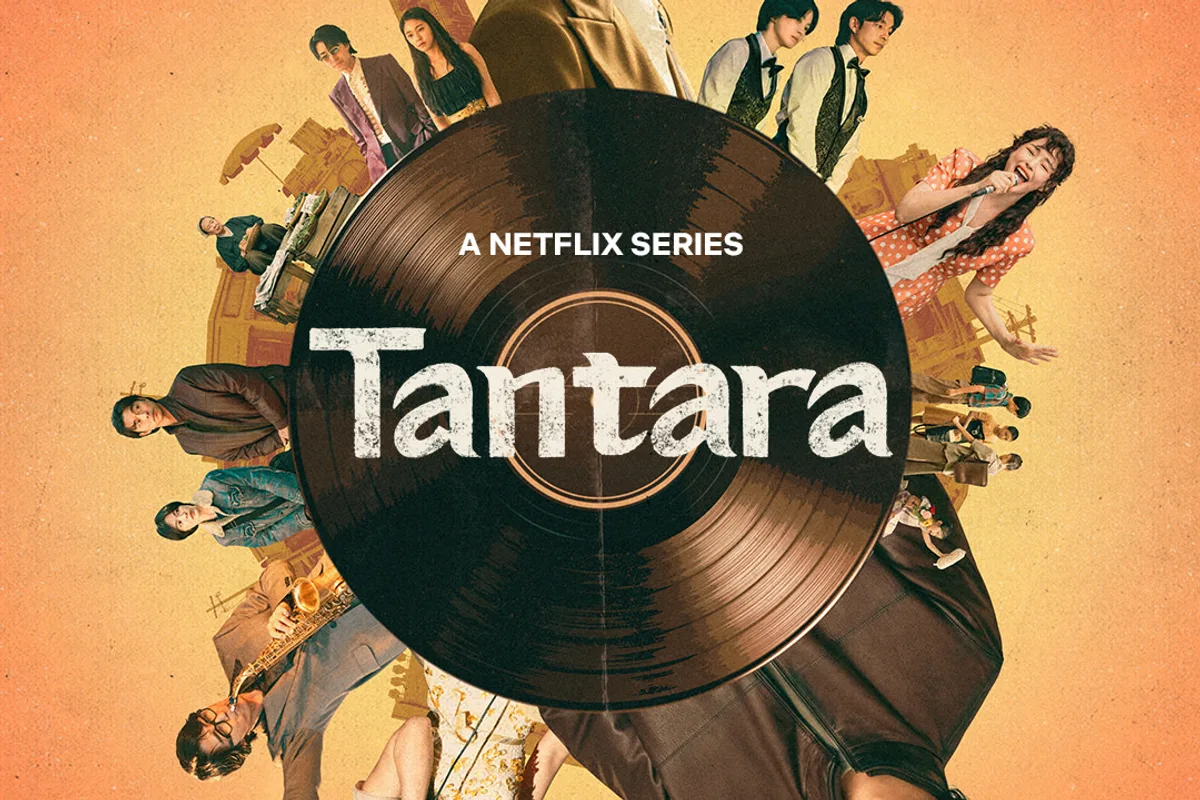
The announcement was accompanied by a new poster featuring the central characters arranged around a vinyl record.
Song Hye-kyo and Gong Yoo lead the cast, with acclaimed screenwriter Noh Hee-kyung responsible for the story and Lee Yoon-jung directing.
Rather than focusing exclusively on famous performers, the series will examine the people who help create stars, the relationships that support their ambitions and the compromises that success may require.
Netflix confirms a worldwide December 11 premiere
The most concrete new information is the release date.
Tantara will premiere globally on Friday, December 11, 2026, exclusively on Netflix.
The English-language announcement confirms the date for international audiences.
The Korean press release additionally specifies a 5 p.m. local release time in South Korea.
Netflix has not detailed the corresponding local time for every European country within the worldwide announcement.
The confirmed information is therefore the December 11 premiere, rather than an independently verified release hour for each territory.
Earlier promotional material had placed the drama within Netflix's final-quarter 2026 Korean programming slate.
The new announcement provides the specific date that had previously remained subject to confirmation.
The series is not yet available to stream as of October 23.
No viewing figures, critical assessment of the completed season or commercial results can be established before its release.
Song Hye-kyo plays a woman determined to escape poverty
Song Hye-kyo stars as Min-ja, the central character in the story.
Min-ja grows up in poverty and takes whatever work she can find to survive.
Her childhood leaves her with an acute understanding of financial insecurity and the limited opportunities available to people without influence.
Entering the music business offers the possibility of changing her circumstances.
According to Netflix, she pursues that ambition with extraordinary determination.
For Min-ja, success is not simply a matter of artistic fulfillment.
It represents the chance to acquire financial security, independence and a social position that once seemed unreachable.
That motivation gives the character an interesting foundation.
She is not beginning her career from a position of comfort. Her ambitions are shaped by the pressure of having experienced deprivation.
That pressure may influence how she evaluates opportunities, negotiates with powerful figures and responds to other people's choices.
The series is officially described as taking place within a harsh entertainment environment, so its story is unlikely to be defined solely by glamorous performances.
However, the exact setbacks and decisions Min-ja faces have not been fully revealed.
The role creates an opportunity for Song Hye-kyo to explore a different kind of determination from some of her earlier performances, including her widely recognized work in The Glory.
That is a comparison of character premises, not an advance judgment of the finished series.
Gong Yoo joins her as childhood friend Dong-gu
Gong Yoo portrays Dong-gu, Min-ja's childhood friend.
The two characters share a history that predates their involvement in the entertainment industry.
As Min-ja attempts to build a future in music, Dong-gu remains beside her and helps protect the dream they are pursuing.
Netflix emphasizes their solidarity and their willingness to endure difficult circumstances together.
Their long relationship could become one of the drama's most important emotional anchors.
Shared hardship can create exceptional trust, but personal ambitions may also develop in different directions as opportunities emerge.
Whether the characters remain united through every stage of their journey has not been established by the official synopsis.
The project also reunites Gong Yoo with director Lee Yoon-jung.
They previously worked together on Coffee Prince, one of the actor's most recognizable television dramas.
Gong Yoo later became internationally known through productions including Train to Busan and Squid Game.
His reunion with Lee offers a meaningful creative connection beyond the publicity surrounding the pairing with Song Hye-kyo.
Importantly, Netflix officially identifies Dong-gu as Min-ja's childhood friend and supporter.
The announcement does not confirm that they become a romantic couple, so their relationship should not automatically be described as a central romance.
The new poster turns a vinyl record into the center of the story
Netflix's latest promotional poster places a large vinyl record at its center.
The principal characters appear around it at different moments of their personal and professional journeys.
Min-ja occupies a prominent position, while Dong-gu and other performers appear in scenes suggesting work, travel and live music.
One character sings into a microphone while another plays the saxophone.
The arrangement suggests that music connects people whose ambitions and circumstances might otherwise take them in different directions.
The vinyl record also provides a visual reference to the period depicted in the series.
Physical recordings were central to the commercial distribution of music, linking performance with production, sales and the professionals who managed artists' careers.
The poster therefore places both the creative and commercial sides of the industry within the same composition.
It is an effective way of introducing the ensemble without revealing major plot developments.
The image is an official release-date poster, not a new scene taken from a publicly available episode.
Kim Seol-hyun plays a singer who could change everything
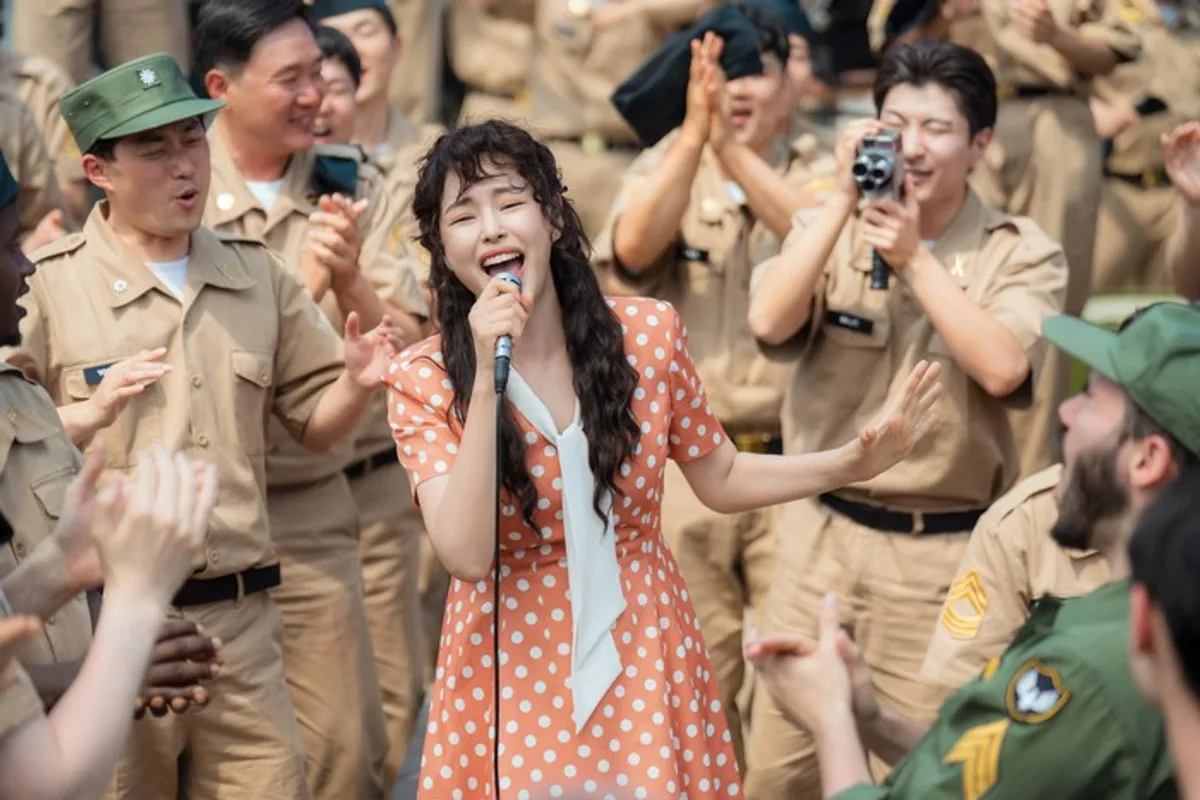
Kim Seol-hyun joins the cast as Min-hui, an ambitious young performer with a striking voice.
Netflix identifies her as one of the first artists whose career Min-ja and Dong-gu attempt to develop.
That relationship introduces another perspective on the entertainment industry.
Min-ja and Dong-gu want to succeed by working with musical talent.
Min-hui wants to pursue her own ambitions as a performer.
Those interests can overlap, but they are not necessarily identical.
An artist may initially depend on managers and professional contacts, only to seek greater control once her career begins to develop.
The Korean announcement also describes a complicated relationship between Min-hui and Min-ja, involving affection and resentment.
That tension could become an important dramatic element.
The women may support one another while competing over opportunities, recognition and personal independence.
However, the exact conflicts between them remain undisclosed.
The official material establishes their relationship as complex, not the outcome of specific future confrontations.
Min-hui's story offers an opportunity to explore the difference between discovering talent and claiming ownership of another person's success.
Cha Seung-won, Lee Hanee and Na Moon-hee expand the ensemble
Cha Seung-won plays Seok Gil-yeo, a highly influential composer.
Netflix describes him as a professional capable of turning unknown singers into major stars.
That position gives him considerable importance within the story's musical world.
A composer with industry connections and a reputation for creating hits can influence which performers receive opportunities.
The official synopsis has not established whether Gil-yeo will consistently support the protagonists or come into conflict with them.
Lee Hanee portrays Yang-ja, another character associated with musical ambition.
Na Moon-hee appears as Mal-sun.
Both characters are included in the wider ensemble represented by the new poster.
Their presence suggests a story extending beyond the central friendship and the experiences of one generation.
However, Netflix has not provided comprehensive details about all of their relationships or individual narrative arcs.
The broader cast creates possibilities for an ensemble drama about different positions within the entertainment business.
The final balance among those characters will become clear only when the series is released.
Noh Hee-kyung returns after Our Blues
Screenwriter Noh Hee-kyung is another major reason for interest in Tantara.
Her previous work includes Our Blues, It's Okay, That's Love, That Winter, the Wind Blows and Worlds Within.
Her dramas often pay close attention to complicated relationships, emotional disappointments and the consequences of decisions made under difficult circumstances.
Rather than defining every character through a single dramatic event, her writing frequently examines how people live with the effects of their choices.
Our Blues, released in 2022, is a notable example of her ensemble storytelling.
Its interwoven narratives explored multiple relationships within a shared community.
Tantara appears to offer similarly interconnected character possibilities.
Min-ja, Dong-gu, Min-hui and Seok Gil-yeo pursue ambitions that intersect within the same professional environment.
One person's opportunity may depend on another person's decision.
Commercial success could strengthen an alliance before creating new sources of disagreement.
This premise seems particularly compatible with a writer interested in the emotional consequences of changing relationships.
The project also reunites Noh with Song Hye-kyo.
They previously collaborated on Worlds Within and That Winter, the Wind Blows.
Their established history adds another element of creative continuity, although the quality of their newest collaboration cannot be assessed before release.
Coffee Prince director Lee Yoon-jung is behind the camera
Lee Yoon-jung directs Tantara.
Her credits include The 1st Shop of Coffee Prince, commonly known internationally as Coffee Prince.
That production featured Gong Yoo, making Tantara a reunion between the actor and director.
Their new collaboration differs substantially from the earlier romantic drama.
Tantara is a period series covering the development of characters within the music business across several decades.
Its settings may involve nightclubs, recording spaces, offices and performance venues associated with the period.
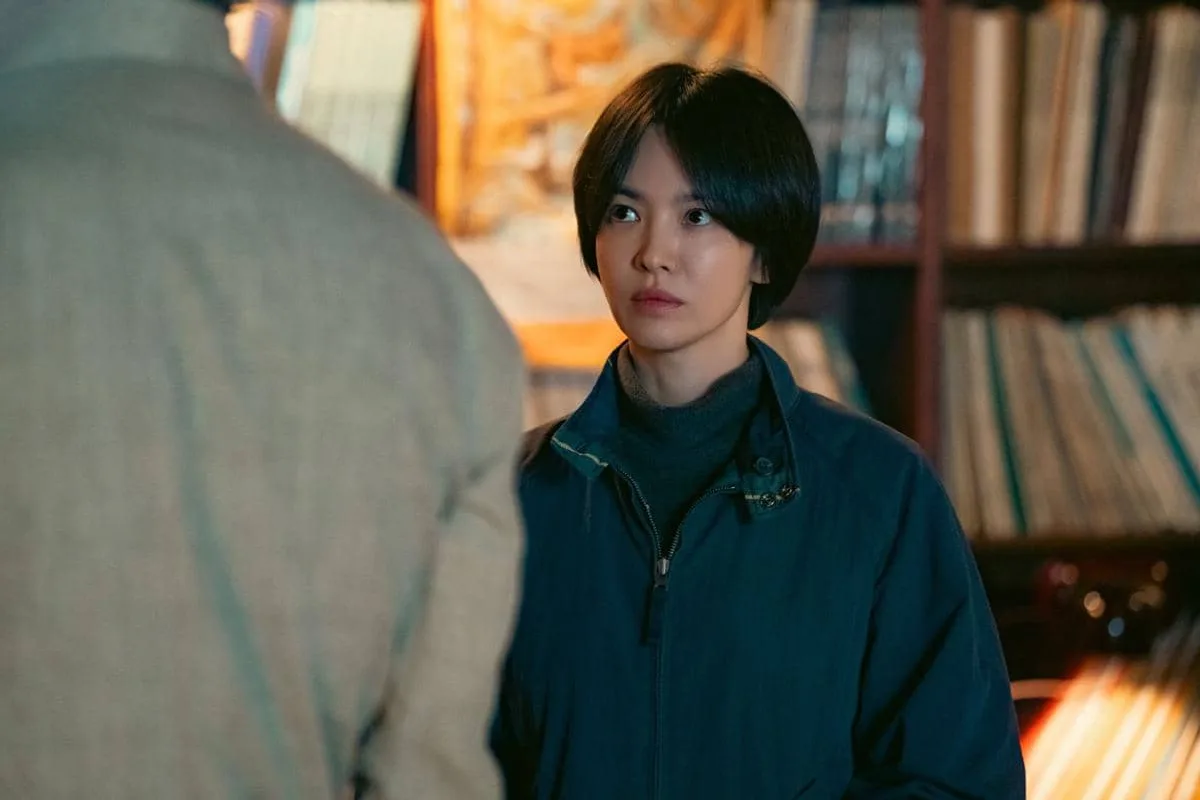
The promotional photographs already emphasize historical clothing, interiors and the atmosphere of earlier generations of Korean entertainment.
However, those images do not reveal the complete visual approach of the finished episodes.
One major directing challenge will involve communicating the passage of time.
The story is set across a broad historical period, and the changing environments, opportunities and social expectations must remain comprehensible to viewers.
The handling of musical performances will also matter.
Songs and stage scenes need to function within the characters' experiences rather than existing only as displays of period detail.
The 1960s to the 1980s offer a changing cultural landscape
Tantara is set during decades of profound change in South Korea.
Economic development, shifting social structures and political conditions affected many aspects of everyday life, including opportunities in entertainment.
The series explicitly places its characters within a difficult professional environment.
For aspiring performers and managers without substantial financial resources, entering that industry could involve considerable personal risk.
The story follows people attempting to create successful careers before the era of globally established K-pop companies.
That historical distance is important.
The contemporary Korean music industry is often associated internationally with idol groups, sophisticated promotional systems and large global audiences.
Tantara explores an earlier entertainment environment, where commercial success depended on different networks of venues, composers, producers and performers.
The historical backdrop may help explain the characters' professional options and the obstacles they encounter.
However, Netflix presents the series primarily as a human drama rather than a documentary account of the complete development of Korean popular music.
It should therefore not be described as a definitive history of K-pop.
The precise historical events included in the fictional storyline remain undisclosed.
Music connects the ambitions of the principal characters
Stories about the entertainment industry have a particular dramatic advantage.
They allow creators to explore artistic expression and commercial decision-making at the same time.
A singer may want to communicate something personal through a song.
A manager may consider the same performance in terms of audiences, opportunities and financial survival.
A composer can contribute an artistic identity while also deciding which performers might be commercially successful.
Tantara brings those roles into a shared story.
Min-ja and Dong-gu seek a future in the business.
Min-hui possesses talent and the desire to perform.
Seok Gil-yeo has the professional reputation and skills associated with developing successful artists.
Their relationships could reveal how cooperation and competition become intertwined.
But the official synopsis does not specify every alliance or betrayal that will emerge.
It also remains unclear how frequently complete musical performances will appear within the episodes.
Netflix has not released an official track list or a comprehensive soundtrack announcement alongside the new premiere date.
Tantara should therefore be understood as a historical entertainment-industry drama rather than automatically classified as a conventional television musical.
Netflix is bringing together a prominent Korean cast
The ensemble combines performers associated with different areas of Korean film and television.
Song Hye-kyo has reached international audiences through dramas including Descendants of the Sun and The Glory.
Gong Yoo is known for Coffee Prince, Guardian: The Lonely and Great God, Train to Busan and Squid Game.
Kim Seol-hyun has worked in music and television, while Cha Seung-won has a substantial screen career across multiple genres.
Lee Hanee and Na Moon-hee add further experience to the supporting cast.
That combination provides Netflix with recognizable performers for its international audience.
But the project's dramatic identity will ultimately depend on how the characters are written.
The announced premise is less about celebrity for its own sake than about people who see entertainment as a way to change their circumstances.
Their relationships, ambitions and compromises will need to carry the story across its historical setting.
How many episodes will Tantara have?
The October 22 announcement focuses on the premiere date, cast and new poster.
It does not establish a detailed international episode-release schedule.
Some specialist tracking pages list a 22-episode first season, but that figure is not explicitly confirmed within the official worldwide date announcement examined for this report.
It should therefore not be presented as a newly established detail from Netflix's October 22 statement.
The company also does not specify within that announcement whether every episode will arrive simultaneously or follow a staggered schedule.
The verified milestone remains the worldwide premiere on December 11.
There are no legitimate viewing statistics for the unreleased season.
Any claims about rankings, audience performance or additional seasons would require subsequent data or official announcements.
Why Tantara could become more than a nostalgic music drama
The historical setting gives Tantara an immediately recognizable visual identity.
Vinyl records, period clothing, microphones and performance venues can create an atmosphere that differs from contemporary entertainment dramas.
But the more substantial narrative possibilities lie in the characters' competing ambitions.
Min-ja wants to escape the limitations imposed by poverty.
Dong-gu attempts to help her create a different future.
Min-hui wants artistic success without necessarily surrendering her independence.
Seok Gil-yeo represents the influence of professionals who help determine which performers become stars.
Those objectives can initially reinforce one another.
They can also create conflict when power, recognition and financial interests begin to change.
Noh Hee-kyung's experience with emotionally complicated ensemble dramas makes that premise especially interesting.
The key question may not simply be who becomes successful.
It may be what the characters are prepared to sacrifice, and whether they still recognize themselves once their circumstances improve.
That is a critical possibility suggested by the confirmed creative team and premise, not a verdict on episodes that have yet to be released.
Tantara premieres December 11, 2026, on Netflix
Netflix has officially scheduled Tantara for Friday, December 11, 2026.
The date was confirmed in the company's October 22 announcement and independently reported by South Korean outlets including Yonhap News Agency and SBS News.
The drama is written by Noh Hee-kyung, directed by Lee Yoon-jung and produced by GTist, Studio Dragon and Imaginus.
Its announced cast includes Song Hye-kyo, Gong Yoo, Kim Seol-hyun, Cha Seung-won, Lee Hanee and Na Moon-hee.
For now, audiences have a release date, promotional photographs and a new poster introducing the show's central characters.
Together, they suggest a story about people trying to transform hardship into opportunity through music.
The central question is not merely whether they will become famous, but what kind of lives they will build on the way there.