
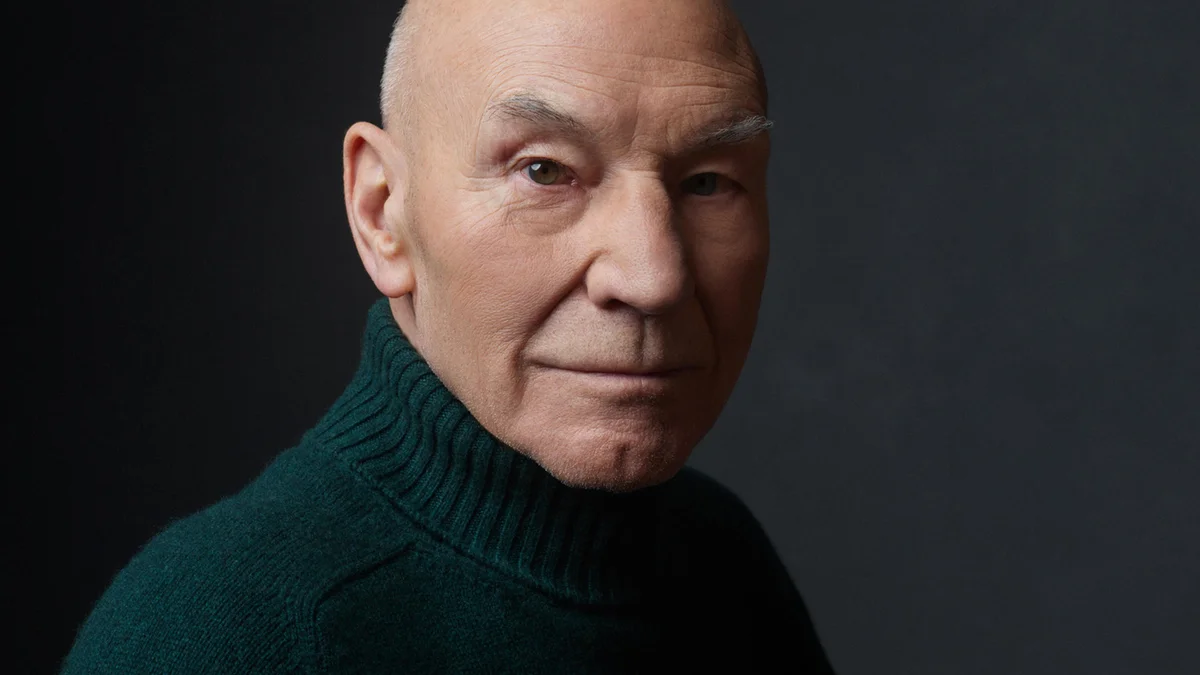
Patrick Stewart had a rare ability to make stillness dramatic.
As Captain Jean-Luc Picard in Star Trek: The Next Generation, he could hold a room through a carefully considered pause or a brief statement delivered without unnecessary force.
His presence suggested authority, but the performances beneath that authority were frequently concerned with doubt, responsibility and human vulnerability.
Those qualities helped transform a classically trained British actor into one of the most recognizable figures in modern popular entertainment.
Stewart died Wednesday, October 28, 2026, in Los Angeles. He was 86.
His longtime spokesperson, Kelly Bush Novak, confirmed his death the following day in a statement reported by Associated Press, ABC News and CBS News.
According to the statement, Stewart died following a period of illness involving Alzheimer's disease and Lewy body dementia. Neither diagnosis had previously been publicly disclosed.
His wife, Sunny Ozell, was by his side, with family and friends surrounding him during his final days.
For millions of viewers, his death marks the loss of Captain Picard or Professor X.
But his artistic history began long before either character existed on screen.
A working-class childhood and a passion for theater
Patrick Stewart was born on July 13, 1940, in Mirfield, a town in Yorkshire, England.
His childhood took place in a working-class household shaped by difficult family circumstances.
Stewart later spoke openly about witnessing his father's violence toward his mother, experiences that influenced both his personal outlook and his eventual advocacy against domestic abuse.
Theater became an important part of his early life.
He trained at the Bristol Old Vic Theatre School before establishing himself as a professional actor.
His career developed through repertory theater, with an especially significant period at the Royal Shakespeare Company.
Stewart spent fourteen years with the company, performing a wide range of classical and contemporary material.
Shakespeare became central to his development.
He approached characters such as Claudius and Macbeth through an intense attention to language, motivation and emotional contradiction.
The demands of stage performance helped him develop a distinctive voice and an extraordinary command of timing.
Those skills would later prove essential to roles that required actors to make imagined worlds feel entirely believable.
Even after achieving international television and film success, Stewart continued returning to the stage.
He never treated theatrical work as merely a stepping stone toward celebrity.
The captain who gave Star Trek a different kind of hero
In 1987, Stewart was cast as Captain Jean-Luc Picard in Star Trek: The Next Generation.
The series was attempting to establish a new identity within a franchise already strongly associated with William Shatner's James T. Kirk.
Stewart's selection initially seemed unusual.
He was known primarily for classical acting rather than American science-fiction television.
But that difference became one of the new series' defining strengths.
Picard was a thoughtful commander whose authority rested on discipline, negotiation and an unusually strong ethical framework.
He could be stern, but he was rarely interested in power for its own sake.
His approach to leadership relied on listening to his officers and considering the consequences of his decisions.
Stewart made those qualities believable without turning Picard into a remote figure of perfection.
The captain could make mistakes, struggle with personal relationships and suffer experiences that challenged his confidence.
The Next Generation ran for seven seasons, from 1987 to 1994.
Picard subsequently appeared in four feature films, beginning with Star Trek Generations and continuing through First Contact, Insurrection and Nemesis.
The character became one of the franchise's most respected figures.
For many viewers, Stewart's performance represented a version of science fiction built around ethical debate and intellectual curiosity rather than spectacle alone.
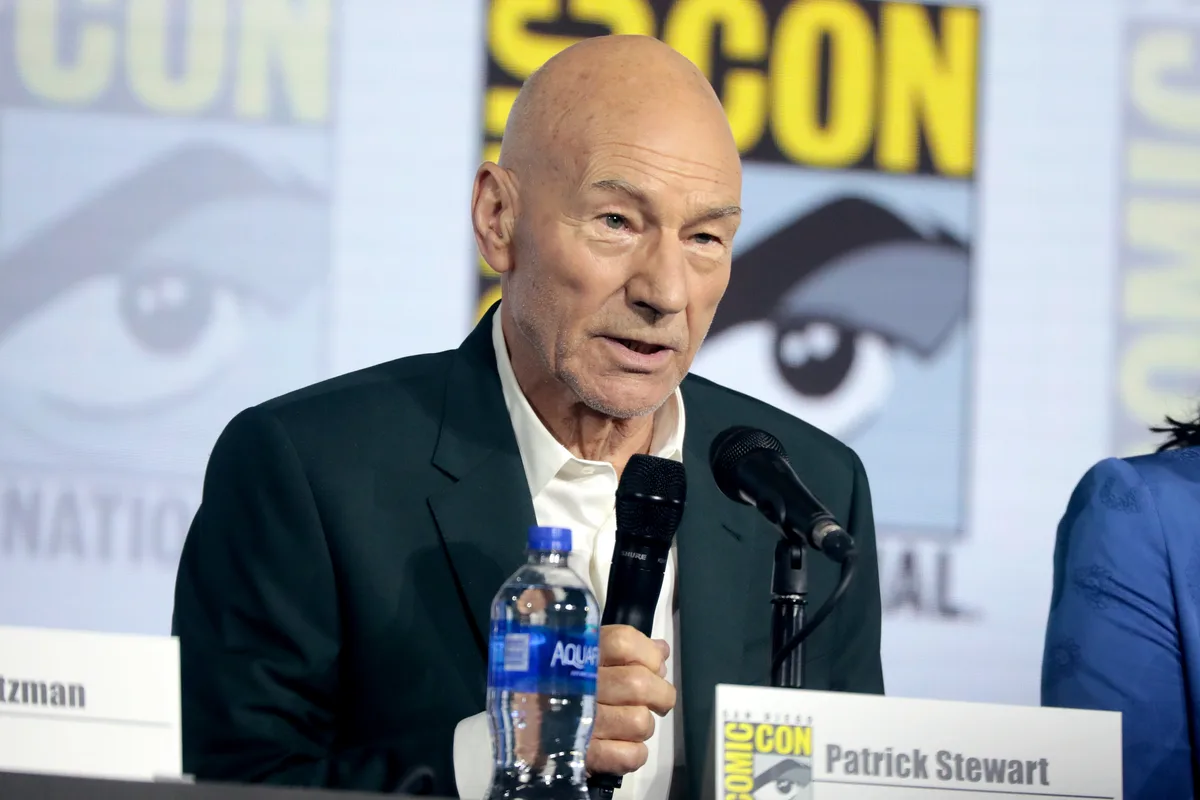
The episodes that revealed Picard's humanity
Some of the actor's greatest television performances came when Picard's authority was stripped away.
In The Best of Both Worlds, the captain is captured and assimilated by the Borg.
His transformation into Locutus remains one of Star Trek's most memorable developments.
The subsequent episode Family explores the emotional damage caused by that experience.
Instead of returning effortlessly to command, Picard must confront the consequences of what happened to him.
Stewart brings an extraordinary vulnerability to a character who ordinarily controls his emotions with great care.
The Inner Light offers another defining performance.
The episode places Picard within an entirely different existence, creating a story about memory, identity and the experience of a lifetime.
Its emotional impact depends heavily on Stewart's ability to make an extraordinary science-fiction premise feel intimate.
These performances explain why his Picard endured beyond the original series.
The actor never allowed the captain's competence to eliminate his humanity.
Instead, he portrayed strength as the ability to remain principled despite fear, grief and uncertainty.
Professor X brought Stewart to a new generation
In 2000, Stewart entered another major franchise when he played Charles Xavier in X-Men.
The film introduced audiences to a powerful telepath committed to protecting mutants and promoting peaceful coexistence with humanity.
Xavier shared several qualities with Picard, including intellectual authority and a belief in dialogue.
Yet the professor was a different character, with his own weaknesses, emotional history and complicated relationships.
His ideological conflict with Erik Lehnsherr, better known as Magneto, became one of the franchise's central themes.
Xavier believed that mutants and humans could live together peacefully, even when events repeatedly challenged that conviction.
Stewart gave the professor a reassuring presence without overlooking the personal cost of his choices.
He returned to the character in films including X2, X-Men: The Last Stand and X-Men: Days of Future Past.
His later appearances included Logan and Doctor Strange in the Multiverse of Madness.
Across these films, Stewart helped establish Professor X as more than a source of exposition or a powerful mentor.
He became one of the emotional and philosophical foundations of the X-Men screen universe.
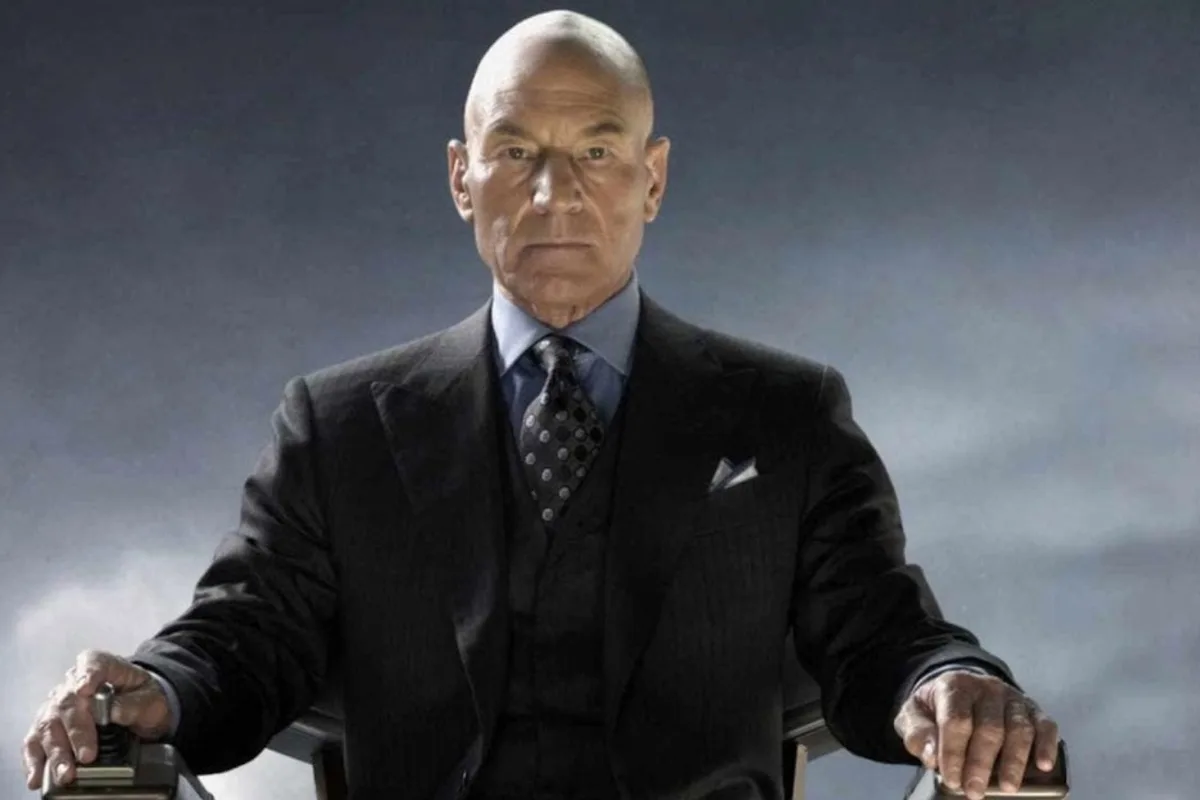
Logan allowed him to dismantle a familiar image
Logan, released in 2017, offered Stewart one of his most affecting later film roles.
Director James Mangold presented an older Charles Xavier whose physical and mental condition had deteriorated.
The once-powerful telepath was dependent on Wolverine and could no longer exercise the control that had defined much of his life.
Hugh Jackman's Logan was himself exhausted and struggling.
Their relationship gave the film a sense of vulnerability rarely associated with conventional superhero spectacle.
Stewart approached Xavier's decline through small gestures, confusion, affection and moments of painful lucidity.
The result was a performance that reminded viewers how much could be achieved within an established franchise character.
Even after decades of portraying Xavier, Stewart found new emotional dimensions in the role.
The film also demonstrated the range he had developed through years of theatrical work.
He could remove much of the character's usual power while preserving his dignity and recognizable identity.
A final return to Jean-Luc Picard
Stewart initially resisted the idea of returning to Picard after his previous Star Trek films.
But he eventually agreed to reprise the character in Star Trek: Picard, which premiered in 2020.
The new series found Picard older and removed from his former position of command.
Its stories examined regret, institutional responsibility, changing relationships and the difficulties of confronting earlier decisions.
The third and final season, released in 2023, brought together several members of the original Next Generation ensemble.
Jonathan Frakes, Gates McFadden, Michael Dorn, Marina Sirtis, Brent Spiner and LeVar Burton returned to the franchise.
Stewart had initially wanted Picard to establish its own direction rather than immediately reunite the familiar crew.
He later expressed considerable pleasure at the reunion and satisfaction with the way the series concluded.
That final season offered a fitting conclusion to a portrayal spanning more than thirty-five years.
Picard had changed considerably since 1987, but the character's defining commitment to humanity and responsibility remained intact.
The theater remained central to his artistic life
The enormous popularity of Star Trek and X-Men never displaced Stewart's attachment to live theater.
He continued performing Shakespeare and other major works throughout his career.
His stage version of Macbeth earned him a Tony Award nomination.
He also received multiple Laurence Olivier Awards across his theatrical career.
One of his best-known stage projects was a one-man adaptation of Charles Dickens' A Christmas Carol.
Stewart performed numerous characters himself, using changes in voice, posture and rhythm to bring the story to life.
The recorded production earned him a Grammy Award.
His friendship and theatrical partnership with Ian McKellen became another important part of his public life.
The two appeared together in productions of Samuel Beckett's Waiting for Godot and Harold Pinter's No Man's Land.
Their collaboration revealed an affectionate and playful side of Stewart that contrasted with the seriousness of his best-known screen roles.
He remained an actor who valued the experience of performing directly for an audience.
A voice that became part of popular culture
Stewart possessed one of the most recognizable voices in British acting.
Its controlled rhythm and clarity could make a fictional speech sound like a matter of historical importance.
That quality made him particularly effective in fantasy, science fiction and animation.
He voiced Emperor Uriel Septim VII in The Elder Scrolls IV: Oblivion and appeared in several animated productions.
He also became a regular presence on American Dad!, voicing the eccentric Avery Bullock.
The animated comedy made playful use of his familiar gravitas.
Stewart appeared to enjoy roles that contradicted the solemn image associated with Picard and Xavier.
His willingness to embrace comedy, absurdity and self-parody contributed to his longevity.
He could move from Shakespearean tragedy to animated satire without diminishing the seriousness of either discipline.
Public advocacy and personal experience
Stewart also used his public position to support causes connected to his personal history.
He spoke openly about the domestic abuse he had witnessed during childhood.
Those experiences informed his support for Refuge, a British organization assisting people affected by domestic violence.
His advocacy reflected a conviction that the effects of violence extend beyond the immediate victim.
The subject remained important to him even after he became internationally famous.
His contributions to acting were formally recognized when he was knighted in 2010.
The honor acknowledged a career that crossed the boundaries between classical theater and mainstream screen entertainment.
Stewart's reputation was built not only on celebrity but on sustained work across a remarkable range of dramatic forms.
Colleagues from Star Trek and X-Men pay tribute
News of Stewart's death prompted tributes throughout the entertainment industry.
Hugh Jackman, his longtime X-Men colleague, was among those remembering the actor.
Ian McKellen, his friend and frequent stage collaborator, also paid tribute.
Within the Star Trek community, William Shatner and George Takei responded to the news.
Wil Wheaton, who played Wesley Crusher on The Next Generation, shared a personal farewell.
The reactions reported by Associated Press and People emphasized both Stewart's acting accomplishments and his generosity toward colleagues.
Akiva Goldsman, who worked on Star Trek: Picard, also remembered Stewart's intelligence, kindness and collaborative approach.
These responses reflected the significance of an actor whose presence shaped multiple generations of television and film.
His impact was not confined to the characters viewers encountered on screen.
It also extended to the actors, writers and production teams who worked with him over decades.
The lasting legacy of Patrick Stewart
Stewart's career bridged two artistic traditions that were sometimes treated as separate worlds.
On one side stood Shakespeare, repertory theater and the discipline of classical performance.
On the other were science-fiction television, superhero films, animation and blockbuster entertainment.
He approached both with comparable seriousness.
That consistency helped elevate the dramatic possibilities of the characters he played.
Jean-Luc Picard became an unusually thoughtful television hero, one who believed intelligence and compassion were essential qualities of leadership.
Charles Xavier became a mentor whose dedication to peaceful coexistence remained compelling even when events challenged his optimism.
Neither role depended entirely on physical power.
Instead, Stewart made conviction, empathy and moral uncertainty central to their appeal.
His theatrical training also allowed him to convey difficult ideas in language that remained accessible to an enormous audience.
Few performers have connected classical acting traditions to modern franchise storytelling quite so successfully.
Stewart is survived by his wife, Sunny Ozell, and his children, Daniel and Sophia.
He leaves behind more than sixty years of performances and characters whose influence will continue through television, film and theater.
Audiences may remember his familiar command voice or the reassuring presence of Professor Xavier.
But his most important achievement may be the way he made authority feel humane.
For Patrick Stewart, a truly powerful character was rarely someone who needed to shout. More often, it was someone willing to listen.