
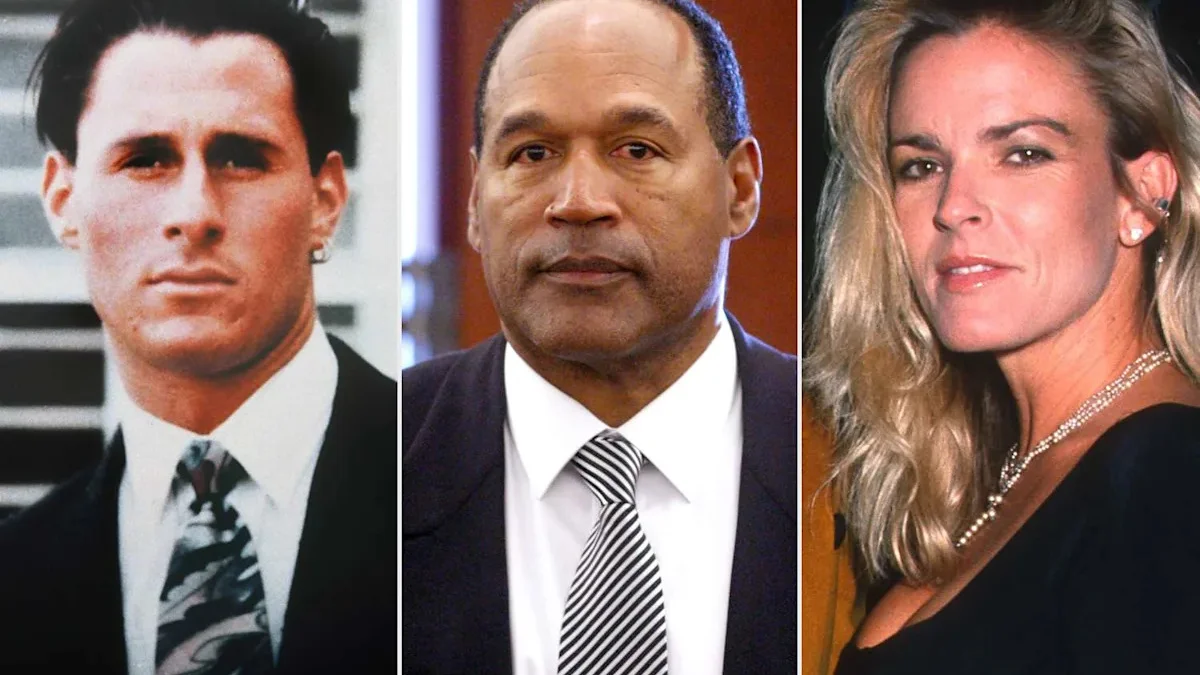
The O.J. Simpson case has been examined in books, television dramas, documentaries and countless news reports.
Yet another production has arrived with a narrower question.
Could someone else have participated in the murders of Nicole Brown Simpson and Ron Goldman on June 12, 1994?
That is the central premise of OJ's Accomplice, a two-part documentary released on Peacock in the United States on November 1, 2026.
The filmmakers say they have gathered witness accounts and additional information that justify reconsidering the possibility of an accomplice.
But the presence of a theory in a documentary does not establish its accuracy.
The distinction matters particularly when allegations concern people who are no longer alive to respond.
Both episodes are now available on Peacock
Peacock released the complete documentary on November 1.
The first installment, Blood and Blind Spots, runs 49 minutes.
It examines aspects of the original investigation and evidence that the filmmakers believe deserve further scrutiny.
The second episode, Partner in Crime, runs 53 minutes.
It concentrates more closely on Simpson's associates and the possibility of another person's involvement.
Together, the installments amount to slightly more than 100 minutes.
The production was originally scheduled for December 2026.
Peacock subsequently moved the premiere to November 1 as fresh reporting on similar theories renewed media interest in the case.
The change is confirmed in the updated release announcements.
Both episodes are already streaming in the United States rather than awaiting a future premiere.
Former investigators and witnesses contribute
The documentary's interview lineup is one of its principal attractions.
Pat McKenna, an investigator who worked with Simpson's defense team, appears in the production.
Tom Lange, a lead detective in the original murder investigation, also contributes.
The series includes Robert Brisolari, a former agent of the United States Drug Enforcement Administration.
Their different professional backgrounds provide opportunities to revisit the case from multiple perspectives.
Kato Kaelin, one of the trial's best-known witnesses, is also interviewed.
Tanya Brown, Nicole Brown Simpson's sister, participates as well.
The filmmakers additionally promise testimony from people associated with Simpson's inner circle and a person described as a newly identified eyewitness.
Those interviews are confirmed in the official production and distribution materials.
Their inclusion does not automatically verify every inference drawn from the testimony.
The evidence must still be assessed according to its source, consistency and independence.
The documentary raises allegations involving Joey Ippolito
Some reporting around the premiere focuses on Joey Ippolito, a deceased former drug smuggler who knew people associated with Simpson.
Articles published by The Hollywood Reporter and summarized by TV Insider describe claims connecting him to the murders.
One notable sequence involves Charlie Ehrlich, who was interviewed during production.
While still wearing a microphone, Ehrlich recounted a conversation he attributed to Ippolito's brother.
According to that secondhand account, Joey Ippolito allegedly admitted involvement in the murders before his death.
The allegation is serious, but its evidentiary status must remain clear.
Ehrlich was not describing a confession made directly to him by Joey Ippolito.
He was reporting what another person supposedly told him.
That makes the statement indirect testimony.
Joey Ippolito is deceased and cannot respond.
His widow, Nicole Ippolito, has publicly rejected the allegations and criticized the documentary.
No court finding established through the reviewed sources identifies Joey Ippolito as an accomplice.
A recorded conversation is not automatically proof
The recording involving Ehrlich has attracted attention partly because of the circumstances in which it was captured.
The moment is described as occurring while he continued talking after a formal interview, with his microphone still attached.
Director Ari Mark told The Hollywood Reporter that he believed Ehrlich knew he was still being recorded.
That detail may clarify the production context.
It does not independently establish the truth of the allegations.
A recorded claim remains a claim.
When the statement concerns what one person supposedly heard from another, corroboration becomes especially important.
Investigators would need to consider supporting documents, independent testimony and any available physical evidence.
The documentary can raise questions and offer a platform for additional accounts.
It cannot establish a deceased person's involvement in a double homicide merely by presenting a dramatic recording.
The distance between a compelling television moment and a demonstrated fact is central to evaluating the production.
What the courts actually decided
Nicole Brown Simpson and Ron Goldman were murdered in Los Angeles on June 12, 1994.
O.J. Simpson was charged with both killings.
The criminal trial became an enormous media event in the United States and internationally.
On October 3, 1995, the jury acquitted Simpson.
He was therefore not convicted of the murders in criminal court.
A separate civil case subsequently reached a different legal outcome.
In 1997, a civil jury found Simpson liable for the deaths of Brown Simpson and Goldman.
He was ordered to pay $33.5 million in damages.
Those outcomes reflect different legal proceedings with different standards of proof.
Simpson died on April 10, 2024, at the age of 76.
The new Peacock documentary does not change either verdict.
Nor does its release establish that a court has identified a second participant in the killings.
Why the Simpson case remains a television subject
The Simpson trial helped reshape the relationship between American criminal justice and television.
The proceedings unfolded during a period of expanding around-the-clock news coverage.
Attorneys, investigators and witnesses became recognizable public figures.
Arguments about forensic evidence, police practices and racial tensions were debated far beyond the courtroom.
The case has continued to generate cultural interest ever since.
The 2016 drama The People v. O.J. Simpson: American Crime Story became a widely discussed television portrayal.
Netflix revisited the events through American Manhunt: O.J. Simpson in 2025.
Those productions examined the investigation, trial and broader cultural impact from different angles.
Peacock's new documentary adopts a more specific focus.
Its central subject is the possibility that another individual participated in the crimes.
That gives the series a recognizable editorial proposition.
But it also creates the risk that the question implied by its title may be mistaken for an established answer.
Ample Entertainment produced the investigation
OJ's Accomplice was produced by Ample Entertainment.
Ari Mark and Sumit David directed the documentary and served as executive producers.
Sphere Abacus is responsible for international distribution.
The project was formally announced in September 2026, after production had wrapped.
At the time, Mark said his team had spent years pursuing leads and building relationships with sources.
He presented the investigation as an opportunity to bring together material that audiences had not previously seen in one place.
That description reflects the production company's stated ambitions.
It does not mean every element is newly discovered or independently conclusive.
The documentary's value depends on the accuracy of its sources and the degree to which their claims can withstand scrutiny.
Why Peacock moved the release forward
The shift from December to November is also revealing from an industry perspective.
Peacock advanced the premiere while new reporting on the accomplice theory was attracting attention.
A representative told The Hollywood Reporter that the company wanted the documentary to remain part of the current media conversation.
The decision followed New York Times reporting that discussed related lines of inquiry.
For a streaming service, releasing a documentary while its subject is already receiving significant coverage can increase its visibility.
That does not mean the earlier premiere validates the documentary's allegations.
Distribution strategy and evidentiary reliability are separate considerations.
The decision nevertheless illustrates how streaming platforms adapt release schedules to developments in news coverage.
A completed documentary can become part of a wider public debate sooner than originally planned.
Where to watch OJ's Accomplice
Both episodes are available on Peacock in the United States as of November 1, 2026.
Blood and Blind Spots runs 49 minutes, while Partner in Crime runs 53 minutes.
The complete documentary can therefore be watched without waiting for additional weekly releases.
Sphere Abacus handles international sales.
The distributor previously confirmed that the program had secured a buyer in the United Kingdom.
However, no French streaming premiere date was sufficiently verified in the material examined.
It would therefore be inaccurate to claim that the documentary is already available through a specific French service.
Availability outside the United States will depend on territorial distribution agreements.
A controversial theory rather than a new verdict
OJ's Accomplice enters an already extensive body of coverage surrounding the Simpson murders.
Its focus on the possibility of another participant gives the production a distinct investigative question.
The interviews with former investigators, witnesses and associates provide potentially useful material for revisiting that question.
But documentary testimony must be distinguished from independently established facts.
The allegations involving Joey Ippolito are indirect and disputed.
The reviewed sources do not identify a court ruling that established his involvement.
The criminal acquittal in 1995 and the civil liability verdict in 1997 remain the key legal outcomes.
The important question is therefore not simply whether the documentary presents a dramatic alternative explanation.
It is whether the evidence supports the claims being advanced.
Both episodes are now available on Peacock, giving audiences an opportunity to examine the filmmakers' case while keeping that distinction in mind.