
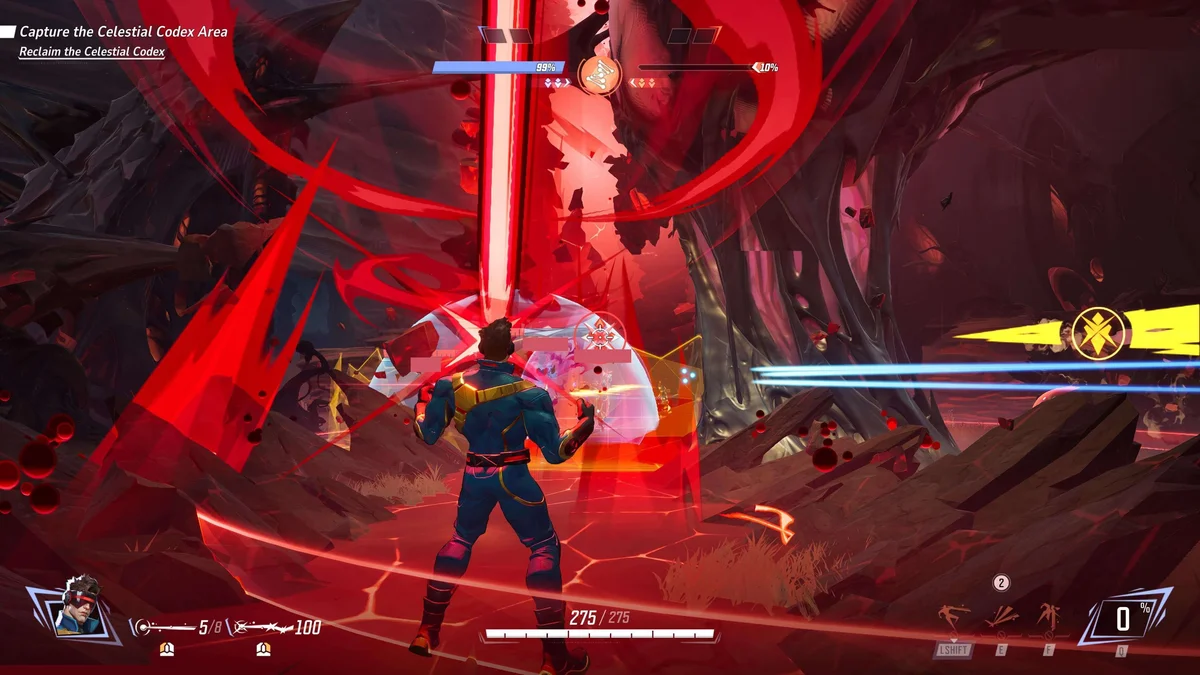
Communication Is Part of Competitive Gameplay
In team-based competitive games, player communication is not merely an optional feature.
It can be essential to success.
A voice message might warn teammates about an approaching enemy or coordinate the use of several abilities.
However, the same communication channel can also become a source of insults, harassment and discrimination.
Publishers must preserve the benefits of coordination while reducing behavior that makes communication unpleasant or hostile.
Marvel Rivals provides a current example of that tension.
On October 16, NetEase Games announced stronger penalties for text and voice communication violations.
The developer explicitly frames a healthier communication environment as an important part of the competitive experience.
Graduated Punishment Rather Than a Single Penalty
The detailed rules published by NetEase on October 10 outline several disciplinary levels.
Some incidents may result in warnings.
More serious violations can lead to communication suspensions lasting up to 365 days.
Players repeatedly breaking the rules may receive temporary matchmaking restrictions.
Particularly serious or repeated abuse can also result in long-term account suspension.
The structure matters because NetEase says it considers severity and previous violations.
That allows the company to distinguish different incidents rather than impose the same penalty automatically.
Automation Is Increasingly Important at Scale
An international community communicating across thousands of matches creates a substantial moderation challenge.
It would be difficult for human moderators to examine every message immediately.
NetEase therefore combines automated systems with player reports.
Text filtering operates in real time and attempts to interpret both words and context.
Voice communication is also subject to automated analysis.
The developer had already described work on this approach in 2025.
October's announcement therefore does not represent the sudden introduction of previously nonexistent monitoring.
It formalizes the policy and strengthens the consequences of verified violations.
Mistaken Enforcement Remains a Central Concern
Moderating human conversation is difficult because identical words can carry different meanings in different situations.
A joke, quotation or harmless expression may be misinterpreted by automated systems.
NetEase says flagged communications undergo human review.
That is an important safeguard within the published process.
However, it does not guarantee the absence of errors.
The developer has not published false-positive rates or enough appeal statistics to assess how often moderation decisions are challenged.
Its system should therefore not be described as perfectly accurate.
Stopping Abuse Without Prohibiting Disagreement
Competitive games naturally produce disagreements.
Players may question a strategy, suggest switching characters or discuss the causes of a defeat.
NetEase says normal communication and differing opinions remain acceptable.
Its policy therefore attempts to distinguish ordinary criticism from personal attacks.
That distinction is essential to the system's legitimacy.
Moderation that is too permissive leaves room for harassment.
Disproportionate enforcement, meanwhile, risks discouraging useful communication.
Success will depend partly on how accurately ambiguous situations are evaluated.
Reporting Remains a Shared Responsibility
Even with automated detection, NetEase encourages players to report misconduct directly.
The system accepts reports during matches and immediately afterward.
Those reports enter the developer's moderation workflow.
Combining player reports with automated detection can help identify incidents that filtering systems might miss.
However, it also creates a responsibility to avoid treating coordinated or malicious reports as automatic proof of wrongdoing.
NetEase describes a review process rather than punishment based solely on report volume.
Voice Moderation Raises Privacy Questions
Analyzing speech introduces considerations beyond those involved in text filtering.
Voice communication may contain personal information and conversational context requiring careful handling.
NetEase says its systems comply with applicable regulations and that voice data is used for identifying and addressing violations.
However, those statements are not a substitute for an independent privacy assessment.
The examined documentation does not establish every technical detail concerning the storage and processing of voice information.
The publisher's stated safeguards should therefore be distinguished from independently verified outcomes.
Toxicity Can Affect Competitive Play Itself
The issue extends beyond individual comfort.
Marvel Rivals matches depend on six-player teams using complementary abilities.
A player who permanently disables communication to avoid harassment may lose access to useful tactical information.
Keeping communication enabled during an abusive exchange can instead undermine concentration and teamwork.
Moderation attempts to reduce that difficult trade-off.
It can influence the competitive experience without directly changing weapons, abilities or hero balance.

Effectiveness Must Be Measured, Not Assumed
The increase in penalties is a documented decision.
Its actual consequences remain to be established.
Measuring improvement would require data on reports, confirmed violations, repeat offenders and moderation errors.
NetEase's announcement does not provide those indicators.
It therefore cannot establish that toxic behavior has already declined because of the stronger rules.
The company has announced a policy and commitment, not a measured outcome.
A Continuing Challenge for Online Game Publishers
NetEase's decision illustrates a broader development in competitive game operations.
Creating new characters, balancing abilities and producing maps is not enough to sustain a welcoming multiplayer environment.
Publishers must also manage the behavior that develops within their communities.
That requires technical systems, human expertise, understandable procedures and proportionate decisions.
Marvel Rivals has now clarified its disciplinary options and announced stronger enforcement.
However, the difficult work begins after the announcement: applying those rules consistently without ignoring harassment or unfairly punishing ordinary conversation.
The policy's success will not be determined solely by its longest possible bans. It will depend on whether players can communicate, coordinate and compete in an environment they consider both respectful and fair.