Some cinematic characters become so closely identified with an actor that recasting them feels almost impossible.
Aragorn is one of those characters.
Since Peter Jackson's The Fellowship of the Ring arrived in 2001, Viggo Mortensen has defined the character for an enormous international audience.
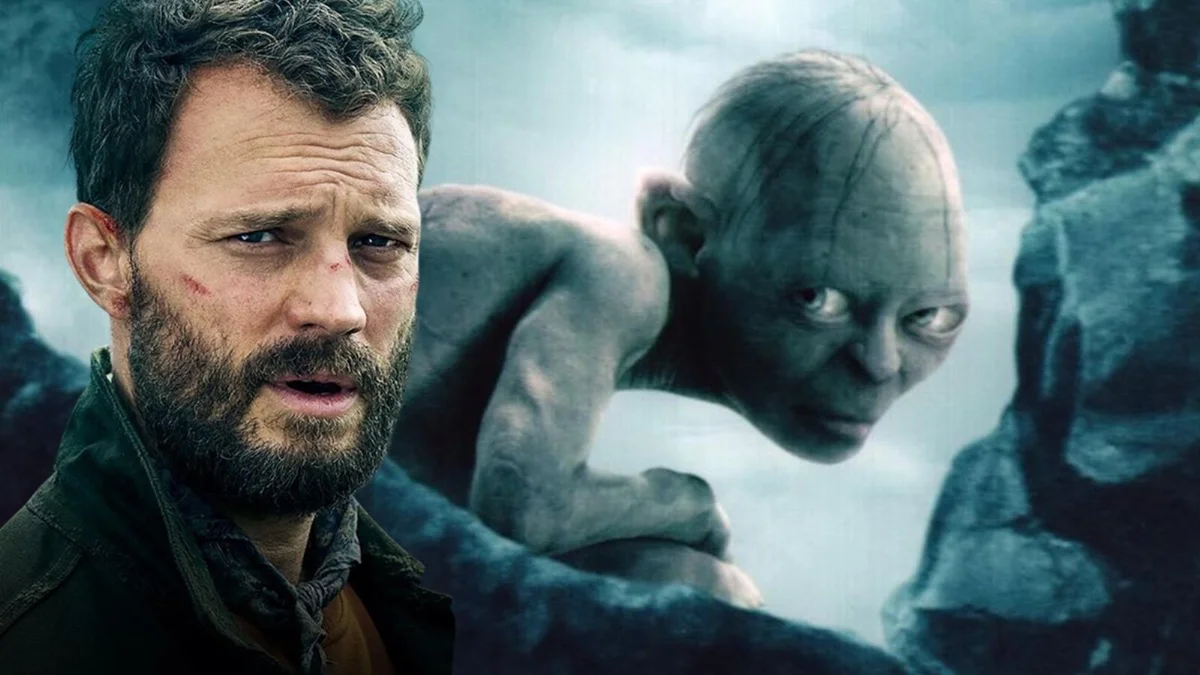
Jamie Dornan now faces the responsibility of portraying an earlier version of the same ranger in The Lord of the Rings: The Hunt for Gollum.
The casting itself is not new. Warner Bros. officially announced Dornan's involvement during CinemaCon in April 2026.
What has changed is that the actor has begun explaining how he sees the challenge.
In an interview with L'Officiel, reported by Variety, Entertainment Weekly and NME in late October, Dornan acknowledged the pressure associated with taking over such an iconic role.
He expressed deep admiration for Mortensen's interpretation and made clear that he is not trying to outdo his predecessor.
Instead, Dornan hopes to capture some of the qualities that made the earlier performance memorable while developing his own understanding of Aragorn.
It is a careful position for a film attempting to continue a beloved cinematic tradition without simply repeating it.
A role that still belongs to Viggo Mortensen in the public imagination
Dornan's comments reveal an unusual level of respect for the actor whose place he is taking.
Rather than presenting his casting as an opportunity to redefine Aragorn completely, he recognizes Mortensen as the performer most strongly associated with the character.
That distinction matters.
Recasting a famous role can produce an expectation that the newcomer must somehow improve upon the earlier performance.
Dornan appears to reject that idea.
Mortensen's Aragorn was defined by a combination of physical strength, restraint and moral uncertainty.
He was a formidable fighter, but his central struggle concerned whether he could accept the responsibilities attached to his ancestry.
As the heir of Isildur, Aragorn was destined for a position of authority that he had spent much of his life avoiding.
Mortensen gave those contradictions a persuasive emotional dimension.
His performance suggested a man accustomed to surviving in the wilderness but uncomfortable with the political destiny awaiting him.
Dornan will have to retain enough of that identity for audiences to recognize Aragorn, while portraying him during a different period.
The challenge is not simply to copy familiar gestures or vocal patterns.
It is to make the character's earlier experiences feel consistent with the man audiences already know.
Why the story requires a younger Strider
The Hunt for Gollum takes place before the events of The Fellowship of the Ring.
At this stage, Aragorn is still widely known as Strider, a ranger traveling through Middle-earth and monitoring the dangers threatening its inhabitants.
He has not yet become the king audiences encounter at the conclusion of Jackson's trilogy.
That chronology played an important part in the decision to recast the character.
Andy Serkis confirmed in April 2026 that a new actor would portray Aragorn.
Bringing back Mortensen would have required him to play a version of the character younger than the one he originally portrayed more than two decades earlier.
Dornan provides a different option without making extensive digital de-aging the defining feature of the performance.
The film's earlier setting also offers room to explore aspects of Aragorn that viewers have rarely seen on screen.
Rather than leading armies or preparing for kingship, he is involved in a dangerous search across Middle-earth.
His experience as a tracker and ranger will be particularly relevant to the mission.
That provides a different dramatic context for the character, even though his moral identity should remain recognizable.
The search for Gollum comes before the Fellowship
The new film develops a period of Tolkien's chronology associated with the effort to locate Gollum.
Before Frodo's journey begins, Gandalf recognizes the danger posed by the information Gollum may possess.
The creature held the One Ring for centuries before losing it to Bilbo Baggins.
If Sauron learns what happened to the Ring and where it might be found, the consequences could be devastating.
Gandalf therefore turns to Aragorn for help tracking down the elusive creature.
The Hunt for Gollum will expand that search into a feature-length story.
The production has also indicated that Gollum's perspective will play an important role in the narrative.
That approach creates opportunities to examine the character differently from the original trilogy.
In The Two Towers and The Return of the King, Gollum spends much of his screen time accompanying Frodo and Sam.
His competing identities, emotional attachments and obsession with the Ring shape their journey.
The upcoming film instead places him at the center of a pursuit unfolding before those events.
The complete sequence of locations, confrontations and newly created scenes has not been publicly disclosed.
The production is adapting material connected to Tolkien's established world, but the full screenplay remains unavailable to audiences.
Andy Serkis directs and returns as Gollum
Andy Serkis has one of the most important roles in the production, both in front of and behind the camera.
He returns as Gollum and Sméagol, the character whose digital performance helped transform the use of motion-capture acting in mainstream cinema.
Serkis' original interpretation combined physical acting with expressive vocal work to portray a creature divided by fear, addiction and conflicting desires.
This time, he also directs the film.
His previous filmmaking credits include Mowgli: Legend of the Jungle and Venom: Let There Be Carnage.
He also worked as a second-unit director on Peter Jackson's Hobbit trilogy.
The Hunt for Gollum will be his first Lord of the Rings franchise entry as principal director.
That gives the production an unusual combination of continuity and change.
The character is returning with the same performer, but the overall film will be shaped by a filmmaker other than Jackson.
Serkis' experience with Gollum should provide a strong foundation for the character's performance.
The wider challenge will involve the film's pacing, action, narrative perspective and coordination of an extensive cast.
Familiar faces are returning to Middle-earth
Several original franchise actors are returning alongside Serkis.
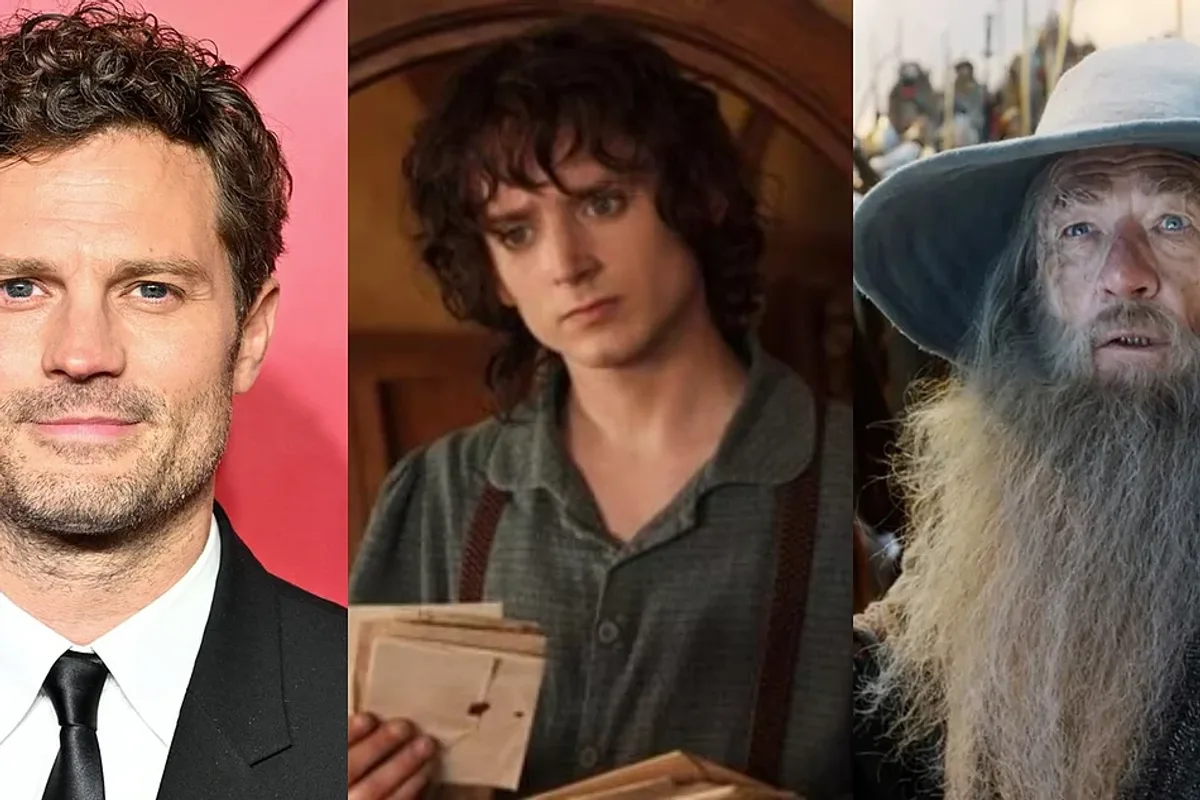
Ian McKellen will once again portray Gandalf, whose investigation into the Ring creates the need to find Gollum.
Elijah Wood returns as Frodo Baggins, although the precise extent of his role has not been disclosed.
Lee Pace will reprise Thranduil, the Elvenking previously seen in The Hobbit films.
These casting decisions establish a direct connection to the earlier adaptations.
They do not mean the entire original ensemble will return.
Only the performers who have been officially announced should be treated as confirmed.
The contrast is especially interesting for Dornan.
He will be portraying a familiar character in scenes alongside actors who have already inhabited their own roles for years.
That mixture could make Aragorn's new portrayal feel both recognizable and distinct.
Leo Woodall and new characters expand the story
The upcoming film also introduces several performers who are new to Middle-earth cinema.
Leo Woodall plays Halvard, a ranger associated with Strider's journey.
Woodall has already worked with Dornan on the project and has spoken positively about his interpretation.
His comments reflect the perspective of a colleague on the production, not an independent assessment of the finished film.
Kate Winslet joins the cast as Marigol, a character associated with a community of Stoors.
Anya Taylor-Joy has been announced as Seren, an Elven character.
These additions suggest that the search will involve people and communities beyond the central figures established in Jackson's trilogy.
However, the announcement of a character name does not reveal the full narrative arc.
There is not yet enough confirmed information to describe exactly how these new figures influence Aragorn's search or Gollum's journey.
Their roles remain promising possibilities rather than fully documented storylines.
Peter Jackson remains involved as producer
Although Serkis is directing, The Hunt for Gollum retains significant creative connections to Peter Jackson's adaptations.
Jackson serves as producer alongside Fran Walsh and Philippa Boyens.
Walsh and Boyens are also involved in the screenplay with Phoebe Gittins and Arty Papageorgiou.
Warner Bros. Pictures and New Line Cinema announced the return of this creative team in May 2024.
The studio presented the film as the first of two new Middle-earth features being developed with the longtime collaborators.
Jackson's presence should not be confused with a directing credit.
Serkis is responsible for directing this installment, while Jackson's involvement provides production continuity.
The arrangement may help preserve familiar elements of the franchise's cinematic identity.
At the same time, the new film must establish a reason to exist beyond audience nostalgia.
A story centered on a previously unexplored pursuit offers an opportunity to visit different parts of Tolkien's chronology without simply recreating the events of the original trilogy.
Production is underway in New Zealand
Warner Bros. announced the beginning of production in July 2026.
A promotional featurette showed Serkis preparing for motion-capture work and crews operating in New Zealand landscapes.
The country has been closely associated with cinematic Middle-earth since Jackson filmed his original trilogy there.
Its mountains, forests and open countryside helped establish the geographical identity of the franchise.
The Hunt for Gollum continues that production connection.
Additional photographs from September revealed elements of the Shire sets.
Some observers interpreted an image taken near a Hobbit dwelling as an early glimpse of Elijah Wood in costume.
However, the exact identity of every person in those photographs has not been officially established.
As of October 29, filming has begun and several cast members have been working in New Zealand.
There has not been a confirmed announcement establishing that all principal photography is complete.
Nor has a full trailer provided audiences with an opportunity to judge Dornan's finished performance.
Can a new Aragorn work alongside a familiar Middle-earth?
The biggest question surrounding Dornan's casting is not whether he can physically resemble Mortensen.
It is whether audiences will accept a different performer as the same character.
Jackson's trilogy established a version of Aragorn whose physical movements, emotional restraint and appearance became deeply familiar.
A new interpretation must retain important aspects of that identity while reflecting the character's different stage of life.
The earlier setting may help.
Strider's life as a ranger offers a different dramatic situation from Aragorn's later responsibilities as the heir to Gondor.
He can be defined through tracking, survival and his relationship with Gandalf, rather than through leadership during a major war.
That does not eliminate the challenge of continuity.
His decisions and values must still feel consistent with the character viewers know from the original films.
Dornan's comments suggest that he understands the distinction.
He is not trying to erase Mortensen's Aragorn or argue that the earlier portrayal needs improvement.
Instead, he is approaching the role as another part of an established character's history.
Whether the performance succeeds will ultimately depend on the finished film, not on interviews conducted during production.
The Hunt for Gollum opens December 17, 2027
Warner Bros. has scheduled The Lord of the Rings: The Hunt for Gollum for theatrical release in the United States on December 17, 2027.
Dates in other markets will depend on local distribution announcements.
No confirmed streaming release date has been provided.
Dornan's October comments are therefore best understood as a new perspective on an already announced casting decision.
His involvement was confirmed six months earlier, and the film has since entered production.
What makes the latest interview significant is the way the actor frames the challenge.
For audiences who grew up with Peter Jackson's films, Aragorn is inseparable from Viggo Mortensen.
Dornan is not asking them to forget that performance.
He is asking for the opportunity to explore who Strider was before the events that turned him into the king of Gondor.
With Serkis directing and much of the original creative team involved, The Hunt for Gollum is positioning itself as a continuation of cinematic Middle-earth rather than a complete reinvention.
The film will have to prove that this earlier chapter contains a story worth telling.