
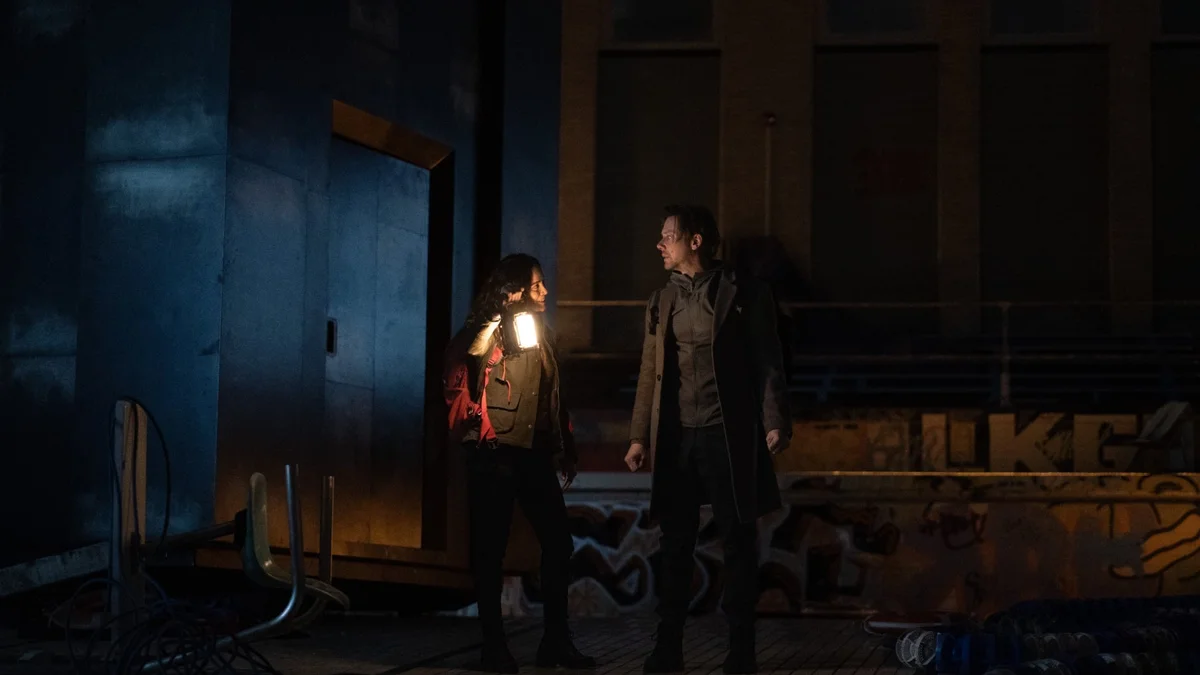
The central question of Dark Matter has changed.
At the beginning of the series, Jason Dessen wanted one thing: to return to the life that had been taken away from him.
By the end of Season 2, that objective is no longer sufficient.
The existence of countless parallel realities has affected other people, other families and entire worlds.
Those consequences come to the foreground in No Quiet Life, the tenth episode of the second season, released on Apple TV on Friday, October 30, 2026.
The finale completes a weekly release schedule that began on August 28.
All ten episodes of the season are now available to stream.
The final installment is approximately 50 minutes long and brings several interconnected storylines toward a confrontation involving the technology that makes travel between realities possible.
But it does not function as a definitive ending to everything the series has introduced.
That distinction matters because Apple TV has not yet confirmed a third season.
No Quiet Life brings the second season to a close
Apple identifies No Quiet Life as the Season 2 finale.
The official description refers to a dangerous gambit that produces unintended consequences.
The deliberately brief synopsis avoids disclosing how the competing storylines unfold.
The episode follows How to Build the Box, released on October 23.
The contrast between the season's first and last titles is particularly revealing.
Season 2 opened with A Quiet Life, reflecting the Dessen family's hope of achieving stability after the events of the first season.
It ends with No Quiet Life, suggesting that those hopes have been much more difficult to fulfill.
Throughout the season, characters have moved between alternate realities while trying to understand the consequences of the choices they made.
The technology known as the Box has become more than a means of transporting one individual.
It has developed into a force capable of affecting entire populations and undermining the stability of different worlds.
The finale brings that danger into focus.
Blake Crouch has moved beyond his original novel
Dark Matter began as an adaptation of Blake Crouch's 2016 novel.
The book followed Jason Dessen, a physicist and family man abducted into another version of his own existence.
His journey through parallel realities was driven by the desire to return home and reunite with his wife and son.
The first television season adapted the principal events of that story and reached a conclusion broadly corresponding to the novel's ending.
Creating a second season therefore required Crouch to develop substantial new material.
Rather than repeating Jason's original quest, he expanded the fictional universe and gave supporting characters more independent storylines.
The Box became the subject of a wider conflict about scientific responsibility and the effects of unrestricted travel between realities.
In an interview with TheWrap published on October 30, Crouch explained that the second season was never intended to resolve every part of the expanded narrative.
He acknowledged that the creative team had developed a story requiring more than ten additional episodes.
That decision involved a risk.
A television continuation ultimately depends on the streaming service commissioning another season.
For Dark Matter, the creative ambition is now ahead of the confirmed production schedule.
Jason and Daniela face a different kind of crisis
Joel Edgerton returns as Jason Dessen, with Jennifer Connelly portraying Daniela.
Their marriage remains the emotional center of the series.
During the first season, Jason's struggle involved reclaiming the family from which he had been separated.
Season 2 complicates that dynamic.
The Dessens now understand that their lives are only one possibility among an extraordinary number of alternatives.
That knowledge makes ordinary family stability increasingly difficult to maintain.
Jason continues to be drawn toward the Box and the scientific possibilities associated with it.
Daniela grows more concerned about the effects of that obsession on their safety and relationships.
Their son Charlie, played by Oakes Fegley, develops his own relationship with the opportunities and dangers of other worlds.
The result is no longer simply a story about a father trying to rescue his family.
It is also about whether a family can remain together when its members begin to respond differently to the extraordinary possibilities surrounding them.
That tension shapes much of the season's emotional conflict.

The supporting characters have become increasingly important
The second season gives considerably more attention to characters whose roles were narrower in the original story.
Amanda, portrayed by Alice Braga, and Ryan, played by Jimmi Simpson, pursue their own efforts to understand the multiverse.
Their experiences allow the series to move beyond Jason's personal perspective.
Amanda Brugel returns as Blair, whose understanding of the technology places her in conflict with Leighton's ambitions.
Leighton, played by Dayo Okeniyi, believes that access to alternate realities could make it possible to create a better world.
Others increasingly question whether such an ambition can be pursued without causing greater harm.
The disagreement changes the nature of the central conflict.
The problem is no longer merely that different versions of Jason exist.
It is that people with opposing beliefs now possess access to a discovery capable of changing reality itself.
Some see the technology as an opportunity to correct past mistakes.
Others believe its continued existence threatens everyone who might be affected by it.
Those competing positions contribute directly to the stakes of the finale.
The finale confronts the danger of the Box
No Quiet Life centers on the consequences of the increasingly dangerous technology.
Throughout the season, the characters have encountered realities that demonstrate how unpredictable alternate worlds can be.
Some offer remarkable possibilities.
Others are defined by violence, disaster or circumstances in which ordinary survival becomes extraordinarily difficult.
The finale involves an attempt to eliminate a major source of that danger.
Blake Crouch discussed its construction in interviews published by TheWrap and Reactor on October 30.
He described the season as an exploration of both the beautiful and terrifying experiences made possible by the Box.
The finale brings those two extremes together.
Its action includes encounters with worlds that are radically different from the familiar reality of the Dessen family.
One features a city transformed by devastating conflict.
Another presents an environment in which the familiar behavior of gravity has been disrupted.
These sequences make the danger of traveling between realities more immediate and physical.
They also reinforce the question of whether the technology should remain accessible at all.
A larger visual-effects challenge
The second-season finale is particularly ambitious from a production perspective.
Dark Matter originally established its identity through psychological suspense and relatively subtle changes between parallel worlds.
No Quiet Life introduces more elaborate action and extraordinary environments.
In his interview with TheWrap, Crouch explained that the production had allocated resources carefully to make the finale possible.
The eighth episode was designed around a more contained setting, helping the team reserve resources for the final installment.
Crouch also described the origins of the world in which gravity behaves differently.
He had considered a similar idea while writing the original novel but had not found a suitable place for it.
The television continuation allowed him to revisit and develop that concept.
That illustrates one of the advantages of extending the adaptation beyond its source material.
Crouch can explore ideas that were previously abandoned and build new stories involving characters who had less space in the book.
At the same time, a larger narrative creates more questions that must eventually be resolved.
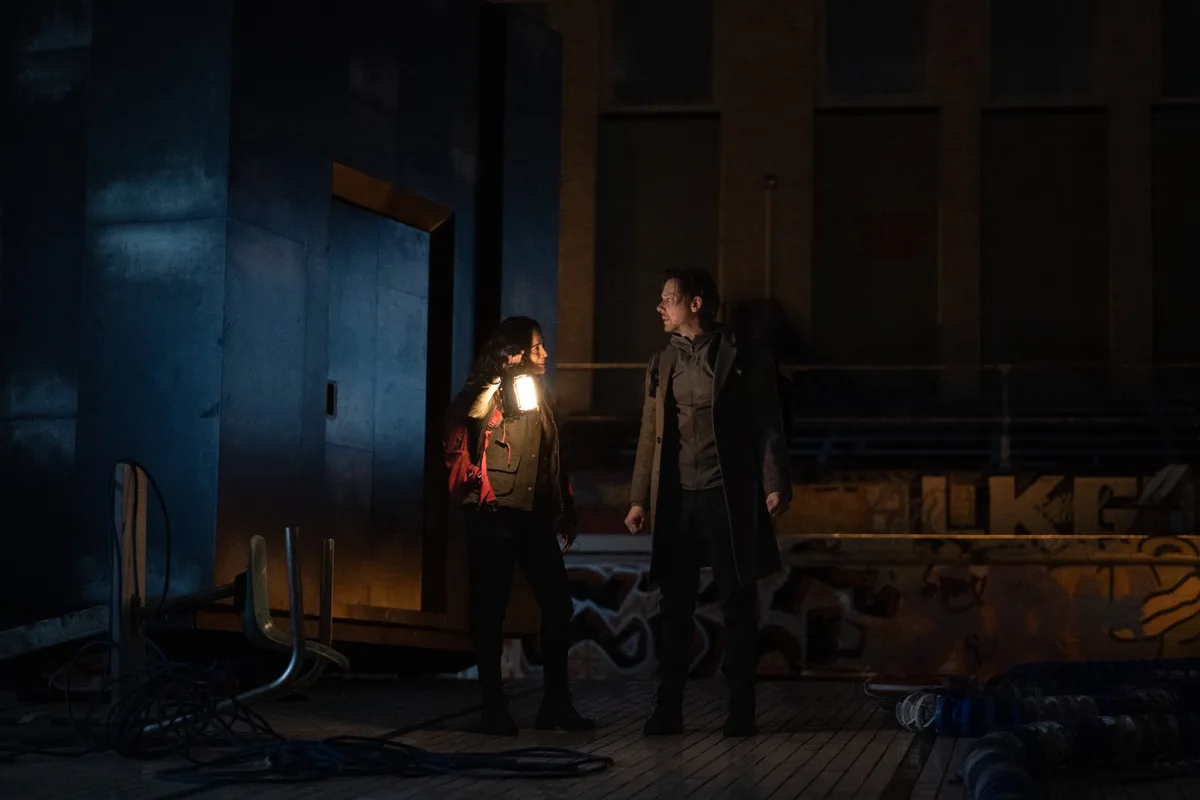
Apple has not renewed Dark Matter for Season 3
As of October 31, 2026, Apple TV has not officially announced a third season.
That remains the most important distinction in discussions about the series' future.
Crouch has clearly expressed interest in continuing the story.
He told TheWrap that he initially envisioned a three-season structure when discussing the project with Apple.
He also explained that the second season was developed with the understanding that the narrative would need additional episodes to reach its intended conclusion.
Those comments establish the creator's ambitions.
They do not constitute a renewal announcement.
Apple has not announced a production start, premiere date or finalized cast for a third installment.
Dark Matter therefore remains in an uncertain position.
Its showrunner knows where he would like the story to go, but the series has not yet received a confirmed continuation.
That situation gives the Season 2 finale additional significance.
Its unresolved consequences may remain unanswered unless the streaming service commissions more episodes.
Why a three-season structure makes sense for the story
The first season followed a clearly defined personal objective.
Jason wanted to recover the life that had been taken from him.
The second season explores the consequences of that journey and expands the story to other people capable of traveling between realities.
It develops a wider conflict about the technology itself.
A third season could theoretically address the personal and ethical consequences of that conflict.
This broad progression is consistent with the structure Crouch described in his October 30 interview.
However, the details of a possible continuation remain unavailable.
No complete synopsis has been announced.
It is also unclear which actors would be involved or how the remaining storylines would be organized.
Predicting specific events would therefore go beyond the information provided by the creator.
The important point is that Crouch has a longer narrative in mind.
Whether that narrative will reach the screen remains undecided.
The finale combines hope with catastrophe
The title No Quiet Life captures the central problem facing the characters.
They have repeatedly searched for a reality in which they might escape the consequences of earlier decisions.
But the existence of the multiverse makes the idea of a perfect home increasingly complicated.
A different world might provide another opportunity, yet reaching it may require abandoning people or relationships already established elsewhere.
Different versions of Jason have experienced radically different outcomes.
Some possess relationships that others have lost.
Daniela and Charlie have also been forced to confront possibilities that fundamentally alter their understanding of family.
The desire to find a better world can become difficult to distinguish from an inability to accept an imperfect present.
That tension lies at the heart of the second season.
Crouch has described his intention to explore both the extraordinary beauty and profound danger associated with alternate realities.
The finale reflects those opposing forces.
Its characters make decisions that change their circumstances, but not every consequence can be erased.
The story preserves uncertainty rather than resolving all of its conflicts through a single final action.
Both seasons are available on Apple TV
Dark Matter premiered on Apple TV in May 2024.
Its second season began on August 28, 2026, and concluded on October 30.
The series now has twenty available episodes across its first two seasons.
The season finale is already streaming rather than being scheduled for a future release.
Apple TV provides multiple audio and subtitle options, including French, depending on territory and playback settings.
Viewers who prefer to avoid weekly releases can now watch the complete second season.
They should nevertheless distinguish the availability of those ten episodes from the status of a potential third season.
No new season beyond the second has been officially confirmed.
Dark Matter has become a much larger story
Across two seasons, Dark Matter has moved from a personal thriller about identity and loss toward a broader exploration of scientific responsibility.
Crouch's novel began with a deceptively simple question: what if a person had made different choices?
The first season turned that question into an urgent effort to recover a stolen life.
The second asks what happens when many people can act upon countless alternative possibilities.
The consequences are no longer contained within one family.
That expansion helps explain the scale and unresolved nature of the finale.
Crouch has chosen to develop new possibilities rather than repeat the ending of his original novel.
The creative freedom is considerable, but it carries a practical risk for a streaming production awaiting renewal.
October 30 therefore marks two different milestones.
The second season has definitively finished airing.
The larger story that its creator wants to complete remains uncertain.
No Quiet Life is available now. The next chapter exists as a creative ambition, not yet as an officially commissioned season.